31% of consumers now say they’ll only use a business rated 4.5 stars or higher. A year earlier, that number was 17%, according to a BrightLocal consumer survey.
So one bad night that ends up online costs more than it used to. A restaurant customer satisfaction survey gives the unhappy guest a private place to tell you first.
Below are 12 survey questions, ranked from must-ask to nice-to-have, plus a 5-question template, when to send it and what to do with the answers.
Pick your starting point:
- A receipt QR code with room for only a few questions: ask #1, #2 and #5.
- Lots of takeout and delivery orders: add #7 to the first five.
- Quiet weeknights you can’t explain: #9 and #10 show whether price or awareness is the problem.
- Building a guest list for email or texts: end with #12.
How These Survey Questions Are Ranked
These questions are ranked by how much a small restaurant needs the answer to fix next week’s service.
The first 5 make a complete short survey on their own. Questions 6 to 12 each add one specific thing, so add only the ones that match a problem you suspect.
That matters because every extra question costs you answers. SevenRooms, a restaurant guest-experience software company, advises “five to eight” questions for a standard post-visit survey and says response rates fall away past ten.
Surveys sit inside a bigger plan to keep guests coming back, so each question here has one job: showing you what to fix before a regular stops visiting.
12 Restaurant Customer Satisfaction Survey Questions, Most Important First
A restaurant customer satisfaction survey should ask guests to rate the visit, the food and the server. It should also ask whether they’d recommend you and what one thing you could do better.
Add the other 7 questions only where you suspect a problem. They run from wait time to contact permission.
1. How Would You Rate Your Visit Today?
Ask for one overall score before anything else.
It’s the number you’ll track week to week, so it goes first.
- Best for: Every restaurant.
- Answer type: 1 to 5 stars.
- Tells you: Whether the visit worked as a whole.
- First step: Make it the first question in your form, with 5 meaning “excellent.”
Say 40 guests answer in a week and 34 give a 4 or 5.
That’s 85% satisfied, a figure you can compare with next week.
2. How Likely Are You to Recommend Us to a Friend?
Ask how likely the guest is to recommend you, on a 0 to 10 scale.
This is the classic Net Promoter Score question, and it measures loyalty rather than one meal.
- Best for: Owners who want to track word of mouth. Skip it if your survey must stay at 2 questions.
- Answer type: 0 to 10.
- Tells you: How many guests would send a friend your way.
- First step: Copy the wording exactly, since changing it breaks the comparison over time.
Here’s how to score it:
- Count guests who answer 9 or 10. Those are promoters.
- Count guests who answer 0 to 6. Those are detractors.
- Subtract the detractor percentage from the promoter percentage.
Say 60% of guests are promoters and 15% are detractors. That’s a score of 45.
3. How Would You Rate Your Food?
Ask about the food on its own, separate from service.
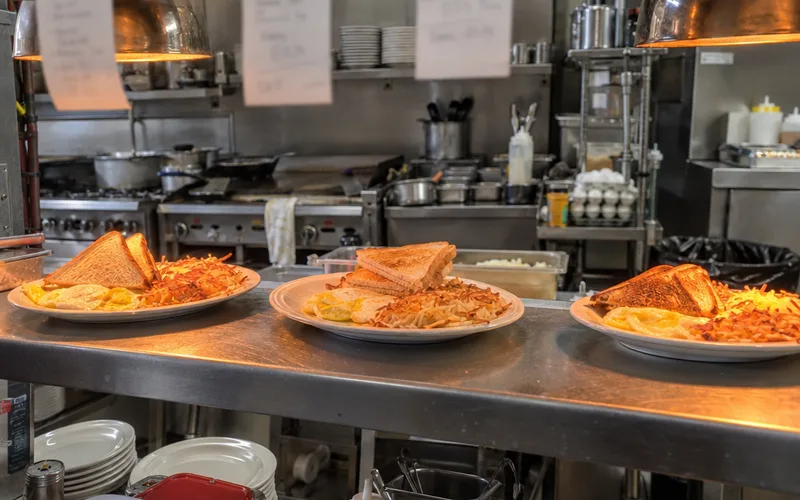
A great server can’t save a cold plate, and you need to know which one let the guest down.
- Best for: Every restaurant, especially one with a new menu.
- Answer type: 1 to 5, with an optional “What did you order?” box.
- Tells you: Whether the kitchen hit its marks.
- First step: Add “Was your food served at the right temperature?” as a yes/no if cold plates are a known issue.
The SmartSurvey restaurant template, for example, asks about taste and temperature as two separate questions. A low taste score points to a recipe, while “too cold” points to the pass.
4. How Would You Rate Your Server?
Ask how friendly and attentive your server was, on the same 1 to 5 scale.
Service is the part of the visit you can coach this week.
- Best for: Sit-down restaurants. Skip it at a counter-service spot and ask about the cashier instead.
- Answer type: 1 to 5, plus an optional “Who was your server?” box.
- Tells you: Which shifts and staff need help, and who deserves a thank-you.
- First step: Print the server’s name on the receipt so guests can fill in that box.
The catch?
A low score on a slammed Friday may be a staffing problem, not a server problem. So compare scores by shift before you talk to anyone.
5. What’s One Thing We Could Do Better?
End the core five with one open-ended question.
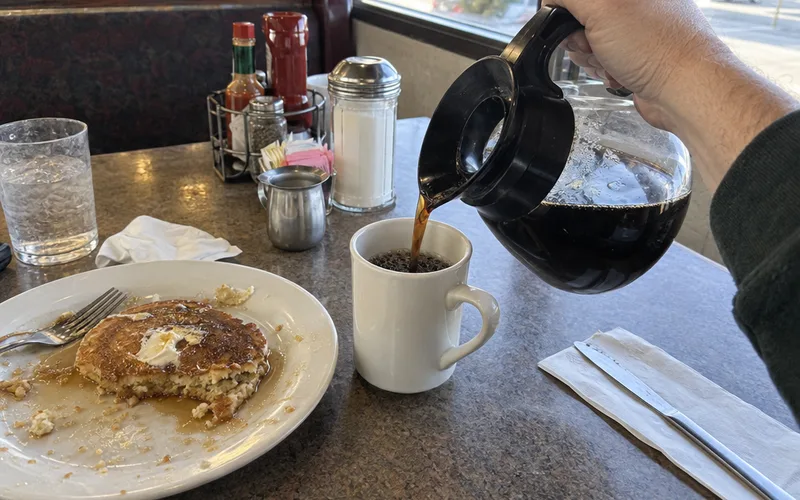
Rating scales tell you something is wrong. This box tells you what.
- Best for: Every survey. Never skip it.
- Answer type: A short text box, optional.
- Tells you: The specific fix, in the guest’s own words.
- First step: Keep it to one open question, because writing takes effort.
Here’s what this box catches that stars miss:
- “Fries were cold by the time they reached the table.”
- “Nobody refilled our coffee after the first cup.”
- “The booth by the door gets a draft every time it opens.”
One honest sentence in this box is worth more than a page of 4-star ratings.
6. How Long Did You Wait for Your Food?
Ask about speed as its own question.
Slow food and rude service feel the same to an annoyed guest, but they need different fixes.
- Best for: Busy lunch spots and any place with a known rush.
- Answer type: Too slow / About right / Fast.
- Tells you: Whether the kitchen or the floor is the bottleneck.
- First step: Compare answers from your busiest shift with your slowest one.
Three choices work better than a scale here, since “About right” is the goal and “Fast” can mean rushed.
7. Was Your Order Correct and Complete?
Ask whether anything was missing or wrong.
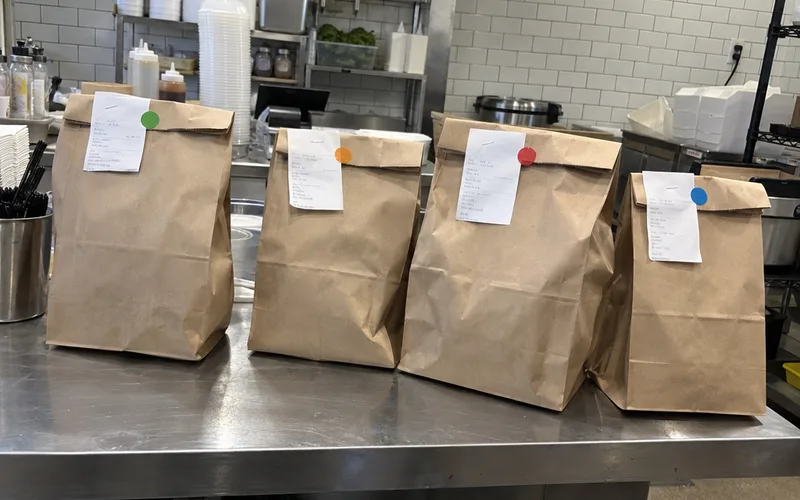
It matters most for takeout and delivery, where the guest finds the mistake at home.
- Best for: Restaurants with takeout or delivery. Skip it if you’re dine-in only.
- Answer type: Yes / No.
- Tells you: How often orders leave incomplete.
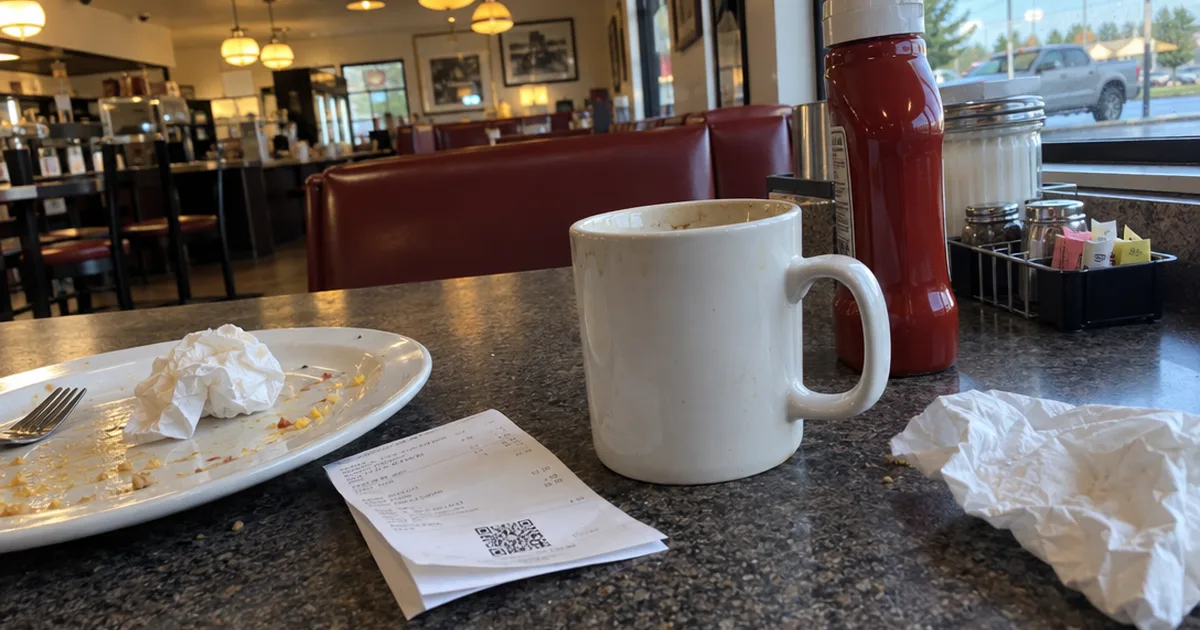
- First step: Put the survey QR code on the takeout bag, not just the receipt.
When the same item goes missing twice in a week, add it to the bagging station’s final check.
8. How Clean Was the Dining Room and Restroom?
Ask about cleanliness, and name the restroom.
Guests notice a messy restroom even when the dining room looks fine.
- Best for: Dine-in restaurants.
- Answer type: 1 to 5.
- Tells you: Whether your cleaning schedule holds up during the rush.
- First step: Have a closer check the restroom at the busiest hour this week, then compare with the scores.
SmartSurvey asks about cleanliness separately from atmosphere, and that’s a smart split. Atmosphere is taste, but cleanliness is a standard you can fix by Friday.
9. Was Your Meal Worth What You Paid?
Ask whether the meal felt like good value.
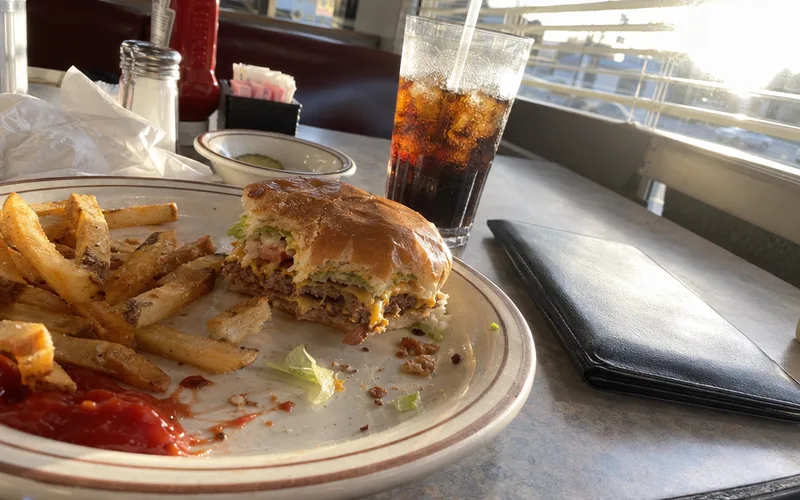
The guest already compared what they paid with what they got, so you don’t need to ask about prices directly.
- Best for: Owners who just raised prices or changed portions.
- Answer type: Great value / Fair / Overpriced.
- Tells you: Whether a price or portion change is quietly costing you regulars.
- First step: Ask it for the 4 weeks after any menu price change.
If “Overpriced” climbs, look at your best-selling dish before you touch the whole menu.
10. How Did You Hear About Us?
Ask first-time guests how they found you.
It’s the cheapest marketing report you’ll ever get.
- Best for: Newer restaurants and anyone paying for ads.
- Answer type: Friend or family / Google / Social media / Walked by / Other.
- Tells you: Which channels bring in new guests.
- First step: Put “Was this your first visit?” just before it, so regulars can skip it.
If almost nobody says “Google” or “Walked by,” you’re hard to find, and market research for your restaurant pays off before you spend more on ads.
11. How Likely Are You to Come Back?
Ask how likely the guest is to visit again.
It’s not the same as #2: a guest may love you and still not recommend a quiet diner to friends.
- Best for: Owners focused on repeat visits.
- Answer type: Very likely / Likely / Not sure / Unlikely.
- Tells you: Who might not return, while you can still change their mind.
- First step: Flag every “Unlikely” answer for a personal reply within a day.
12. May We Contact You About Your Answers?
End with permission to follow up, plus a box for email or phone.
This turns an anonymous score into a guest you can talk to.
- Best for: Any restaurant that wants to fix problems one guest at a time. Skip it if you promise anonymous answers.
- Answer type: Yes / No, with an optional contact box.
- Tells you: Who wants a reply.
- First step: Add a separate checkbox asking permission to send offers.
Each yes adds a name to your guest database, which later feeds your email list and loyalty programs. Keep the two permissions apart, so a guest who wanted a reply doesn’t get promos they never asked for.
Survey Questions Compared
Here’s how all 12 questions compare on answer type and the problem a low score points to:
| # | Question | Answer type | A low score points to |
|---|---|---|---|
| 1 | Rate your visit | 1-5 stars | The visit overall |
| 2 | Recommend us | 0-10 | Weak word of mouth |
| 3 | Rate your food | 1-5 | Recipe or temperature |
| 4 | Rate your server | 1-5 | Coaching or staffing |
| 5 | One thing to improve | Text | The specific fix |
| 6 | Wait time | 3 choices | Kitchen or floor speed |
| 7 | Order correct | Yes/No | Bagging and checks |
| 8 | Cleanliness | 1-5 | Cleaning schedule |
| 9 | Worth the price | 3 choices | Price or portion |
| 10 | How you heard | Multiple choice | Weak marketing channel |
| 11 | Come back | 4 choices | A regular at risk |
| 12 | Contact permission | Yes/No + box | Guests to follow up |
Numbers 1 through 5 are the survey. The rest are add-ons you swap in when one problem keeps showing up in the comments.
How to Write Survey Questions Guests Will Answer
Good restaurant survey questions ask about one thing at a time, in plain words, so the feedback points to one fix and the guest can answer in a second on a phone.
First, ask one thing per question. A combined food-and-service question forces a guest who loved the burger but waited 40 minutes to pick one answer.
Second, keep the wording neutral. Asking how much a guest loved your pancakes assumes they did, so unhappy guests skip it.
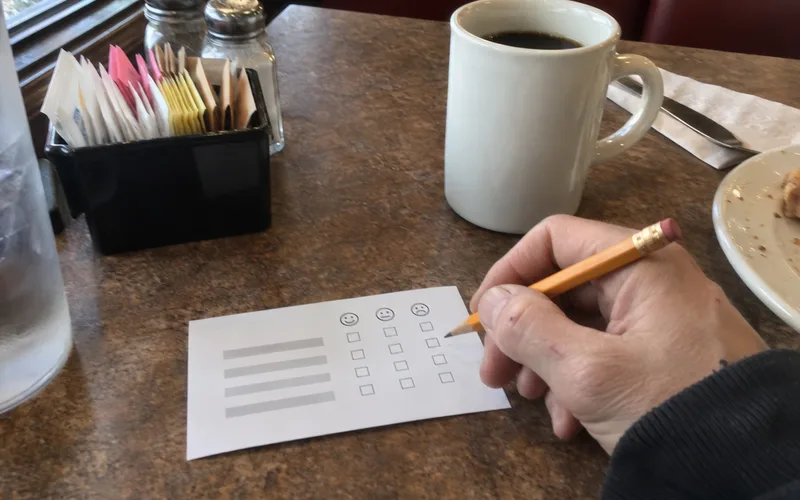
Third, keep the same wording and scale every time, or you can’t compare one month with the next.
A Free 5-Question Restaurant Survey Template to Copy
A restaurant customer satisfaction survey template only needs the core five questions, an intro line and a thank-you.
Paste this into any free form builder:
Thanks for eating with us! This takes about 1 minute.
- How would you rate your visit today? (1 to 5 stars)
- How likely are you to recommend us to a friend? (0 to 10)
- How would you rate your food? (1 to 5)
- How would you rate your server? (1 to 5)
- What’s one thing we could do better? (optional)
Thank you. We read every answer.
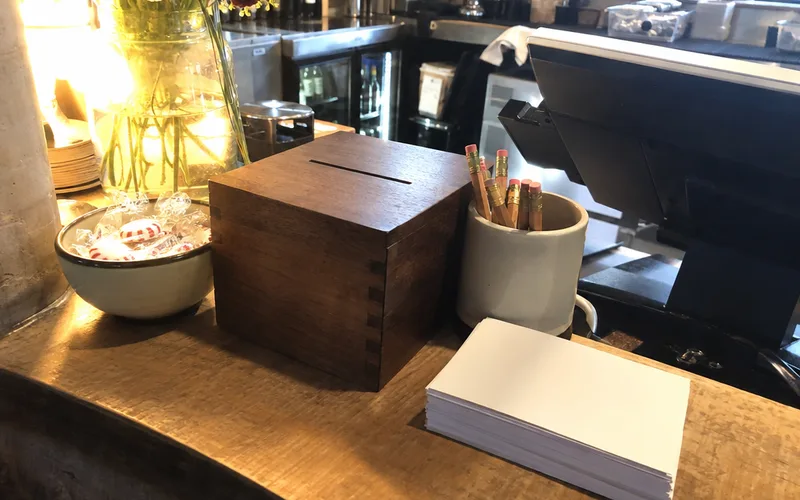
For guests who won’t scan a code, print the same questions on a half-sheet comment card with a line for the date and server. Keep a box by the register.
For takeout and delivery, swap #4 for a question about how easy ordering was, and add #7. SevenRooms builds its takeout questions around ordering, wait time and whether the food arrived warm.
How Many Questions Should a Restaurant Survey Have?
A restaurant survey should have 5 to 8 questions for standard post-visit feedback, the range SevenRooms recommends. Past 10, the company says, response rates drop.
So what about longer templates?
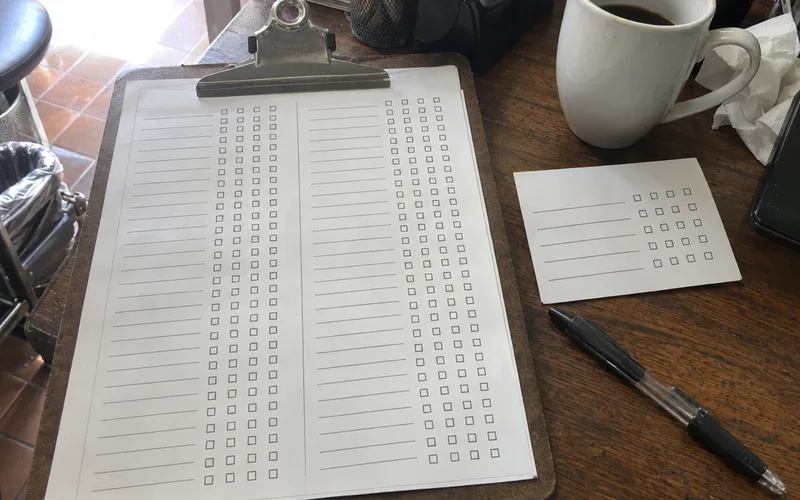
The SmartSurvey restaurant satisfaction template lists 15 questions and 5 minutes to complete. That’s fine for a one-off deep dive after a menu change, but it’s too long for a QR code on a busy Friday.
Three of those 15 ask about gender, age and how often the guest eats out, so drop them unless you’re planning a new concept.
When Should a Restaurant Send a Customer Satisfaction Survey?
A restaurant should send a customer satisfaction survey within 24 hours of the visit, as SevenRooms advises, while the guest still remembers their server and the room. Wait a week and you’ll get a star rating with no detail behind it.
Same-day is even better when you can manage it:
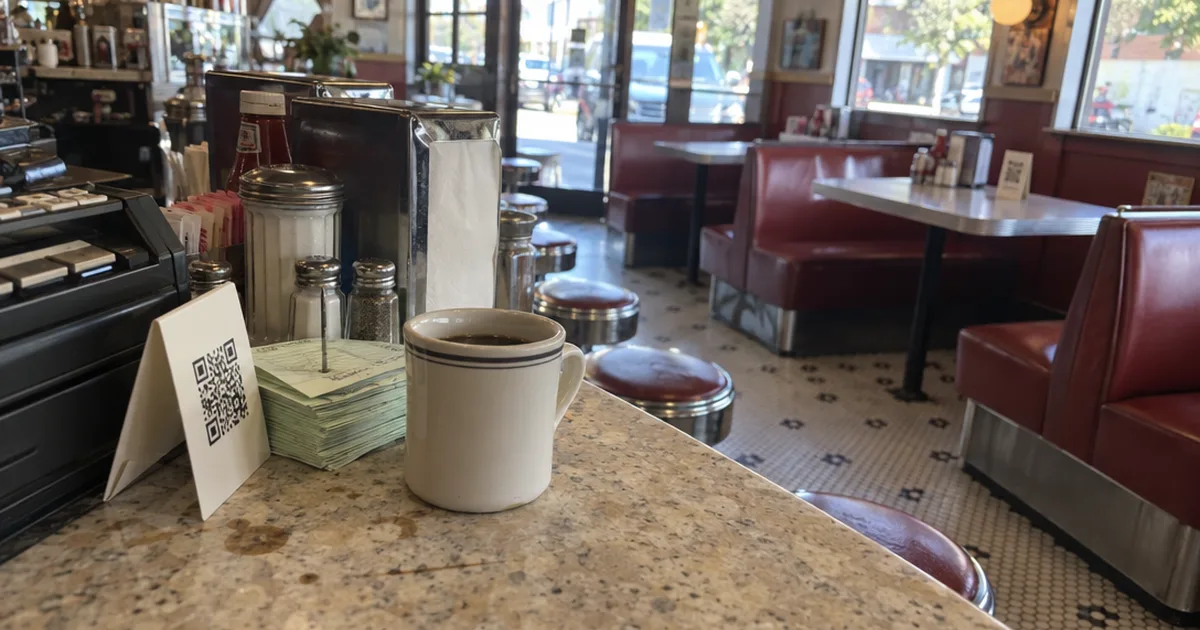
- Receipt or table QR code: the guest can answer before leaving or on the drive home.
- Email: an automatic send after the check closes reaches them that evening.
- Text (SMS): a short link the next morning catches lunch and dinner guests alike.
Don’t survey the same regular after every visit, though; once a month is plenty.
How to Get Guests to Fill Out Your Survey
Guests fill out restaurant surveys when the link reaches them easily by receipt QR code or email, the survey looks short and they get something small for finishing.
That receipt QR code reaches every paying guest at no extra cost. Add a table card for guests who never look at the receipt.
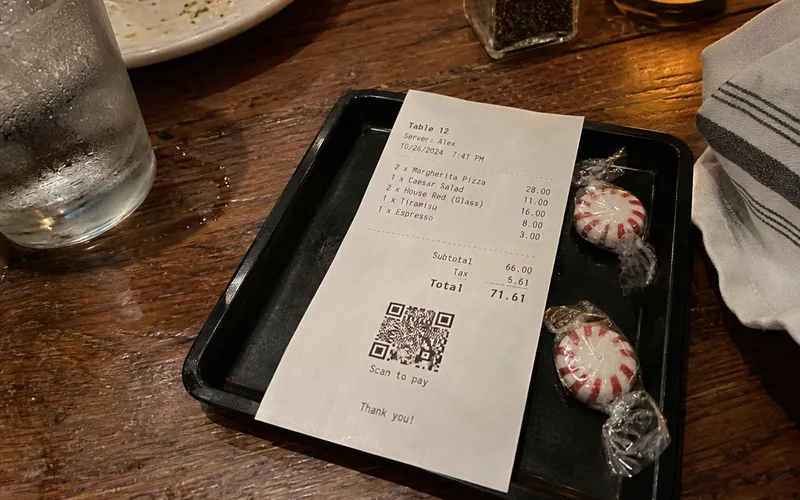
Then ask in person. Here’s what a server can say when dropping the check:
“If you’ve got a minute, the code on your receipt is a quick survey. I read the answers, and it helps us fix things fast.”
For guests already on your list, put the link in a thank-you note through your restaurant email marketing. A one-line link also fits your restaurant text marketing, as long as guests opted in.
Should You Offer a Reward for Completing the Survey?
Yes, a small reward for completing the survey is fine, as long as every guest gets it no matter what they answer.
Never tie the reward to a good rating. That turns your survey into a request for 5 stars, and the answers stop being useful.
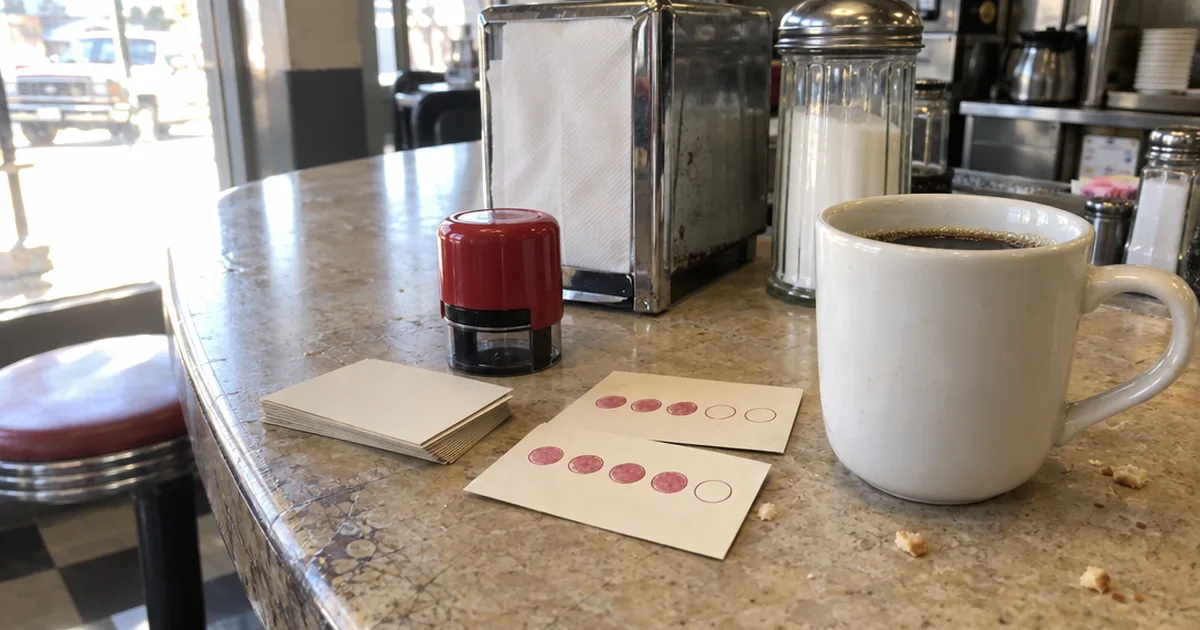
A reward that brings the guest back works best, like a stamp on their digital punch card for each finished survey. Loyalty programs make that simple, since the thank-you then counts toward a free coffee or dessert.
How to Score Your Survey Results
You score a restaurant customer satisfaction survey with two numbers: the percentage of guests rating their visit 4 or 5 (your CSAT) and your Net Promoter Score from #2. Compare both with your own last month, not with someone else’s average.
Here’s why.
Public benchmarks mix chains, fine dining and fast food, so your own trend is the fairer test.
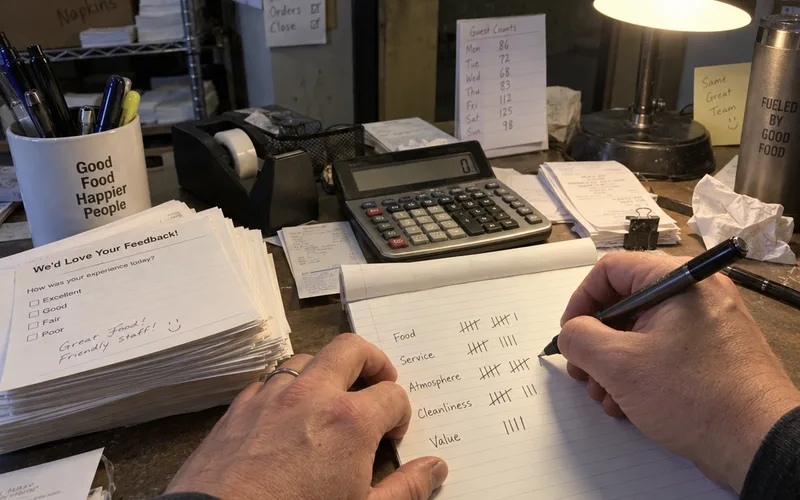
Track CSAT weekly and NPS monthly in a simple spreadsheet. When CSAT drops, read that week’s negative feedback in #5 first.
For a fuller system that also uses reviews and repeat visits, here’s how to measure customer satisfaction across your whole restaurant.
What to Do With Negative Survey Feedback
Reply to negative feedback from a survey within a day, apologize for the specific problem and give the guest a reason to come back. A fixed bad night often turns into a regular you’d otherwise have lost.
Speed matters more now. That BrightLocal finding means a few low public reviews can drop you below the line where nearly a third of consumers stop considering you.
A private survey answer lets you fix it first. Andrew Strickland, F&B manager at Gosford RSL, put it this way in a SevenRooms customer story:
“It’s a safety net where if a guest goes home unhappy, they let us know before posting on Google.”
Here’s what to send to a guest who gave a low score and left an email:
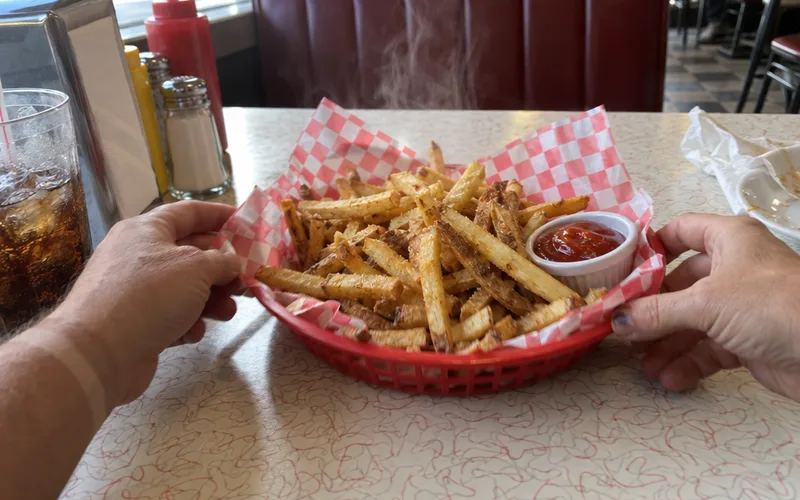
“Hi [Name], thanks for telling us about the cold fries on Tuesday. That’s not how we want your visit to go. Your next order of fries is on us, just show this email. I’d love another shot.”
Then fix the cause, not just the guest. A complaint that shows up 3 times in a month is a process problem, so raise it at the next pre-shift meeting.
For tougher cases, follow these steps to handle customer complaints. And if the guest already posted, here’s how to respond to negative reviews without making it worse.
Why Small Restaurants Should Run Surveys at All
Small restaurants should run surveys because public reviews mostly come from guests who loved or hated the visit, while survey feedback comes from everyone in between.
A 2025 report from SevenRooms found 59% of operators rely on third-party reviews to gauge how guests see them. But 56% now use feedback surveys and 53% use guest sales data for a more accurate view.
And the customer feedback you collect yourself is yours to keep, so every guest who agrees to a follow-up joins a database you can reach without a third-party app.
Need a tool? A free form builder is enough to start, and this roundup of restaurant customer feedback tools compares paid options once you outgrow it.
Frequently Asked Questions
What are 5 good survey questions for a restaurant?
Five good restaurant survey questions ask the guest to rate the visit, say how likely they are to recommend you, rate the food, rate the server and name one thing you could do better. That set covers the overall score, loyalty, food, service and one fix in about a minute.
How do you do a customer satisfaction survey for a restaurant?
You do a restaurant customer satisfaction survey by writing 5 to 8 short questions, putting them in a free online form and sending the link to guests within 24 hours of their visit. Share it with a QR code on the receipt, a table card, a text or an email, then read every answer each week.
What is the best free tool to make a restaurant survey?
The best free tool to make a restaurant survey is a free online form builder such as Google Forms, which works on phones and collects answers in a Google Sheets spreadsheet. Turn its link into a QR code for receipts and table cards.
What is a good NPS or CSAT score for a restaurant?
A good NPS or CSAT score for a restaurant is one that beats your own score from last month, because public benchmarks mix chains, fine dining and diners. Track both monthly, and treat any drop of a few points as a reason to read that month’s comments.
Final Thoughts
A restaurant customer satisfaction survey only has to do one thing: tell you about a bad night while you can still fix it.
Copy the 5-question template this week, put its QR code on your receipts and read every answer before Monday’s prep.