Restaurant guests want the same 5 things from your staff, whatever their age or income. Deloitte’s research found the importance of each one held consistent regardless of age, income, region, and gender.
So good restaurant customer service looks the same for the Friday family crowd and the Tuesday lunch regular. That’s great news for a small team.
You don’t need a different playbook for every guest. You need 1 clear standard, a few scripts for the hard moments and a 10-minute huddle to keep it sharp.
What Is Restaurant Customer Service?
Restaurant customer service is everything your staff do to look after a guest during a visit: the welcome, the seating, the order, the meal, any fixes, the check and the goodbye.
Your front of house team delivers most of it. That’s the hosts, servers, cashiers and bussers guests actually see.
But the kitchen and its chefs shape it too. A server can’t apologize their way out of a cold plate, so service starts with how the front and the kitchen talk to each other.
Here’s the deal:
Deloitte’s restaurant research says quality, value, cleanliness, location and staff are now the table stakes every restaurant must meet before guests will even consider it. In other words, good food and polite staff only get you in the running, and service is how you win the second visit.
The steps look different at a fast food restaurant counter than at a classic American sit-down diner. The job is the same: make each customer feel noticed, get the order right and make the next visit easy.
Why Customer Service Matters for a Small Restaurant
Customer service matters for a small restaurant because it decides whether a first-time diner comes back, and repeat guests keep an independent place busy on slow nights.
Big chain brands can outspend you on ads. They can’t easily outserve you, because your owner is in the building and your team knows the regulars.
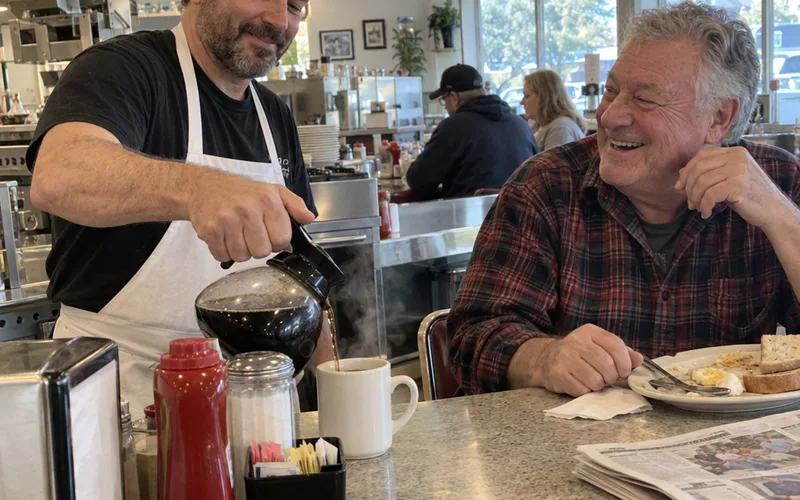
That makes service your cheapest marketing and the start of real loyalty.
A guest who leaves happy tells a friend, posts on Instagram and comes back on a Tuesday without a coupon. A guest who leaves annoyed does the opposite, and you rarely hear why.
So treat customer satisfaction as something you manage, not a feeling. It’s the first link in the chain that helps you keep regulars coming back, and the restaurant service research shows what a bad visit can cost.
The 5 Things Guests Want From Restaurant Staff
Restaurant customers want staff to engage them, hear them, empower them, delight them and know them, the 5 experiential elements Deloitte’s restaurant research names.
Each one turns into a simple behavior your team can practice:
- Engage me: Deloitte describes this as treating the guest in a friendly, authentic, hospitable and genuine way, as a person. For your servers, that means eye contact and a real hello, which builds rapport fast.
- Hear me: Listen before you talk. Repeat the order back and catch the allergy the first time.
- Empower me: Deloitte includes valuing the guest’s feedback and responding to it in an appropriate way. So when someone says the salsa was too hot, say what you’ll do about it.
- Delight me: Give one small moment they didn’t expect, like a taste of a new special for a guest who can’t decide.
- Know me: Deloitte’s “know me” element is remembering the guest and their preferences and anticipating their changing needs. That’s personalization, and a regular’s usual order, ready to confirm, does it in 5 words.
Notice what’s missing from that list.
Nothing on it costs money. Every one of the 5 is a habit, so you can train it, check it and improve it every week.
The Steps of Service in a Restaurant
The steps of service in a restaurant are greet, seat, take drinks, take the food order, serve, check back, clear, offer dessert, bring the check and invite the guest back.
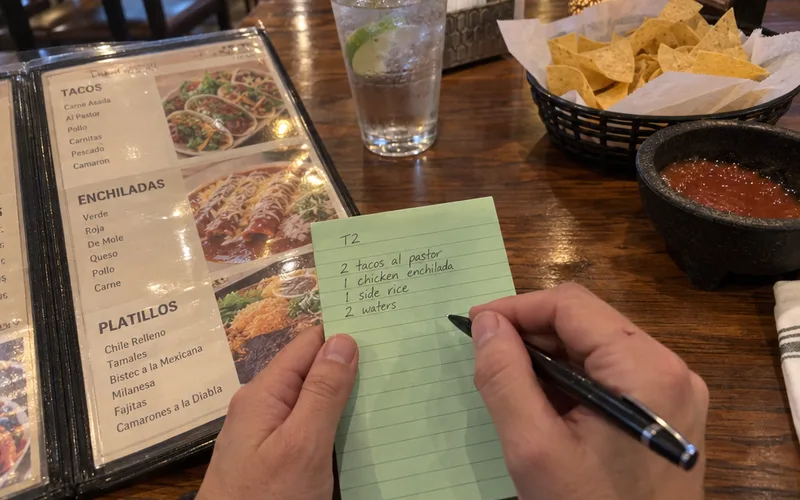
Here’s what a good experience looks like at each one:
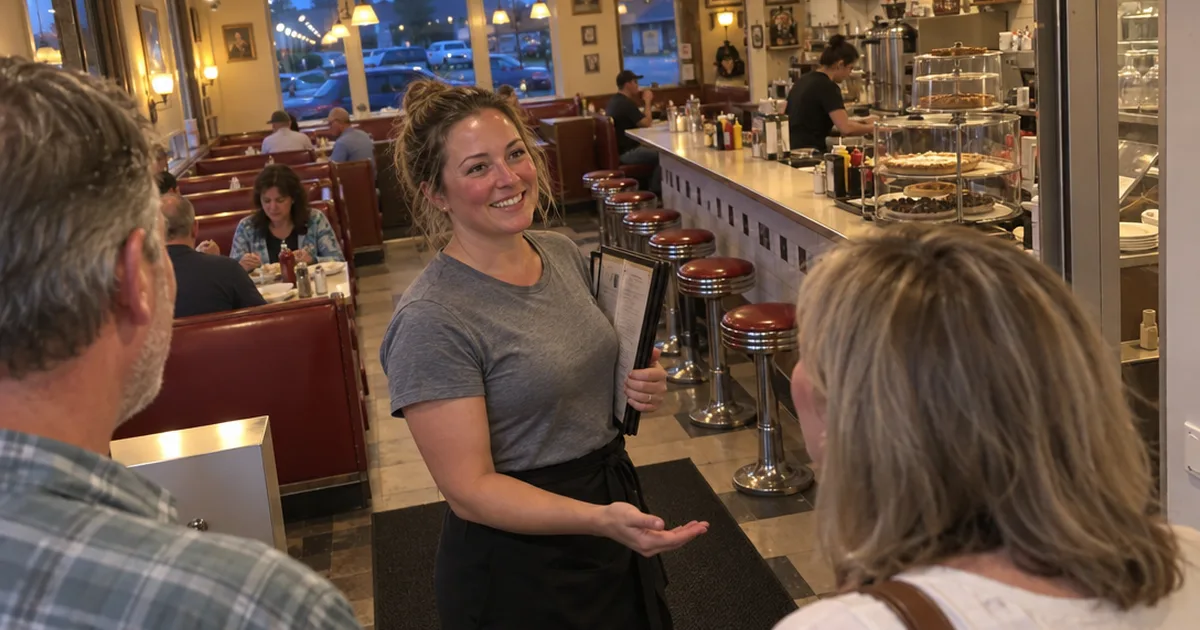
- Greet. Say hello the moment a guest walks in, even when you’re busy: “Hi, welcome in! I’ll be right with you.” A short welcome message the whole team uses keeps it warm on hectic nights.
- Seat. Pick the table with the guest in mind: a quiet booth for a couple, space for a stroller, a clear path for a wheelchair. Good wheelchair accessibility is part of service.
- Take drinks. Get drinks moving fast so the table relaxes while they read the menu.
- Take the food order. Ask about allergies and repeat the order back before it goes to the kitchen.
- Serve. Bring each plate to the right person without asking “Who had the burrito?”
- Check back. Return after the first few bites with a specific question: “How’s the green chile? Too hot?”
- Clear. Take empty plates as people finish so the table never looks abandoned.
- Offer dessert. Suggest one thing by name instead of asking “Any dessert?” These simple upselling techniques feel helpful when they’re specific.
- Bring the check. Drop it as soon as the guest asks, and take cash, cards or digital wallets without fuss.
- Invite them back. Thank them and give a reason to return, like Thursday’s special.
Pick target times for the steps guests notice most, like the greeting and the check, and write them into your standard.
How the Steps Change at a Counter or Pizzeria
Counter-service spots squeeze those 10 steps into 4: greet, take the order, hand it over and thank the guest.
That makes each one count more. The cashier is the host, the server and the goodbye, often in about 2 minutes.
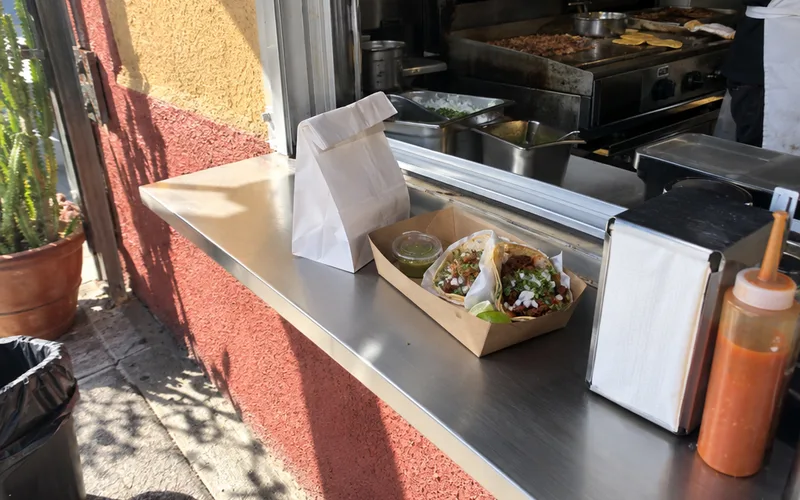
So repeat the order back, call the name clearly at pickup and say “See you next time” like you mean it.
6 Examples of Good Restaurant Customer Service
Good restaurant customer service examples include remembering a regular’s order, warning guests about a wait, guiding an allergy, remaking a wrong dish without fuss, splitting a check with a smile and thanking guests by name.
Here’s how each one sounds:
- The regular’s order: “The usual, Maria? Carnitas, no onions?” One line builds more loyalty than any coupon.
- The honest wait: “Entrées are running about 25 minutes tonight. Want an appetizer to start?” Guests forgive a wait they were told about.
- The allergy guide: A server who knows which dishes are made without nuts saves a family with children a stressful night.
- The no-argument remake: “Sorry, that’s not what you ordered. A fresh one is on the way.”
- The easy split check: Splitting a bill 4 ways without a sigh is service, even if it takes an extra minute.
- The thank-you by name: “Thanks, Ray, see you Friday” beats “Have a nice day” every time.
Each example takes seconds, but each one shows the guest you were paying attention.
That attention can continue after the visit, too. A short note is an easy way to thank a customer after a visit, especially after a big party.
Customer Service Skills Restaurant Staff Need
The 6 customer service skills restaurant staff need most are active listening, menu knowledge, empathy, attention to small cues, calm under pressure and teamwork with the kitchen.
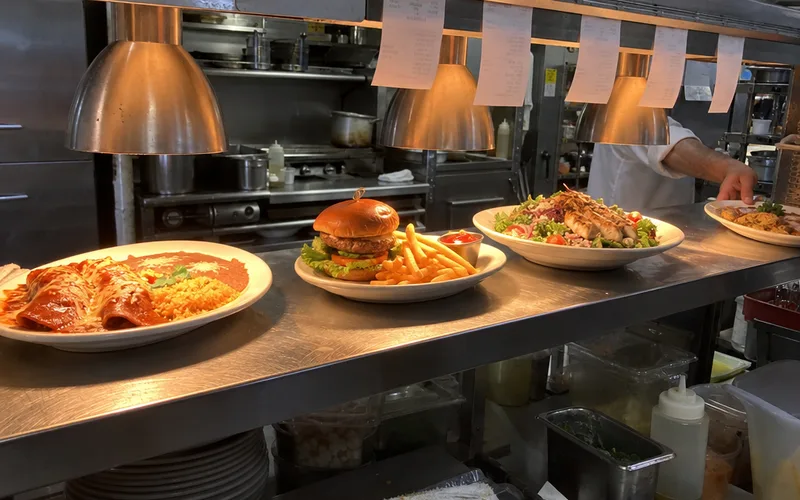
Here’s what each one means on the floor:
- Active listening: Hear the whole request before answering, then repeat it back.
- Menu knowledge: Know what’s in every dish, what can be made without cheese, which wine or beer goes with the special and what a tourist should try first.
- Empathy: Picture the night from the guest’s chair, whether it’s a first date or a tired parent with a toddler.
- Attention to nonverbal cues: Notice the guest looking around for help or the half-eaten plate.
- Calm under pressure: Keep your voice and facial expressions friendly, and stay in problem-solving mode when the ticket rail is full.
- Teamwork: Run food or refill drinks for any table, and keep communication with the kitchen clear so chefs don’t have to guess.
Most of these skills are taught, so the owner’s job is to show staff what good looks like, not to hope they already know.
How to Train Restaurant Staff in Customer Service
Restaurant staff can learn customer service without a training department in 4 steps: a 1-page standard, a 10-minute pre-shift huddle, role-play for hard moments and a shadow shift for new hires.
Here’s how to run each one:
- Write a 1-page standard. List your steps of service, your greeting, your check-back question and your goodbye. One page gets read.
- Hold a 10-minute huddle. Cover the specials, the 86’d items, big reservations and 1 service point to focus on that night.
- Role-play the hard moments. Have 2 staff act out a wrong order or a long wait while the team watches, then swap.
- Shadow before solo. Pair each new hire with your best server for their first shifts so they learn the rhythm, not just the rules.
Here’s a huddle script you can use tonight:
“Tonight’s focus is the check-back. After the first few bites, ask 1 specific question about the food. If something’s wrong, come get me right away.”
Say you run this every shift for a month. That’s about 20 short lessons, far more practice than one training day could give.
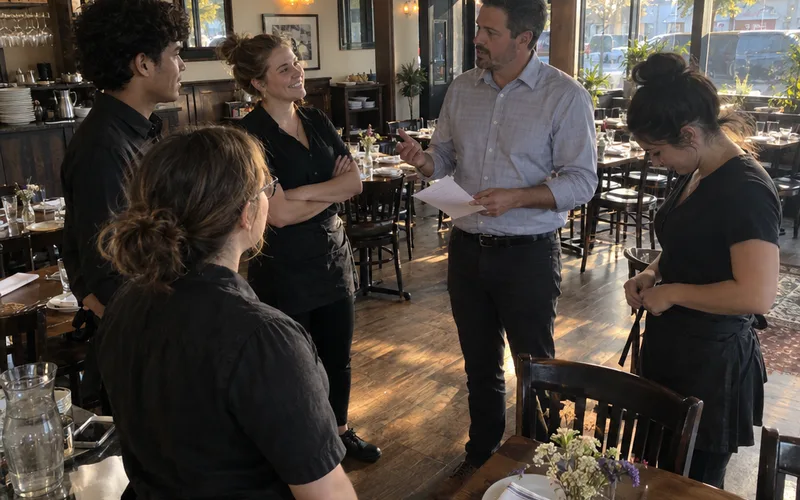
Look after the team, too. Fair schedules, a real break and a thank-you at close show staff the care you want them to show guests.
Pro Tip: Praise the behavior in front of the team when you see it. A small incentive, like first pick of next week’s shifts, beats a lecture about what went wrong.
How to Handle a Complaint or a Wrong Order
A restaurant should handle a complaint or wrong order by listening to the whole problem, apologizing without excuses, fixing it right away and checking back once the fix arrives.
Most guests don’t need a perfect experience. They need to see that someone cares and acts fast.
Here’s what to say:
“I’m really sorry about that. Let me get the kitchen started on a fresh one right now, and I’ll bring it out myself.”
Then do exactly that. A quick manager visit afterward shows the guest it mattered beyond one server.
That’s Deloitte’s “empower me” element at work: guests want you to value their feedback and respond in an appropriate way.
Skip the debate about who made the mistake. Guests hear excuses as “not our problem,” so the fix and the follow-up are what they remember.
For bigger problems, use a full complaint process for conflict resolution, so every manager handles them the same way. And if the complaint shows up online first, reply to a bad review calmly and in public.
When to Remake, Comp or Refund a Meal
A restaurant should remake a meal that’s wrong or cold, comp it when the guest no longer wants it or waited too long, and refund only when an order never arrived as promised.
A clear rule is real staff empowerment, and it protects your margins too. Without one, servers either give everything away or freeze while the guest waits.
Here’s a simple 3-level rule you can adapt:
- Server’s call: Remake any dish, or comp a drink or dessert, with no approval needed.
- Manager’s call: Comp an entrée or take a percentage off the check.
- Owner’s call: Refund a full order, usually takeout or delivery that never arrived right.
Say you let servers comp up to $10 on their own. That covers most small fixes on the spot, and the guest never watches anyone hunt for permission.
Note: Write down every comp and the reason. A pattern on 1 dish or 1 shift shows you where the real problem is.
Customer Service for Takeout and Delivery Orders
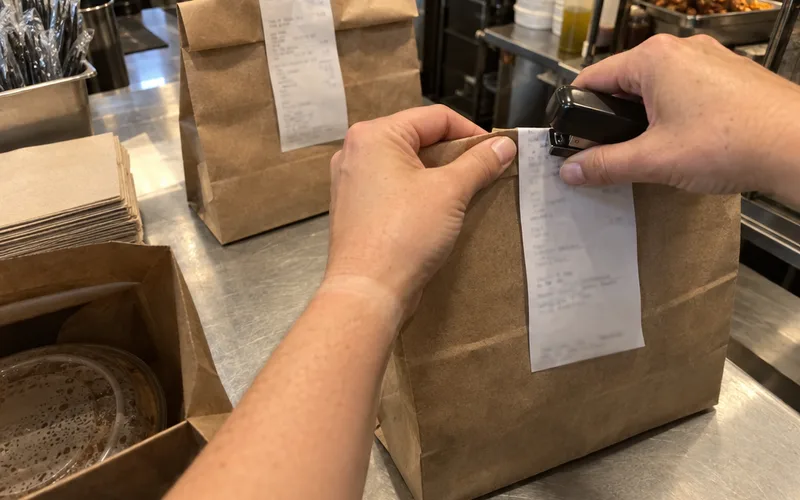
Customer service for takeout and delivery orders comes down to accurate orders, honest ready times, sealed and labeled bags and a fast fix when something arrives wrong.
The consumer still judges your restaurant, even when a driver handed over the bag.
So check every bag against the ticket before it leaves the kitchen, and label each container.
What about delivery apps?
Grubhub’s partner blog says all Grubhub Guarantee Perks are funded 100% by Grubhub, not by the restaurant. That perk may calm a guest about a late order, but it doesn’t change their opinion of your food.
So when a guest calls about a wrong order, own it:
“That’s on us. I can remake it now for pickup, or credit you on your next order. Which works better?”
For orders from your own website, send a short email the next day to anyone whose order had a problem. That keeps the relationship with you, not the app.
Common Restaurant Customer Service Mistakes
The restaurant customer service mistakes to watch for are interrupting guests, making substitutions feel like a burden, uneven service between shifts, staff venting within earshot and ignoring the counter while on the phone.
All 5 are easy to fix once you spot them:
- Interrupting: Wait for a pause before stepping in. A great server adds to the experience, never breaks into it.
- Grudging substitutions: “No problem, I’ll swap the beans for rice” costs nothing.
- Shift-to-shift swings: If Friday night feels different from Sunday lunch, your standard isn’t on paper yet.
- Venting in earshot: Guests hear more than staff think, especially near the pass.
- Phone over people: Greet the guest in front of you with a nod before you finish the call.
Consistency is the mistake hiding behind all the others. A guest who gets great service once and an average experience next time often decides the second visit was the real you.
How to Check Your Restaurant’s Customer Service
Restaurant owners can check their customer service cheaply by eating a meal as a guest, sending a friend in as a mystery shopper, reading every review weekly and asking guests 1 question at the register.
Eat in your own dining room at a busy hour, and watch other tables, not just yours. Staff will treat you well, but the table next to you tells the truth.
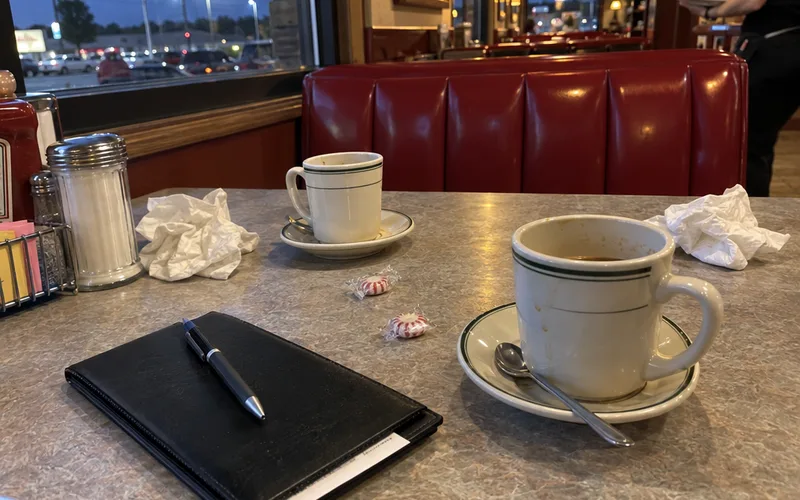
For a cheap mystery shop, pay a friend the staff doesn’t know back for their dinner. Give them 5 questions to answer afterward, like how long the greeting took.
Then read every review once a week and note any repeat complaint.
QR codes printed on receipts let guests answer that same question later, on their phones. For a fuller system, here’s how to measure customer satisfaction with surveys and simple scores.
Key Takeaway: Pick 1 thing to check each month, fix it and check again.
How Good Service Turns First-Time Diners Into Regulars
Good service turns first-time diners into regulars when the second visit feels warmer than the first: staff remember the guest, the guest has a reason to return and the invitation back is specific.
That’s Deloitte’s “know me” element again, put to work.
Your staff can’t remember everyone, so give them help. Keep a short note on regulars in your POS or reservation book, like “allergic to shellfish” or “always orders the flan.”
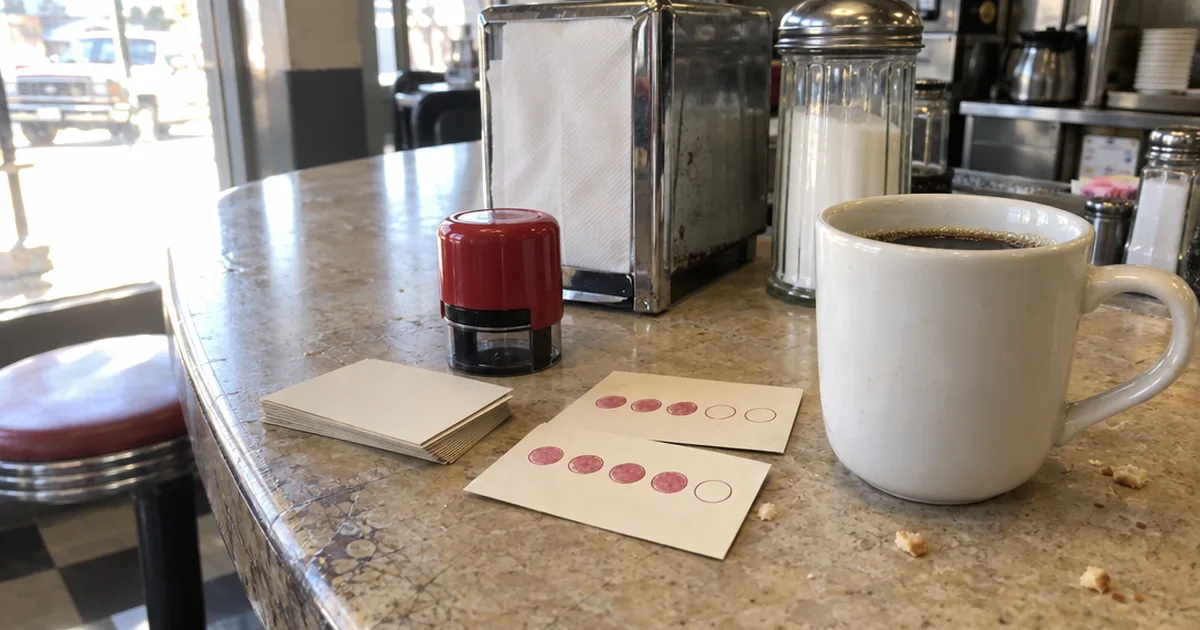
A loyalty program does the rest. A digital punch card in Apple Wallet or Google Wallet gives a first-time guest a reason to return and shows staff who’s on visit 3 versus visit 30.
Loyalty starts with service, and a reward simply gives a happy guest one more nudge to return.
The wider restaurant customer experience matters too, but service is the part your team controls, and gratitude at the goodbye is free.
The One Habit to Start This Week
Restaurant customer service is built shift by shift, not in one big training day.
Write your 1-page service standard this week and read it out at your next pre-shift huddle.
Frequently Asked Questions
How do I offer a better service to customers in a restaurant?
Better restaurant service starts with 3 habits: greet every guest quickly, repeat every order back and check back after the first few bites. Write those 3 into a 1-page standard and coach them at every pre-shift huddle until they happen without reminders.
What does customer service do in a restaurant?
Customer service staff in a restaurant welcome guests, seat them, take and deliver orders, answer menu questions, fix problems and handle payment. In a small restaurant, one person often covers several of those jobs in a single shift, so everyone needs the same standard.
What should a restaurant customer service email say?
A restaurant customer service email should thank the guest by name, repeat their exact problem in a line, say what you did to fix it and give them a direct way to reach you. Keep it short and sign it with a real person’s name, not “The Management.”
Do customers tell the waiter when their food is wrong?
Some customers don’t tell the waiter when their food is wrong; they finish what they can, pay and quietly decide not to return. A check-back after the first few bites gives a quiet guest an easy moment to speak up while you can still fix it.