Professional chefs have already predicted the hottest menu trends for 2026. That’s the 2026 What’s Hot Culinary Forecast from the National Restaurant Association, an easy place to start your market research for a restaurant.
The rest of what you need is closer than you think: your street, your competitors and the guests already eating with you. Below are 7 steps from industry trends to a decision, plus survey questions to copy.
- Best for: Owners planning a new spot, a new menu or new hours. Skip it if you only need guest satisfaction scores.
- Cost: Free if you do it yourself.
- Time: 2-4 weeks for a first pass, a few hours a week.
- First step: Write the one question your research must answer on a blank page.
What Is Restaurant Market Research?
Restaurant market research is gathering facts about your diners, competitors and local demand, so you pick a concept, menu, prices and location with data instead of a guess. A full market analysis looks at demand, competition and trends in your whole area, not only at the people already inside.
Market research comes in 2 kinds. Qualitative research asks a few people why they choose what they do, through interviews and focus groups.
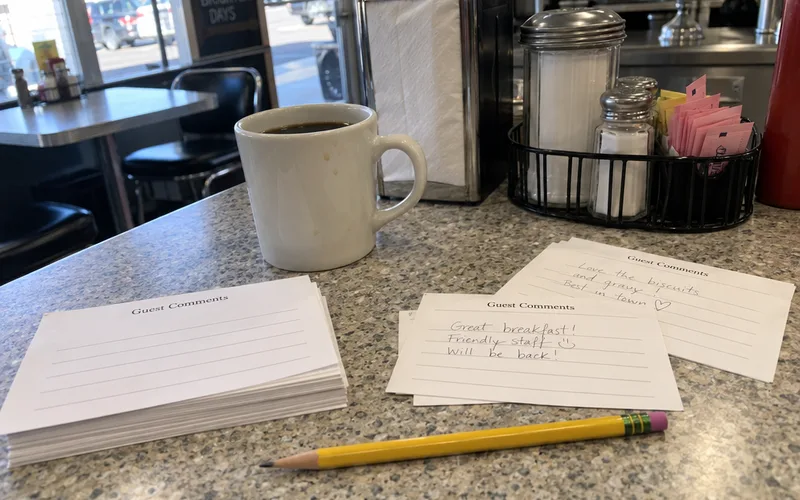
Quantitative research counts answers from many people, usually with a survey, so you can tell how common a preference is.
A focus group tells you why diners skip your block at lunch. A survey tells you how many of them feel that way.
How to Do Market Research for a Restaurant Step by Step
Market research for a restaurant takes 7 steps: set a goal, read industry trends, map your trade area, study competitors, pull your sales data, survey your target market and run a focus group. The first 5 need no diner interviews at all.
Step 1: Write Down the Decision You Need to Make
Market research goes wrong when it tries to answer everything at once.
So start with one decision, like opening for weekday lunch or adding a second location.

Then list 3 to 5 questions that decision depends on, like who would come, what they’d pay and who they’d pick instead of you.
That decision is your research goal, and any data that doesn’t serve it can wait.
Step 2: Read the Latest Industry Trends
Industry research and economic indicators tell you which way consumers and costs are moving before you study your own block.
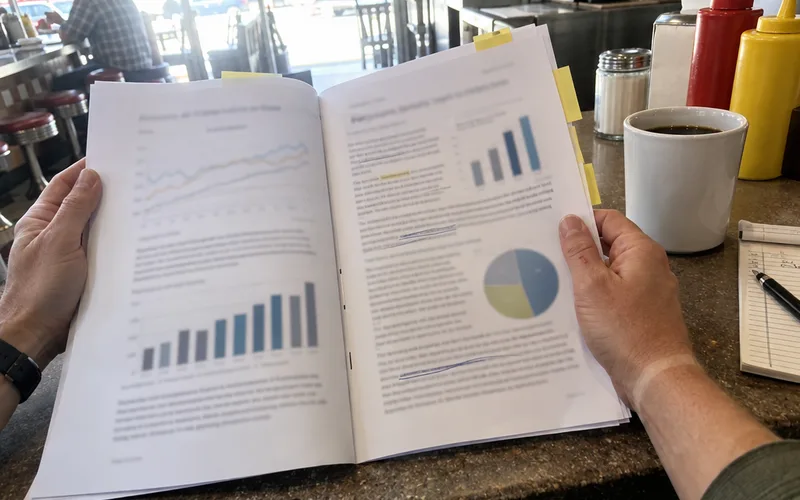
The National Restaurant Association conducts research that tracks current and future restaurant industry trends, from menu trends to technology changes. Its State of the Restaurant Industry 2026 report covers what’s ahead for operators, consumers and the industry this year.
Two more reports from the association are worth a look:
- The Restaurant Technology Landscape Report 2024 shows which technologies customers in each restaurant segment want, and where operators plan to invest.
- The Restaurant Performance Index tracks current and expected business conditions, so you can see whether the sector is growing or shrinking.
Write down 2 or 3 shifts in consumer preferences that touch your concept, like more vegetarian meals, sustainability or takeout. You’ll test them against your own diners in Step 6.
Step 3: Map Your Trade Area and Its Demographics
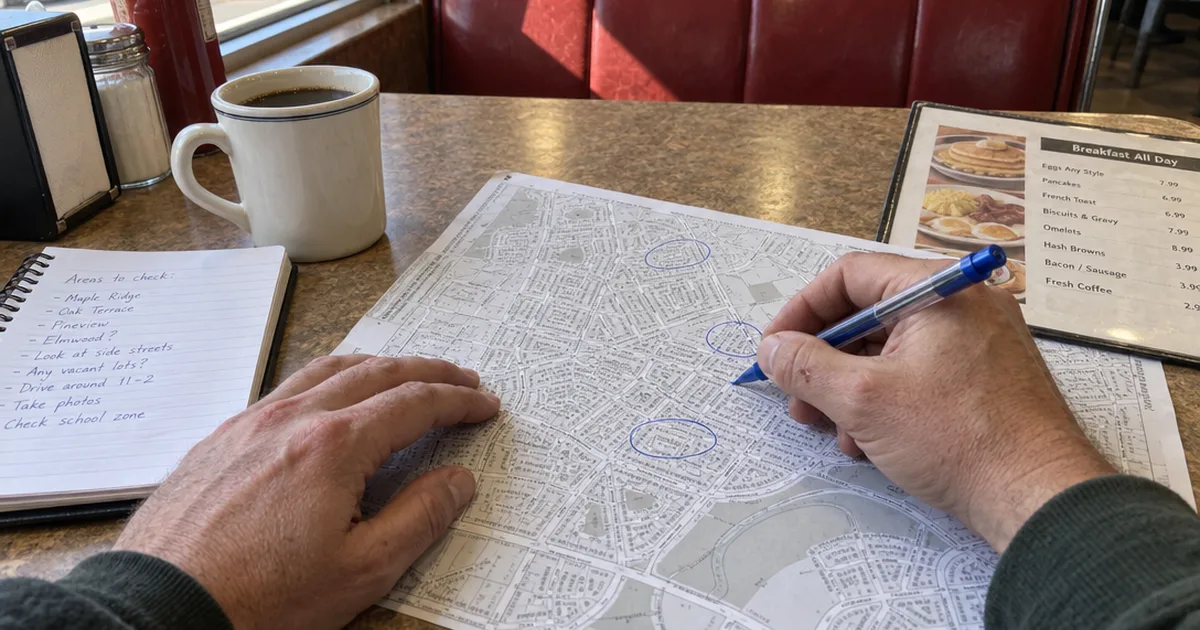
A restaurant trade area is the zone most of your guests come from. You analyze it by mapping who lives and works there, how they travel and where they eat now.
Open Google Maps, drop a pin on your address and look at what sits within a short walk or drive. Offices, schools, gyms and homes tell you when people pass by and why.
Then pull the numbers for your market analysis. The U.S. Census Bureau gives free demographic information, such as age and income, for your county or ZIP code.
Demographics tell you who lives nearby. Psychographics, like lifestyle, values and dining behaviors, tell you why they eat out, and your survey in Step 6 covers that part.
Here’s what to record for the area:
- Who lives there: age, gender, household size and income
- How people arrive: parking, transit and foot traffic
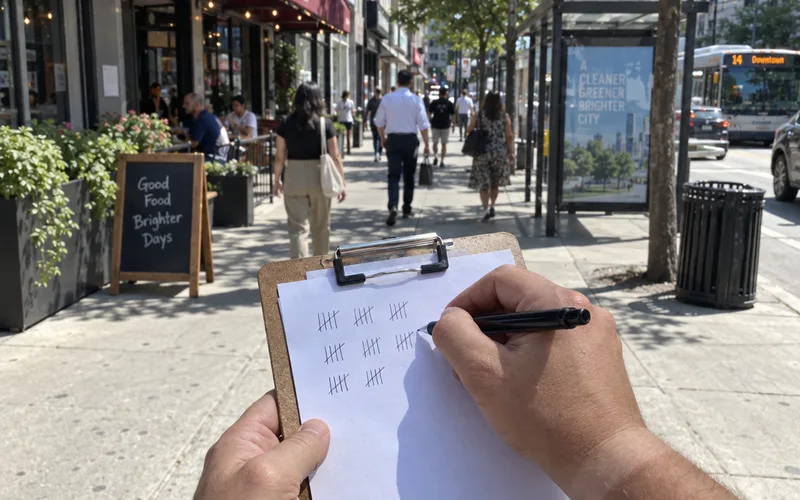
- When it’s busy: count passers-by for 15 minutes at lunch and at dinner
Do the counts on 2 different days. One rainy Tuesday can make a busy corner look dead.
Step 4: Size Up Your Competitors
A restaurant competitor analysis compares rivals that chase your diners on menu, prices, reviews and busy hours. The goal is to find the gap they leave open.
Start with 2 lists. Direct competitors serve a cuisine like yours to the same crowd.
Indirect competitors win the same meal another way, like a fast food chain, a bakery or a sandwich shop at midday.
Then visit 3 to 5 of them and score each one on the same things:
- Menu and price range
- Busiest and slowest hours
- What reviews on Google and Yelp praise and complain about
- How they market their brand: social media, flyers, loyalty programs
- What they do that you can’t, or won’t
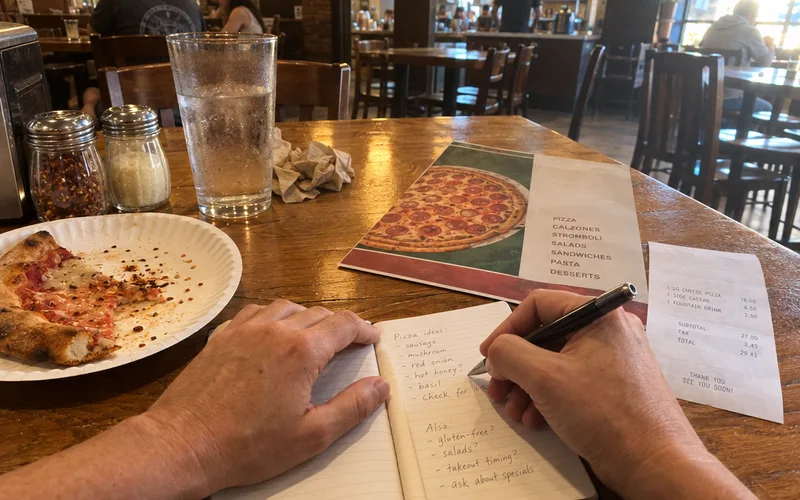
Eat there at the times you’d want to be busy. The competition is easier to read with a fork in your hand than from their website.
Look for the complaint that keeps coming up in their reviews. That repeated gripe is often your opening.
Step 5: Pull the Data You Already Have
An open restaurant already holds its best market research data. Point-of-sale reports, loyalty program records and reviews show what guests buy, when they come and why they return.
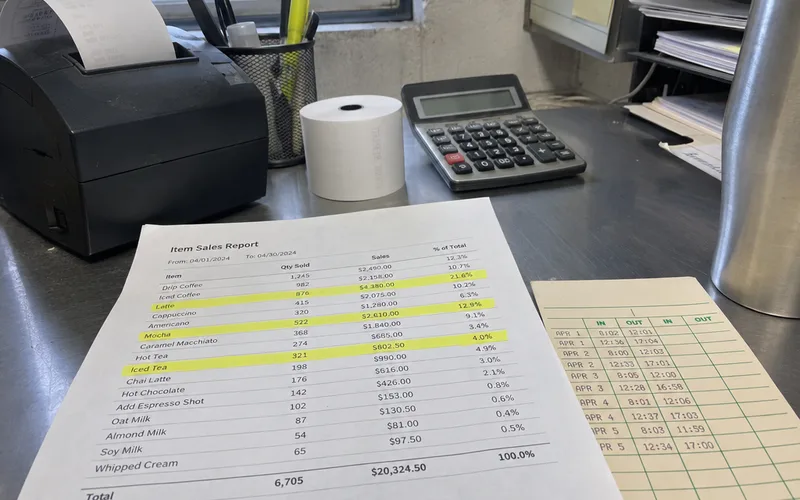
Run a sales report for the last 90 days and note your 5 best sellers, your slowest hours and your average check. If you run a punch card or wallet loyalty program, count how many guests return within a month.
Reviews add the feedback behind the numbers. Read your last 50 and tally what people mention most.
This step is free and covers real diners, not maybe-someday ones. The guest data you collect at the counter makes it sharper every month.
Step 6: Survey Your Target Market
A survey is quantitative research: you ask many people the same short set of fixed-choice questions, so you can measure demand across your target market.
Build your questionnaires free in Google Forms and keep them short. Use closed questions, like multiple choice and Likert scale ratings (agree to disagree), because they’re quicker to answer and easier to count.

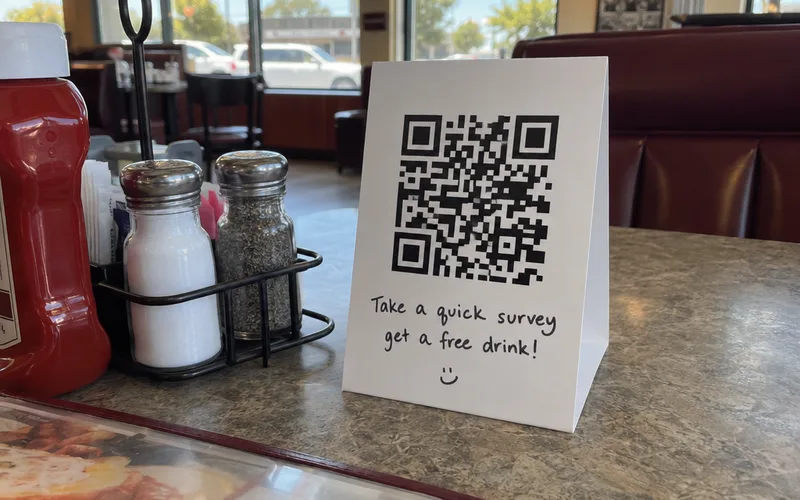
Share it with a QR code on receipts, a social media post and your email list. A small reward, like a free drink next visit, gets more people to finish it.
Step 7: Run a Small Focus Group
A restaurant focus group is a recorded, guided conversation with a small group of people from your target market about your concept, menu or service.
Here’s how to run one:
- Pick one goal, such as testing 3 new dishes.
- Invite people who match your target diners, not your friends.
- Hand out a short demographic form and a release form that explains you’re recording.
- Ask 10 to 12 open questions, moving from broad to specific.
- Listen back to the recording and note what more than one person said.
Thank everyone with gift cards or a meal on the house.

Repeated answers matter most.
One loud guest isn’t a trend, but 3 quiet ones saying the same thing usually is.
Market Research Survey Questions to Copy
A restaurant market research survey should ask who the person is, how they eat out, what they want and what would make them choose you, in about 8 questions.
Copy these into your form:
- What is your age range? (Under 25 / 25 to 39 / 40 to 59 / 60+)
- Do you live, work or study near [your street]?
- How often do you eat out or order takeout? (Rarely / Monthly / Weekly / Several times a week)
- Which meal do you most often buy out? (Breakfast / Lunch / Dinner / Late night)
- How much do you usually spend per person on that meal?
- What matters most when you pick a place? (Price / Speed / Taste / Healthy options / Atmosphere)
- What would make you try a new restaurant on this block?
- Would you join a rewards program for a free item after a few visits? (Yes / No / Maybe)
Avoid leading questions that push people toward the answer you hope for. Ask what would bring them in, not whether they’d love your idea.
For guests who’ve already eaten with you, a customer satisfaction survey asks a different set of questions about food, service and value.
Where to Find Free Restaurant Market Research Data
Free restaurant market research data comes from the National Restaurant Association, the U.S. Census Bureau, Google and Yelp reviews and your own point-of-sale system.
The association publishes restaurant industry statistics at the national and state levels, including the size of the industry in your state. The Census Bureau covers population, age and income by area.
Reviews show what diners like and dislike about every restaurant near you. Your POS adds sales by item and hour, plus repeat-guest counts if you run a loyalty program.
Your local chamber of commerce can also tell you what new offices or housing are planned nearby.
A Market Research Example for a Small Restaurant
A hypothetical example of market research for a small restaurant is a family taqueria using all 7 steps to decide whether to open for weekday lunch.
- Decision: Should we open at 11 a.m. on weekdays?
- Trends: The owner picks 2 industry trends to test with office workers.
- Trade area: A map shows 2 office buildings and a college within a 5-minute walk.
- Competitors: Reviews of a nearby sandwich shop and pizza place complain about slow lines.
- Own data: POS reports show a takeout rush at 5 p.m. from office workers heading home.
- Survey: Say 60 people answer the QR-code survey and 35 work nearby and buy lunch out weekly.
- Focus group: 6 office workers try 3 plates; all 6 ask for something ready in under 10 minutes.
The decision writes itself: open for lunch with a short, fast menu and a punch card to bring workers back.
How Much Does Restaurant Market Research Cost?
Restaurant market research costs little more than your time when you do it yourself, because census data, review sites, Google Forms and your POS reports are free or already paid for.
Money comes in when you hire help. Survey tools can sell you targeted respondents, and market research firms will run surveys, focus groups and concept tests for you, priced per project.
For most small restaurants, doing it yourself is enough. Put spare money into the marketing budget that acts on what you learn.
How Often Should a Restaurant Do Market Research?
A restaurant should do a full round of market research at least once a year, and again whenever something big changes, like a new competitor, a sales drop or a new menu.
In between, keep the light checks going. Read new reviews weekly, glance at competitors monthly and look at your POS trends every quarter.
Turn Your Findings Into Decisions
Market research pays off only when each finding changes your menu, prices, hours or marketing.
Sort what you learned into a simple SWOT analysis, then pick the 1 or 2 changes with the clearest support.
A menu finding feeds your menu engineering, a price finding feeds your pricing strategy, and the rest goes into your restaurant marketing plan. Those changes are where restaurant marketing on a small budget starts filling seats.
Frequently Asked Questions
How do you research the market before opening a restaurant?
You research the market before opening a restaurant by checking industry trends, mapping the trade area around your site, scoring nearby competitors and surveying people who live or work close by. Do all of it before you sign a lease, since the location is the hardest thing to change later.
Is market research or gut feeling better when opening a restaurant?
Market research is better than gut feeling for the decisions that cost money, like location, prices and opening hours. Let your gut pick the concept and the feel of the place, then use surveys, competitor visits and local data to check that enough diners want it.
Is there a market research template for restaurants?
A restaurant market research template can be a simple spreadsheet with one tab per step, from trends and trade area to survey results and decisions. Add the survey questions from this guide to a free online form and the template is ready.
Final Thoughts
Good market research for a restaurant is just a habit of checking your hunches against real diners before you spend money on them.
Pick the one decision you’re stuck on this week, write it at the top of a page and start with Step 1.