Restaurant prices rose 6.9% in one year, the most since 1981. That was March 2022, in Bureau of Labor Statistics data reported by Restaurant Business, and one consultant predicted owners would stop raising prices and start reworking their menus instead.
That rework has a name: restaurant menu engineering. Below, you’ll get the formula, the 4 categories every dish falls into, a worked diner example and the exact moves for each category.
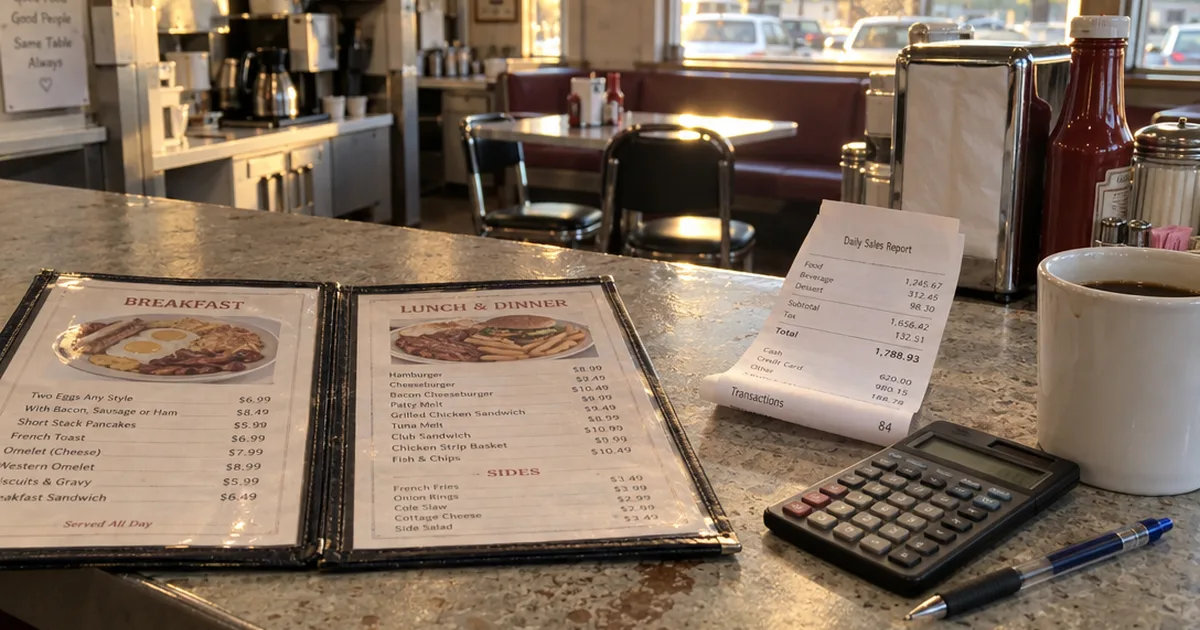
You don’t need menu management software or a consultant. A spreadsheet and your sales report are enough.
- Best for: Independent restaurants with at least a few weeks of item sales in their register. Skip it if your menu changes every day, like a chalkboard of specials.
- Cost: Free. You need a spreadsheet, your recipes and your sales report.
- Time: This week for the first analysis of one menu section.
- First step: Export last month’s item sales report from your register and pick one section, such as entrées.
What Is Restaurant Menu Engineering?
Restaurant menu engineering is a method for pricing and arranging your menu based on two numbers for every dish: how much money it leaves you after food cost, and how often guests order it. Baker Tilly, a national advisory firm, describes menu engineering as a strategic approach to designing and pricing a menu to maximize profitability, in March 2025 guidance by restaurant consultants Brian Campbell and David Foster.
In other words, you stop guessing which dishes “do well.”
Instead, you measure each one. An item can be your best seller and still earn you less per plate than almost anything else on the menu.
Menu engineering mixes 3 skills:
- Cost math: what each plate costs you to make.
- Sales data: how many of each item you sold.
- Menu psychology: how the layout, prices and descriptions steer customer behavior.
The goal isn’t a cheaper menu or a pricier one. It’s a menu where the dishes that earn the most get ordered the most.
Why Engineer Your Menu Instead of Raising Prices?
Menu engineering lets a restaurant improve its profit dish by dish instead of raising every price at once, which matters when guests are already watching their checks. Restaurant Business reported that the 6.9% jump in restaurant prices for the year ending March 2022 was the highest since December 1981, and the same report found restaurant inflation up 11.7% since 2019.
So consumers have already seen years of rising menu prices.
Another blanket increase is a hard sell. Restaurant consultants Foster and Campbell put it plainly: “Simply raising prices can alienate guests as can cutting portion sizes.”
In fact, consultant Dan Varroney, president and CEO of Potomac Core, told Restaurant Business in April 2022:
“I think restaurants will be severely restrained from increasing prices further. They’ll more likely look at modifying menus.”
That’s the opening menu engineering gives you. You raise the price on the 1 item guests won’t blink at, trim the portion on another and move a third to a better spot.
Key Takeaway: Menu engineering spreads the fix across a few targeted dishes, so no regular feels a sudden jump on everything.
The 4 Menu Engineering Categories
The 4 menu engineering categories are Stars, Plowhorses, Puzzles and Dogs, and every dish lands in one of them based on whether its profit and its popularity are above or below the average for its menu section.
Here’s how each one works:
- Stars: high profit, high popularity. These are the dishes you want more of.
- Plowhorses: low profit, high popularity. Guests love them, but each plate earns less than average.
- Puzzles: high profit, low popularity. Each plate earns a lot, but too few guests order it.
- Dogs: low profit, low popularity. They take up menu space, prep time and inventory without paying for it.
Picture a square cut into 4 boxes. Popularity runs up the side and profit runs along the bottom, so every item sits in exactly 1 box.
That square is often called the menu engineering matrix.
Each box calls for a different move, which is why sorting comes before any change to the menu. The moves are further down, after the math.
The Menu Engineering Formula
The menu engineering formula has 2 parts: contribution margin (menu price minus food cost) for profit, and each dish’s share of the units sold in its section for popularity. You calculate both for every dish, then compare each one with the section’s average.
The good news? It’s basic data analysis you can do in a spreadsheet.
Contribution Margin: Price Minus Food Cost
Contribution margin is the dollar amount an item leaves you after its ingredients, before rent, labor and other fixed costs. The Baker Tilly guidance says to calculate each item’s contribution margin as price minus cost of goods and then assess its sales volume.
Here’s the formula:
Contribution margin = menu price - food cost per plate
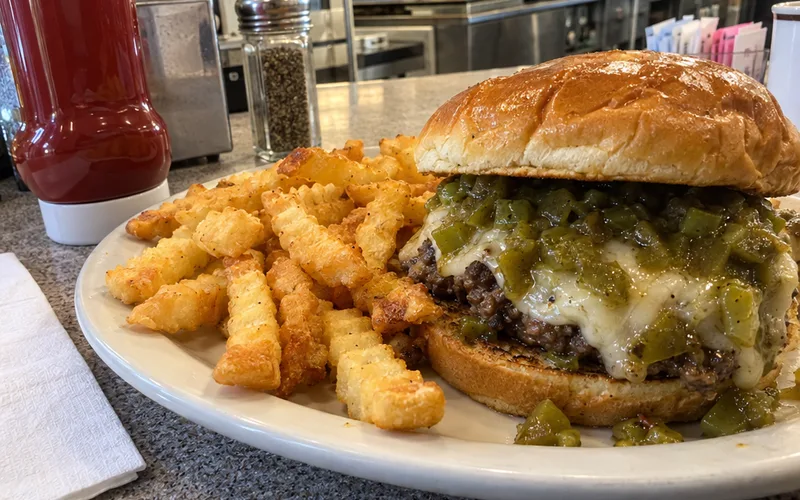
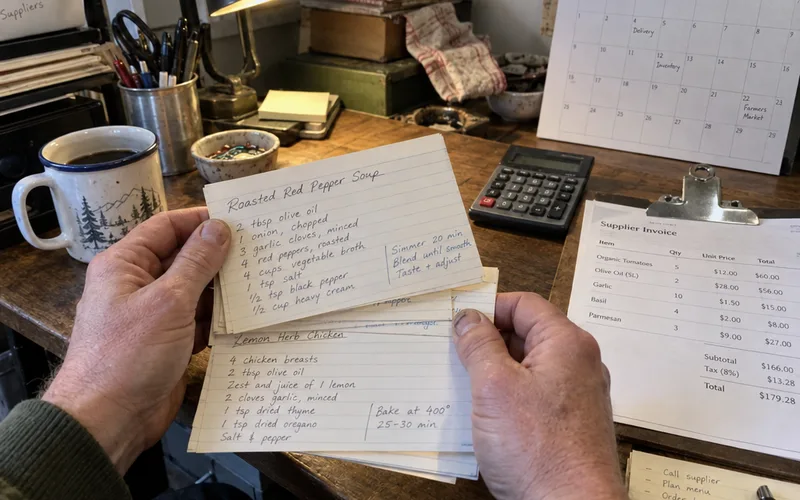
Say your green chile cheeseburger sells for $14.00 and its ingredients cost $4.20.
Its contribution margin is $9.80, which some owners call gross profit per plate. That’s the number menu engineering cares about.
Why Food Cost Percentage Can Fool You
Food cost percentage is food cost divided by menu price, and it tells you how efficient a dish is, not how much money it makes. An item with a great food cost percentage can still earn fewer dollars per plate than a “pricier” dish.
Here’s an example with hypothetical numbers:
- A $12.00 breakfast platter that costs $2.40 has a 20% food cost and a $9.60 margin.
- A $24.00 grilled salmon that costs $9.00 has a 37.5% food cost and a $15.00 margin.
The salmon looks worse on food cost percentage.
But every salmon you sell leaves you $5.40 more than the platter. So rank items by margin dollars, and use food cost percentage only as a warning light.
Popularity: Each Dish’s Share of Sales
Menu item popularity is the share of a section’s total units sold that each dish accounts for, sometimes called its menu mix. You divide each dish’s units sold by the section’s total units sold.
Then compare it with an even share.
An even share is 100% divided by the number of dishes in the section. With 6 entrées, an even share is about 16.7% of entrée sales, or 1 out of every 6 plates.
An item above that line is popular. One below it is not.
How to Do Menu Engineering in 5 Steps
Menu engineering takes 5 steps: pull item sales for a typical stretch, cost every plate, calculate margin and popularity within each section, sort every dish into its category, then change the menu and track what happens. Most owners can finish the first section in an afternoon.
Here’s each step.
Pull Item Sales for a Typical Stretch
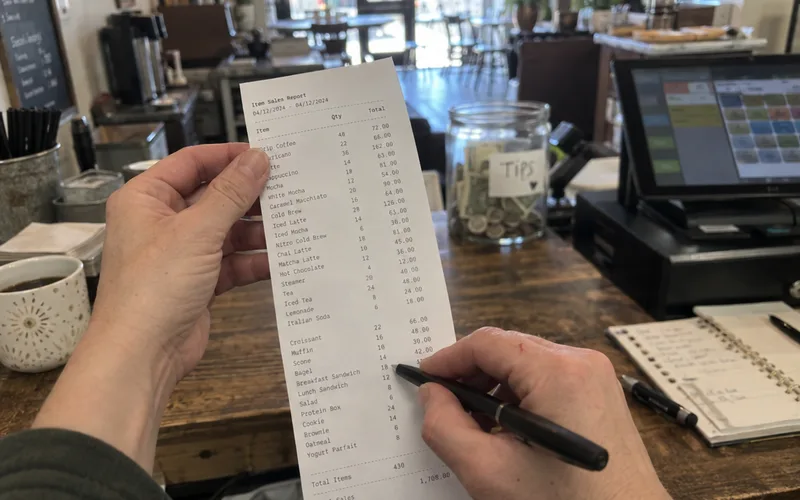
Item sales come straight from your point-of-sale (POS) system, which records every dish rung up. Export a report of units sold per item for a recent stretch of normal business.
Pick a few weeks with no holiday rush, road closure or big catering order.
A weird week skews popularity. If the street was torn up for 10 days, leave those days out.
Cost Every Plate, Garnish Included
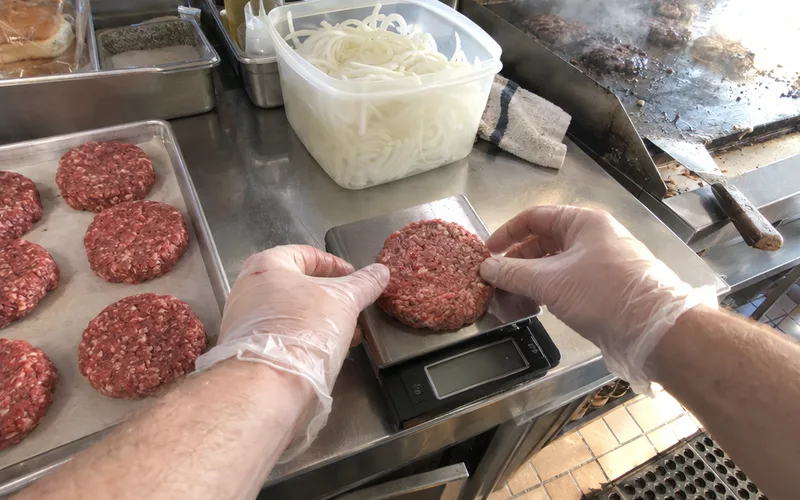
Plate cost is the cost of every ingredient that goes on the plate, at what you pay suppliers today. Foster and Campbell stress that recipes must be complete, and they tell owners to “be sure to include garnishes and condiments in the costing process.”
That means the lime wedge, the salsa cup, the bread basket and the side of sour cream.
Small items add up across hundreds of plates. Use your latest supplier invoices, not last year’s prices, because ingredients and inventory costs move.
Work Out Margin and Popularity by Section
Margin and popularity only make sense inside one menu section, such as appetizers, salads, pizza and pasta, sandwiches, entrées or desserts. The same consultants run the analysis within each category for exactly this reason.
A $7.00 dessert will never match a steak’s margin.
So compare desserts with desserts. Build one worksheet tab per section with these columns:
- Dish name
- Menu price
- Food cost per plate
- Contribution margin (price minus food cost)
- Units sold
- Total margin (contribution margin times units sold)
- Share of section sales
At the bottom, add 2 averages: total margin divided by total units sold, and the even share of sales.
Sort Each Dish Into Its Category
Each menu item gets its category from 2 yes-or-no questions: is its margin above the section’s average, and is its share of sales above an even share? Two yeses make a Star, and two nos make a Dog.
Popular but below-average margin is a Plowhorse.
Above-average margin but slow sales is a Puzzle. Add a column in your worksheet for the category, so the sheet becomes your working menu engineering analysis.
Change the Menu, Then Track the Results
Menu changes work best a few at a time, so you can tell which move helped. Make the changes your categories call for, then pull the same sales report again after a similar stretch of normal business.
Compare each item’s new margin and share of sales with the old ones. Ask servers for guest feedback too, since they hear first when a portion feels smaller.
If you also watch a few restaurant marketing KPIs such as average check and revenue, you’ll see whether the whole menu is earning more, not just one dish.
A Menu Engineering Example: One Diner’s 6 Entrées
A simple menu engineering example is a hypothetical diner with 6 entrées over 4 weeks, where every price, cost and sales count is made up to show the math. The diner sold 1,200 entrées in total, so an even share is 200 plates per dish.
Here are the numbers for each entrée:
- Green chile cheeseburger: $14.00 price, $4.20 cost, $9.80 margin, 340 sold.
- Chicken fried steak: $16.00 price, $6.40 cost, $9.60 margin, 260 sold.
- Grilled salmon: $24.00 price, $9.00 cost, $15.00 margin, 90 sold.
- Enchilada plate: $15.00 price, $3.30 cost, $11.70 margin, 250 sold.
- Meatloaf dinner: $13.00 price, $5.20 cost, $7.80 margin, 120 sold.
- Breakfast platter: $12.00 price, $2.40 cost, $9.60 margin, 140 sold.
Those 1,200 entrées left $12,383 in total margin.
Divide that by 1,200 plates and the average margin is $10.32. Now every entrée gets sorted against $10.32 and 200 plates.
Here’s where they land:
- Star: the enchilada plate ($11.70 margin, 250 sold).
- Plowhorses: the cheeseburger and the chicken fried steak.
- Puzzle: the grilled salmon.
- Dogs: the meatloaf dinner and the breakfast platter.
Now try one fix. Say the diner raises the cheeseburger to $14.75 and it keeps selling about 340 plates.
Its margin climbs to $10.55, above the $10.32 average, which turns a Plowhorse into a Star. That’s $255 more every 4 weeks from a 75-cent change.
Not bad.
This is the whole method in miniature: measure, sort, then make one targeted change per item.
What to Do With Stars, Plowhorses, Puzzles and Dogs
Each menu engineering category gets its own move: protect and feature Stars, raise Plowhorse margins with small price or portion changes, give Puzzles more attention so more guests order them, and cut or rework Dogs. Restaurant consultants Foster and Campbell give the same 4 moves.
Here’s how to apply each one.
Stars: Protect and Feature Them
Stars are your high-profit, high-popularity dishes, and the job is to keep them that way. The same consultants advise featuring these items prominently in every menu section.
So keep the recipe and portion the same, because consistency protects customer satisfaction.
Put Stars where eyes land first, which the layout section below covers, and repeat them on table tents and your specials board. Don’t discount a Star, because it already sells without help.
Plowhorses: Fix the Margin Quietly
Plowhorses are popular dishes with below-average margins, and the fix is to raise what each plate earns without scaring off the guests who love it. The consultants suggest adjusting the portion, the price or both.
A small price bump is often the easiest move when demand is strong, as the cheeseburger example shows.
Other options protect profit margins too. Swap a pricey ingredient for a cheaper one guests won’t notice, or pair it with high-margin side dishes or drinks.
The catch?
A big jump on a regular customer’s favorite gets noticed fast. So the safer strategy is to change one thing at a time and keep the increase small.
Puzzles: Sell Them Harder
Puzzles are high-margin dishes that don’t sell enough, and the fix is to put them in front of more guests. The consultants recommend promoting them through specials or a redesign, including better ingredients, plating and garnish.
Run a Puzzle as a weekly feature, using restaurant specials ideas to frame it.
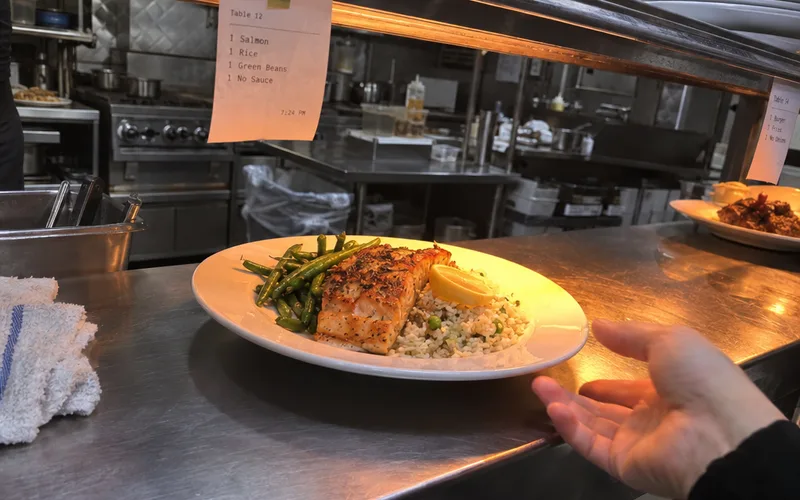
Then move it to a better spot on the menu and rewrite its description in plain, tasty language that says what makes it good. A clear food photography shot on your social posts or menu board helps a slow seller too.
Pro Tip: If you run a loyalty program, make a Puzzle the reward. A free plate on a digital punch card gets regulars to try it, and some will order it again at full price.
Dogs: Cut or Rework Them
Dogs are dishes with low profit and low popularity, and in most cases they should come off the menu. Removing them, the same consultants say, reduces waste and streamlines the menu.
Fewer items means less kitchen prep, less food waste and a faster, easier read for guests.
But check before you cut. If a Dog is a regular’s ritual, part of your brand or the only option for kids or a dietary need, rework the recipe cost instead of dropping it.
Need a replacement? Fill the slot with a new dish from your list of creative menu ideas, then track it like everything else.
Where to Put Your Most Profitable Dishes
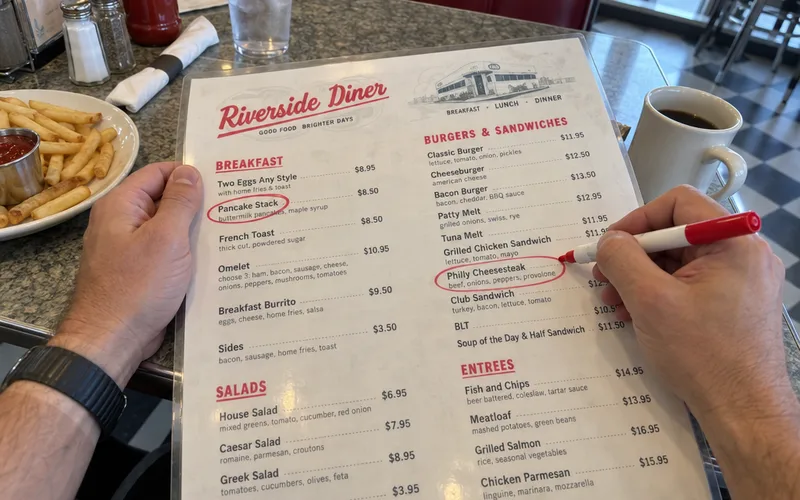
Your most profitable dishes, the Stars and Puzzles, belong where guests look first: on a two-page menu that’s the center of the right page, and on a one-page menu it’s the top-left corner. Baker Tilly’s consultants note that on a traditional two-page menu, the center of the right page is often the first place guests look.
After that, eyes move to the top of the left page, then to the bottom of the right page.
Menu design guides often call that path the Golden Triangle.
A single-page menu reads differently. The same consultants say guests scan it in a Z-pattern: across the top from left to right, then diagonally down to the bottom-left, then across to the bottom-right.
So the top of a one-page menu is prime space.
Placement isn’t the only lever, though. The same consultants suggest using boxes, bold fonts or icons to draw attention to high-margin items.
Box one item per section, not five. When everything is highlighted, nothing stands out.
How to Show Prices on Your Menu
Menu prices should sit quietly beside each dish rather than shout, and Baker Tilly’s consultants advise avoiding the dollar sign and not printing prices in bold. The aim is to keep guests reading about the food instead of comparing numbers.
So write “16” instead of “$16.00” and set prices in the same font as the description.
Skip the dotted lines that run from each dish to a column of prices. A neat column makes it easy for customers to scan for the cheapest item.
Here’s another tool from menu psychology:
Start each section with an anchor item, such as one expensive dish. The same consultants say it sets a reference point, so the items around it feel like better value.
The same guidance mentions psychological pricing, such as $9.95 instead of $10. Test it on one section before you change the whole menu, and see the broader restaurant pricing strategies for how to set the base price itself.
Get Your Servers Selling the Right Dishes
Servers decide what a lot of guests order, so they’re part of menu engineering, not an afterthought. Restaurant consultants Foster and Campbell advise teaching servers to be “salespeople” rather than order takers and training them to sell your most profitable items.
Start with a 5-minute huddle before service.
Tell the team which 2 plates you’re pushing this month and why they’re great. Let servers taste them, so the recommendation comes from experience.
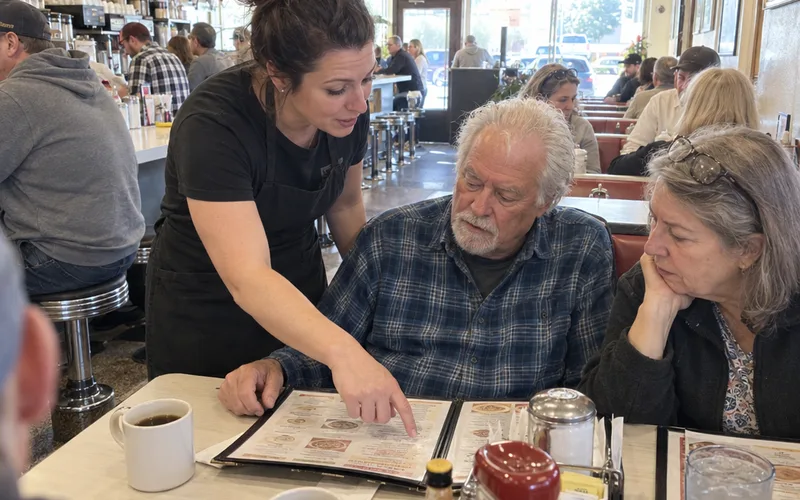
Here’s what a server can say: “If you like green chile, the enchilada plate is what I’d order. The red sauce is made here every morning.”
That’s a Star sold with one sentence, and it goes straight to your bottom line. For more lines that don’t sound pushy, see these restaurant upselling techniques.
How Often Should You Re-Engineer Your Menu?
Restaurant menus need menu engineering on a regular schedule, because guest tastes and ingredient costs keep shifting, and restaurant consultants Foster and Campbell advise updating the analysis regularly for both reasons. A practical rhythm for a small restaurant is once a quarter, plus any time a key ingredient jumps in price.
Here’s a simple checklist:
- Every quarter: rerun the full spreadsheet for every section.
- When a supplier raises a big price: recost the items that use that ingredient right away.
- When you add a new item: give it a few weeks, then sort it with the rest of its section.
- Before you reprint menus: check the categories first, so the new layout follows them.
Quarterly is my recommendation, not a rule. If your menu barely changes and costs are steady, twice a year can work.
Is Menu Engineering Worth It for a Small Restaurant?
Menu engineering is worth it for a small restaurant because it costs nothing but a few hours with a spreadsheet, and a short menu takes less time to analyze than a big one. In the hypothetical diner example, one 75-cent change on a single dish added $255 every 4 weeks.
A small menu also helps you keep regulars. When you protect the plates they love and fix the margin quietly, nobody feels the change.
Menu engineering also lifts the profitability of your other work. Every flyer, post and promotion sends guests to the menu, so engineering it first makes the rest of your restaurant marketing earn more per visit.
In other words, you get more from the guests you already have before you spend a dollar finding new ones.
Start With One Section This Week
The biggest lesson of menu engineering is that profit hides in a few specific dishes, not across the whole menu.
So pick one section, probably entrées, and run the 5 steps before Friday.
Frequently Asked Questions
What are the four categories of menu engineering?
The four categories of menu engineering are Stars (high profit, high popularity), Plowhorses (low profit, high popularity), Puzzles (high profit, low popularity) and Dogs (low profit, low popularity). Sort each dish against the averages for its own menu section, such as entrées or desserts.
What is the menu engineering formula?
The menu engineering formula is contribution margin = menu price minus food cost, paired with each dish’s share of the units sold in its section. A dish above the section’s average margin is high profit, and a dish above an even share of sales is high popularity.
What are some examples of menu engineering?
Common menu engineering examples are raising a popular burger’s price by 75 cents, boxing a high-margin enchilada plate in the center of the menu, running a slow-selling salmon as a special, and cutting a dish that earns little and rarely sells. Each move follows the dish’s category.
What are the 5 basic steps of menu planning?
The 5 basic steps of menu planning with menu engineering are pulling item sales for a typical stretch, costing every plate, calculating margin and popularity, sorting dishes into the four categories, and changing the menu and tracking the results. Start with one section, such as entrées.
What categories are on a restaurant menu?
A restaurant menu’s usual categories are appetizers, salads, entrées and desserts, plus drinks, sides and specials on many menus. Engineer each category on its own, because a dessert’s margin and sales pace should be compared with other desserts, not with steaks.
What are the most profitable food items to sell?
The most profitable food items to sell are the dishes with the highest contribution margin on your own menu, meaning the most dollars left after food cost. Run the formula for every dish, because a low food cost percentage does not always mean the most profit per plate.