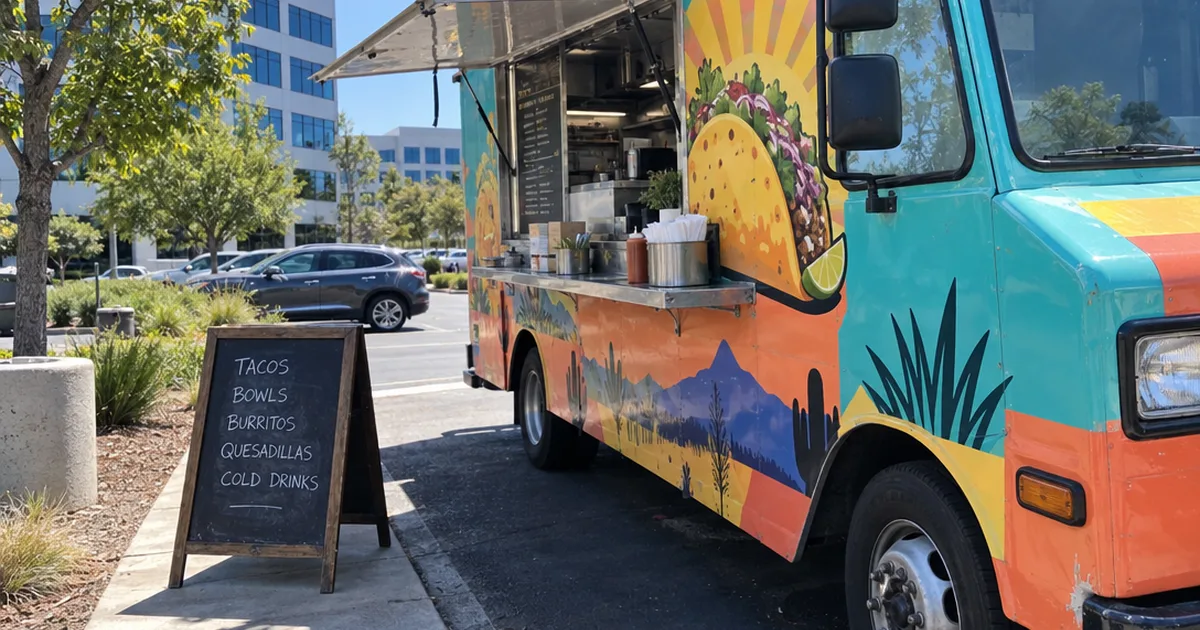
In 2020, people spent twice as much on takeout at places with a rewards program.
That’s according to the U.S. Chamber of Commerce, and it’s the whole game for a truck that moves: getting the same people to find you again.
A food truck marketing plan puts that on a schedule. Below are 12 steps to write one in an afternoon, in the order you’d do them, plus a one-page sample plan to copy.
- Best for: New and running trucks that want steady stops and repeat customers. Skip it if you only work private events booked by someone else.
- Cost: Free to write. Most tactics in it start at $0.
- Payoff: One Phoenix truck, The Diner On Wheels, grew its catering until it matched its day-to-day location sales.
- Time: This week to write it, about 90 days to judge it.
- First step: Open your POS and pull last month’s sales by location.
How to Write a Food Truck Marketing Plan Step by Step
To write a food truck marketing plan, set one 90-day goal, define your target market, write a mission statement, run a SWOT analysis and set a budget. Then plan your weekly route, social posts, listings, anchor spots, catering, rewards and a monthly review.
Each step below ends with something you can write down. Put those answers on one page and you have a plan.
Step 1: Set One Goal for the Next 90 Days
A food truck marketing plan starts with one goal you can count in 90 days, such as more sales at your slowest stop, more catering bookings or more repeat customers.
Why only one? Because every later part of your strategy, from where you park to what you post, gets judged against it.
Here’s how to pick it:
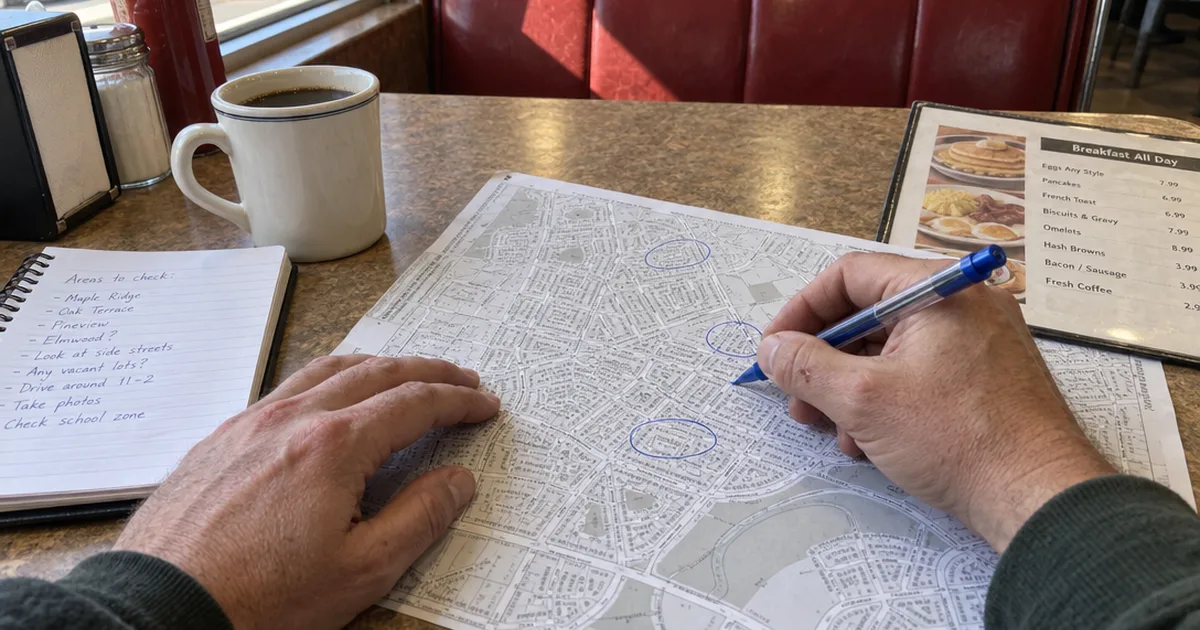
- Pull last month’s sales by location from your POS.
- Circle the stop or day that underperforms the most.
- Write the goal as a number with a date, like “Raise Tuesday sales at the office park by 20% by March 31.”
That last line is a made-up example, so use your own numbers.
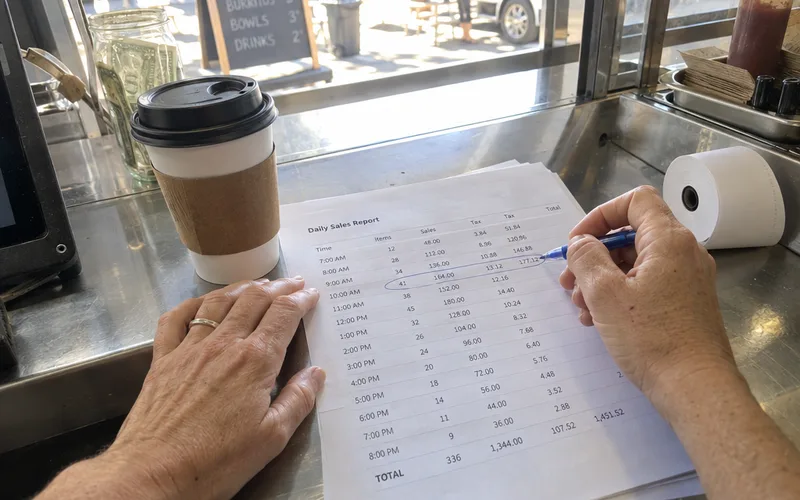
If you don’t have sales history yet, make the goal about reach instead: “Get 200 people on my text list before opening day.”
Write down: your one goal, with a number and a date.
Step 2: Define Your Target Market and Your Best Stops
The target market for a food truck is the group of people near your stops when you’re open: weekday office workers, brewery and taproom crowds, event visitors, students or families at weekend markets.
A restaurant picks its customers once, when it signs a lease. A food truck picks them every time it parks.
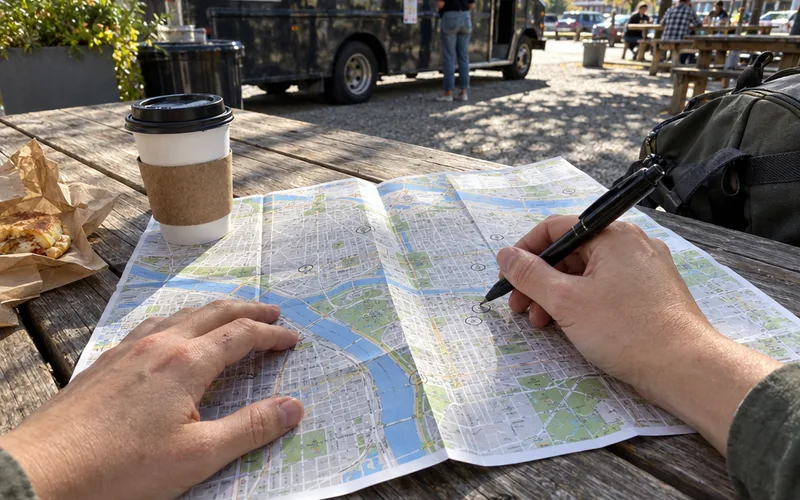
So write it down as places and times, not just ages. For example, “office workers at the business park, 11 a.m. to 1:30 p.m., Tuesday and Thursday” tells you where to go and when to post.
Then match each group to what it wants most:
- Office workers want speed and a predictable weekly day.
- Brewery crowds want something to share and stay for.
- Event visitors want one signature item they can eat walking.
- Families want simple choices and a kid-friendly option.
Pick one or two groups your menu, price and hours fit best. Your route should follow your target market, not the other way around.
Step 3: Write Your Mission Statement and Brand Promise
A food truck mission statement is one sentence that says what you serve, who it’s for and why they should pick you over the truck parked next to you.
Here’s the shape, with made-up examples:
- “Fast, smoky brisket tacos for the downtown lunch crowd, ready in five minutes.”
- “Wood-fired pizza by the slice for brewery nights, made in front of you.”
That sentence becomes your mission statement, and your brand repeats it everywhere: the wrap, the menu board, your bio and every post.
Keep it short enough to read from across a parking lot.
“Great food” never stands out at an event full of trucks, so name your unique selling point, the competitive advantage only your truck has.
Step 4: Run a 20-Minute SWOT Analysis
A SWOT analysis lists your food truck’s strengths, weaknesses, opportunities and threats on one page, so your marketing strategy plays to what you do well and plans around what can go wrong.
Draw four boxes and fill each with 2 or 3 lines:
- Strengths: a signature dish, fast service, a bright wrap.
- Weaknesses: no catering menu yet, a small following, one cook.
- Opportunities: a taproom with no kitchen, an office park with no cafeteria, a summer festival.
- Threats: rain, a new truck with the same cuisine, a permit limit on one street.
Now turn each box into an action, so a strength becomes your main post.
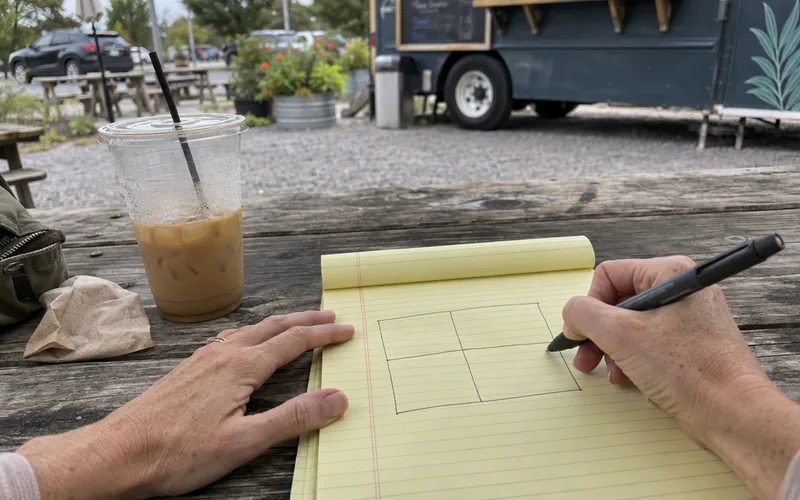
A threat becomes a backup plan, so rain might mean a rainy-day catering offer.
In other words, the SWOT tells you which steps below matter most for your truck.
Step 5: Set a Monthly Marketing Budget
A food truck marketing budget should be a fixed monthly dollar amount you can spend for 90 days without hurting payroll or food costs, with most of it on one test tied to your goal.
Many tactics here cost nothing, like a Google Business Profile, a route post and a brewery pitch.
So split your budget in two:
- Fixed costs: things you pay for anyway, like a website, a rewards tool or printing.
- One test: a single paid advertising push aimed at your goal, like flyers near the office park or a boosted post for one event.
Say you set $300 a month in this made-up example. Put $100 toward fixed tools and $200 on one test, then check if sales at that stop moved.
If it didn’t, move the $200 to a different test next month. The same split works for a restaurant marketing budget at a fixed location.
Step 6: Build a Weekly Route and Post It the Same Way Every Time
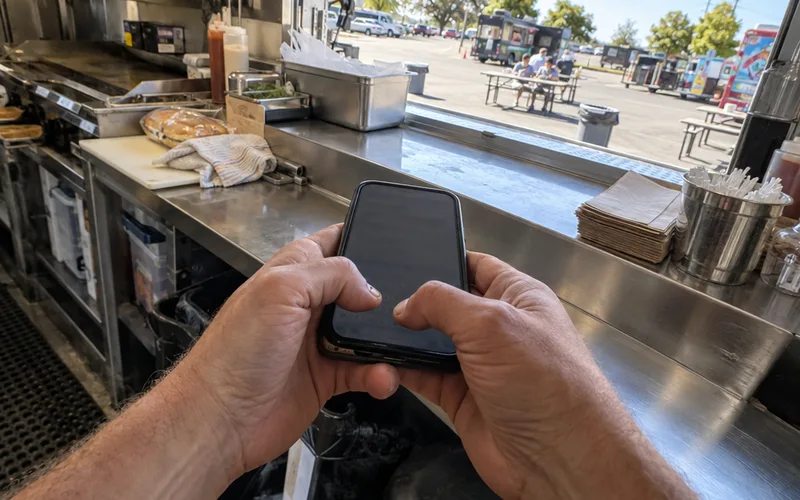
Food trucks let customers know where they are each day by posting one route message at the same time every week. It goes on social media, a text list, Google Business Profile and finder apps.
Predictable beats clever. If you’re at the office park every Tuesday, people plan lunch around you.
Here’s a route post to copy:
“This week’s stops: Tue and Thu, Park Center lot, 11-2. Fri, Hops and Barley, 5-9. Sat, Main Street Market, 9-1. Menu and map in the link.”
Send it every Monday morning, then post a short “we’re open” Story the moment you park.
When plans change because of weather or a breakdown, post the change before you’d normally open. A missed stop with no warning costs more trust than a cancelled one.
Step 7: Pick Two Social Platforms and a Posting Routine
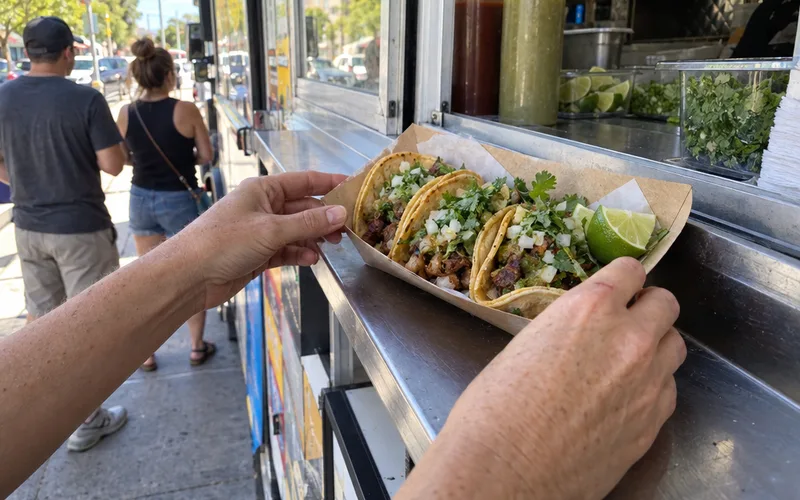
The best social media platforms for most food trucks are Instagram and Facebook used together. Instagram handles daily Stories and food photos, Facebook handles local groups and events, and TikTok is an optional third.
The audience is there: DataReportal counted 5.07 billion social media user identities at the start of April 2024, in its Digital 2024 April Global Statshot.
But you don’t need every app. Two platforms done well beat five done badly.
A one-person crew can keep this weekly routine:
- Monday: the route post from Step 6.
- Each service day: a “we’re open” Story with a photo of the line or the grill.
- Twice a week: one short video of your signature dish being made.
- Once a week: repost a customer’s photo and thank them by name.
Keep this routine for 90 days before you add a third platform or the deeper food truck social media tactics.
Step 8: Get Found on Google, Finder Apps and Your Own Website
Getting a food truck found online takes three things: a free Google Business Profile, listings on finder apps such as Where’s The Food Truck, and a simple website with your schedule and menu.
Start with Google. Set up your free Google Business Profile as a business that serves an area instead of one fixed address, then add food photos and update your hours whenever your route changes.
Then add the finder apps. The U.S. Chamber of Commerce names Where’s The Food Truck and Street Food Finder, which list trucks by location and food type, plus Roaming Hunger for catering.
Last, your website. It needs four things: this week’s route, your menu, a catering form and a way to join your text list.
Put the menu on the page as text, not a PDF. The Chamber points out that search engines don’t pick up PDF menus.
Step 9: Lock In Anchor Spots at Breweries, Offices and Events
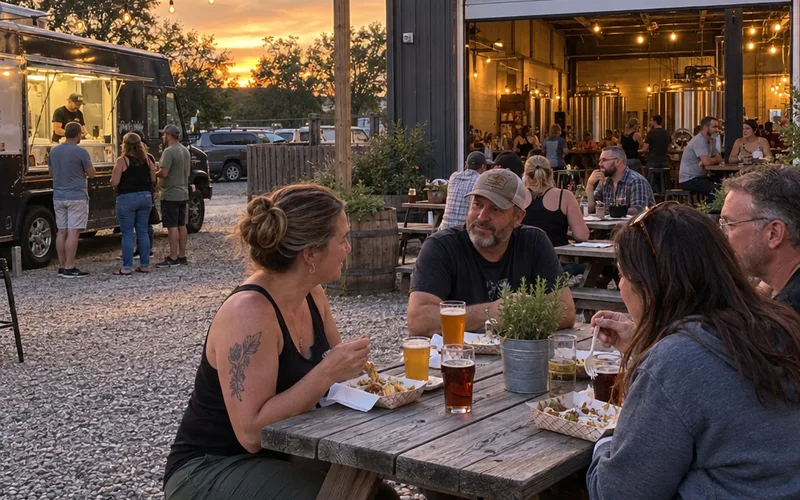
Food trucks get booked at breweries, offices and events by pitching the manager directly with one recurring slot. Ask for something specific, like every Thursday night at a taproom.
These anchor spots are the backbone of your route. Two of them can carry your week before you post a single photo.
Here’s what to send a brewery or taproom manager:
“Hi [Name], I run [Truck Name]. We’d love a regular Thursday night spot at your taproom. We handle setup and cleanup, we post your name in our weekly route, and we’re happy to do a trial night first. Would a Thursday next month work?”
Ask about the deal before you commit. The Chamber notes that a brewery or winery partner may expect a percentage of your sales while you’re on-site, so build that into your prices.
For offices, email the property manager or the company office manager, not a general inbox. Offer a weekly lunch day and a short menu that moves fast.
For festivals, street fairs and any organization that hosts events, find each vendor application deadline and put it on your calendar the day you see it.
Step 10: Add Catering as Your Second Revenue Line
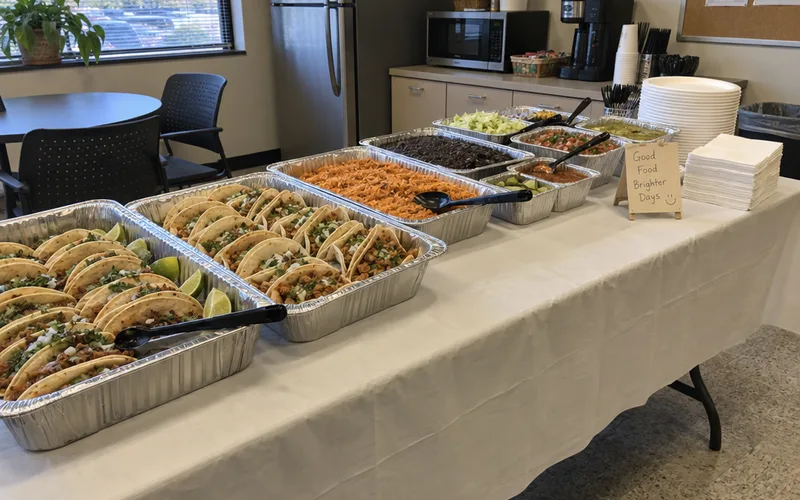
Catering gives a food truck a set menu and a guaranteed number of guests, which makes it easier to plan than a street stop.
Shelly Hiser, owner of The Diner On Wheels in Phoenix, grew her catering until it matched her day-to-day location sales. Here’s how she put it to the U.S. Chamber of Commerce:
“Catering is where the money is at. You have a specific set menu and a guaranteed number of guests.”
So build catering into your plan from day one, and start small:
- Write a short catering menu with 3 to 5 items you already make fast.
- Make a rate sheet with a per-person price and a minimum.
- Add a catering form to your website and a line to your route posts.
- Hand a card to every company or organization that books a lunch day.
The catch? Catering takes time to quote and plan, so keep your first menu small.
Once it works, promote it with the same catering marketing ideas restaurants use.
Step 11: Turn First-Timers Into Regulars With Rewards and a Contact List
You get regular customers for a food truck by parking at the same stops every week, rewarding repeat visits with a punch card and building a text list.
The rewards part matters. The U.S. Chamber of Commerce reports that consumers spent twice as much on takeout in 2020 at businesses that offered rewards programs.
It also says digital programs, a virtual punch card or a points system, work better for both the truck and the customer.
Why digital? A paper card can stay home in a drawer, but a digital punch card saved to Apple Wallet or Google Wallet stays on the phone, at every stop.
Keep the reward easy to reach, like a free item on the 6th visit, so people actually earn it.
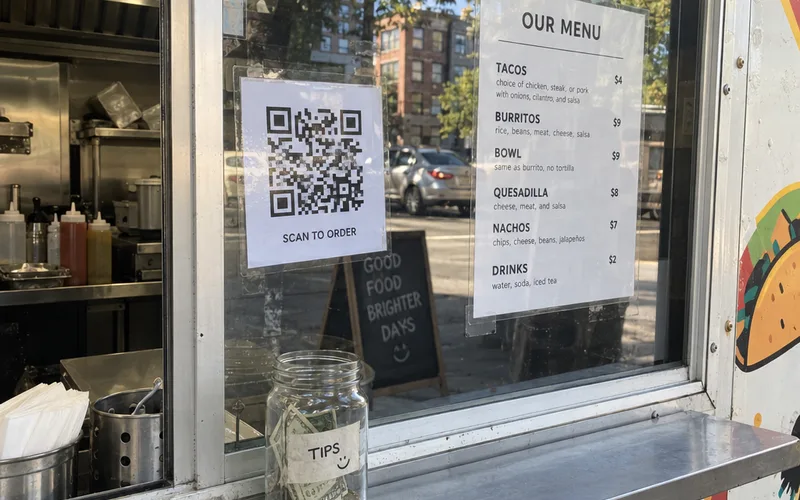
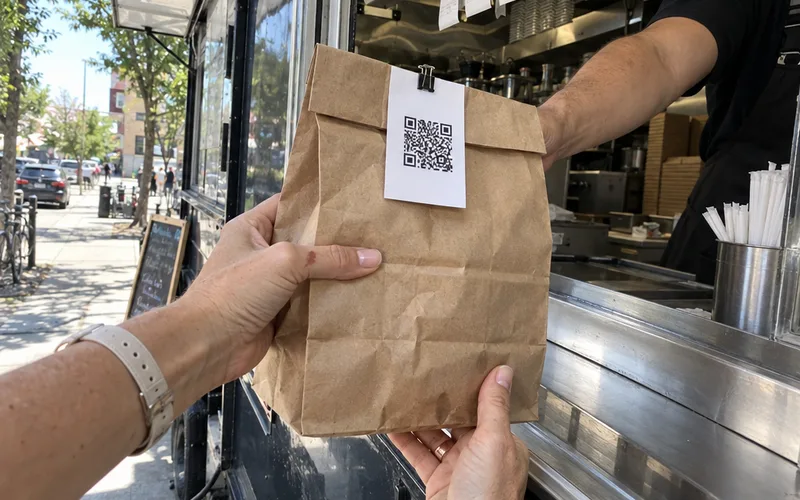
Then add a text list. Put a QR code sign at the window and say this when you hand over the order:
“Want our weekly route by text? Scan this and you’ll get one message every Monday.”
Send that one message and nothing more, so people stay subscribed. Before you send it, follow the opt-in steps for restaurant text marketing.
Key Takeaway: A rewards card brings people back, and a text list tells them where to go.
Step 12: Track Results by Stop and Adjust Every Month
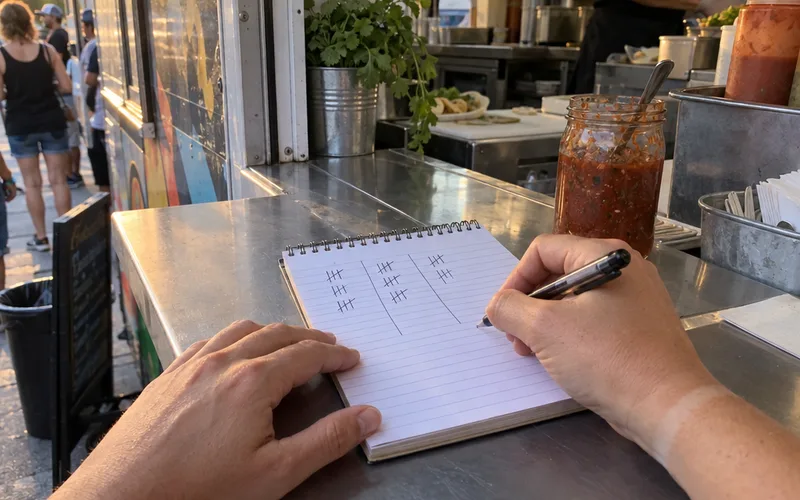
You measure food truck marketing by tracking one number per stop each week, such as sales, orders, rewards redeemed or new text sign-ups, and comparing it with the 90-day goal from Step 1.
Likes are nice. Sales at the stop are what pay for the truck.
Once a month, run this check:
- Export sales by location from your POS.
- Count new rewards members and text sign-ups.
- Note which posts or offers ran that week.
- Keep what moved your number, change what didn’t, drop what still doesn’t by day 90.
Give each offer its own code or word, like “say TACO at the window,” so you know which flyer or post brought people in.
The same habit works for any restaurant marketing KPI. Pick the few numbers that match your goal and your marketing strategy, and ignore the rest.
What a Food Truck Marketing Plan Includes
A food truck marketing plan includes six parts: one measurable goal, a target market tied to stops and times, a mission statement, a SWOT analysis, a monthly budget, and a weekly schedule of tactics with the one number you’ll track.
That’s it. You don’t need 20 pages.
What makes a food truck plan different from a restaurant plan is location. A fixed restaurant markets one address, but your plan has to market a route that changes every day.
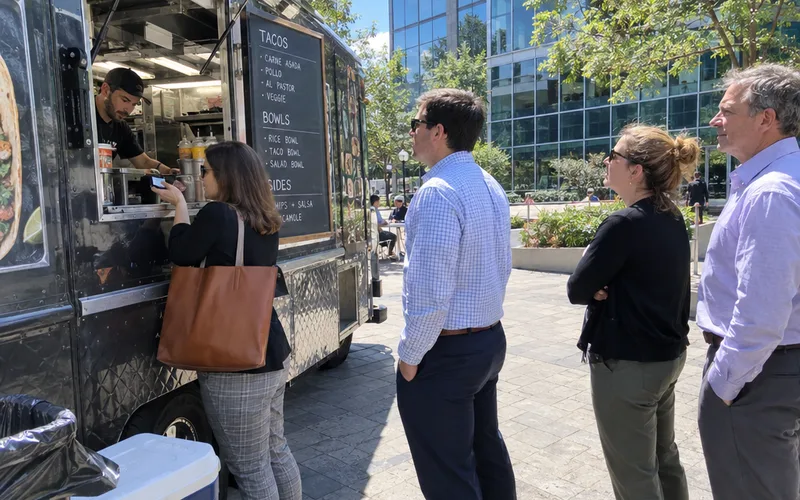
So the schedule part carries more weight: route posts, anchor spots, catering and rewards.
The U.S. Chamber of Commerce put food trucks at about $3 billion in revenue across roughly 5,500 establishments in 2021. With that many trucks, yours has to be easy to find on any given day.
Once the six parts are written, more food truck marketing ideas can slot into the schedule one at a time.
Food Truck Marketing Plan vs. Business Plan
A food truck marketing plan covers how you’ll find and keep customers. A food truck business plan covers the whole company, from menu costs and permits to funding, with marketing as one section.
If a lender or investor asked for a plan, you need the business plan. If you already have a truck, or you’re about to open, you need the marketing plan in this guide.
The good news? The marketing plan drops straight into the marketing section of a business plan later.
How to Market a New Food Truck Before Opening
To market a new food truck before opening, start 6 weeks out: claim your social accounts and Google Business Profile, build a text list, book a first anchor spot and hold a free tasting.
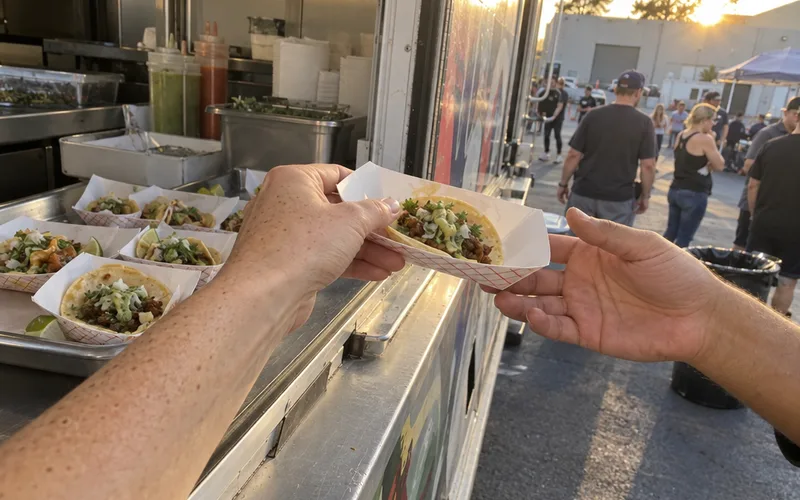
Work back from opening day:
- Six weeks out: lock in your name, logo and handles, and set up your Google Business Profile.
- Four weeks out: post the wrap, the menu and behind-the-scenes prep, and start the text list with a QR code at your commissary or pop-up.
- Two weeks out: pitch your first brewery or office slot, and invite local food bloggers to a free tasting.
- Opening week: post your first route on Monday and offer a small reward for your first customers.
Opening day itself can borrow grand opening event ideas from restaurants, like a small reward for the first people in line.
A Free One-Page Food Truck Marketing Plan Template
A free food truck marketing plan template can fit on one page with six lines: goal, target market, mission statement, SWOT analysis, budget, and a weekly schedule with the number you track.
Filled in for a made-up taco truck, it looks like this:
- Goal: Raise Tuesday sales at Park Center by 20% by March 31.
- Target market: Office workers at Park Center, 11-2, Tuesday and Thursday; taproom crowds Friday night.
- Mission statement: Fast, smoky brisket tacos for the lunch crowd, ready in five minutes.
- SWOT: Strength is speed; threat is winter rain, so push office catering from December.
- Budget: $300 a month, $100 fixed tools and $200 on one test.
- Weekly schedule: Monday route post; Tue and Thu Park Center, Fri Hops and Barley, Sat Main Street Market; track Tuesday sales, rewards redeemed and text sign-ups on the 1st of each month.
Copy those six lines into a document or spreadsheet and replace every detail with your own.
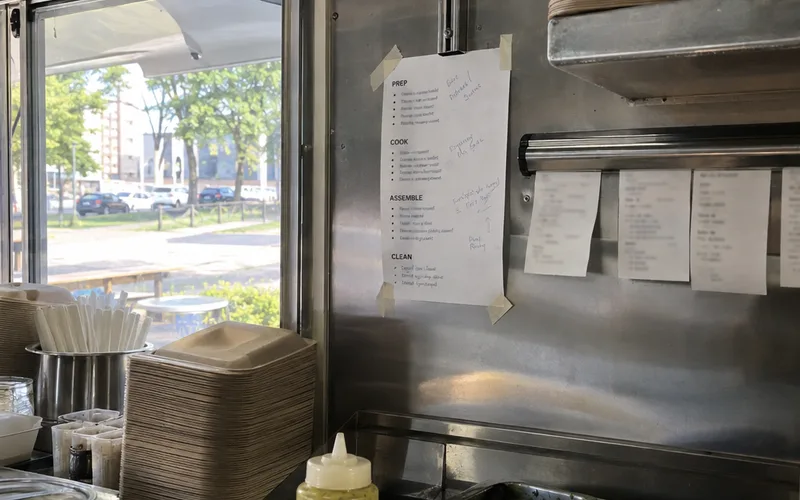
Print it and tape it inside the truck. A plan you can see during service is a plan you’ll actually run.
Once the truck runs smoothly, broader restaurant marketing like flyers and local ads can come next.
Frequently Asked Questions
What is the target market for a food truck?
The target market for a food truck is the group of people who are near your stops when you’re open, such as weekday office workers, brewery and taproom crowds, event and festival visitors, or families at weekend markets. Pick the one or two groups your menu, prices and hours fit best, then plan your route around where they gather.
What is a good mission statement for a food truck?
A good mission statement for a food truck is one sentence that says what you serve, who you serve it to and what makes you different, such as “Fast, smoky brisket tacos for the downtown lunch crowd, ready in five minutes.” Keep it short enough to fit on your truck, your menu board and your Instagram bio.
Do loyalty programs work for food trucks?
Loyalty programs do work for food trucks, and the U.S. Chamber of Commerce reports that in 2020 consumers spent twice as much on takeout from businesses with rewards programs. A digital punch card or points system suits a truck best, since it travels with the customer to every stop and doesn’t slow the line.
How long does a food truck marketing plan take to work?
A food truck marketing plan usually needs about 90 days before you can judge it, because a weekly stop needs several visits before regulars build it into their routine. Review your sales by stop once a month, then keep, change or drop each tactic at the 90-day mark.
Is there a free food truck marketing plan template?
A free food truck marketing plan template can be one page with six lines: your goal, target market, mission statement, SWOT analysis, budget, and a weekly schedule with the number you’ll track. Copy the sample plan in this guide into a document or spreadsheet and fill in your own truck’s details.
Final Thoughts
A food truck marketing plan works when it’s short enough to run every week: one goal, a few stops your people already visit, and a reason for them to come back.
Block off one afternoon this week, write your one-page plan, and send your first Monday route post before the next one comes around.