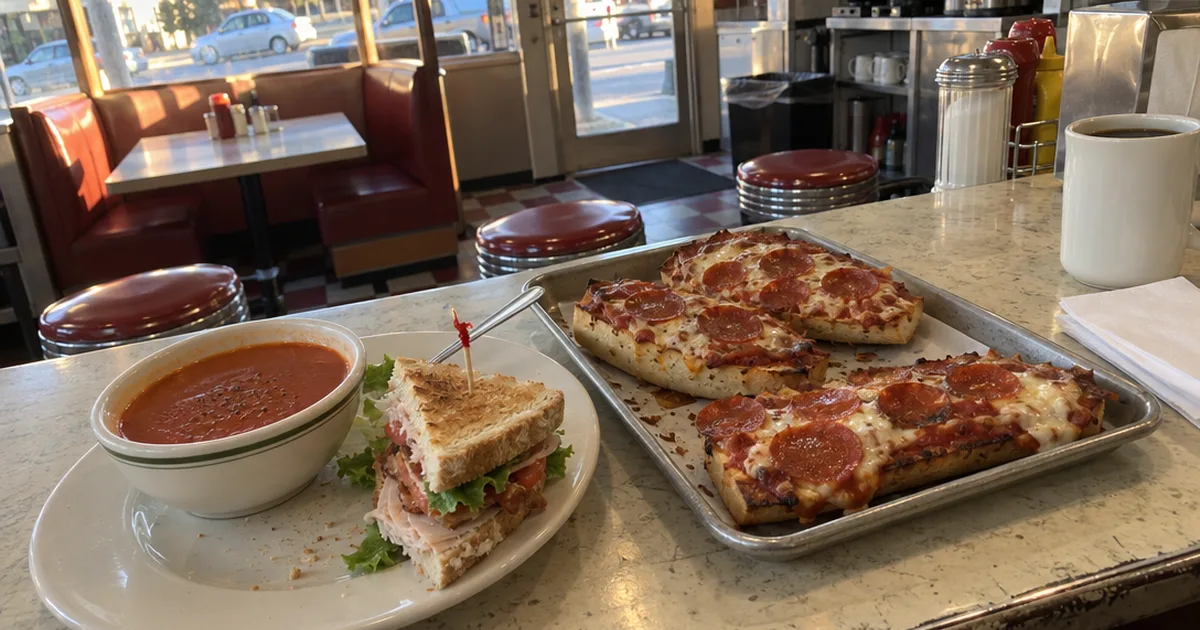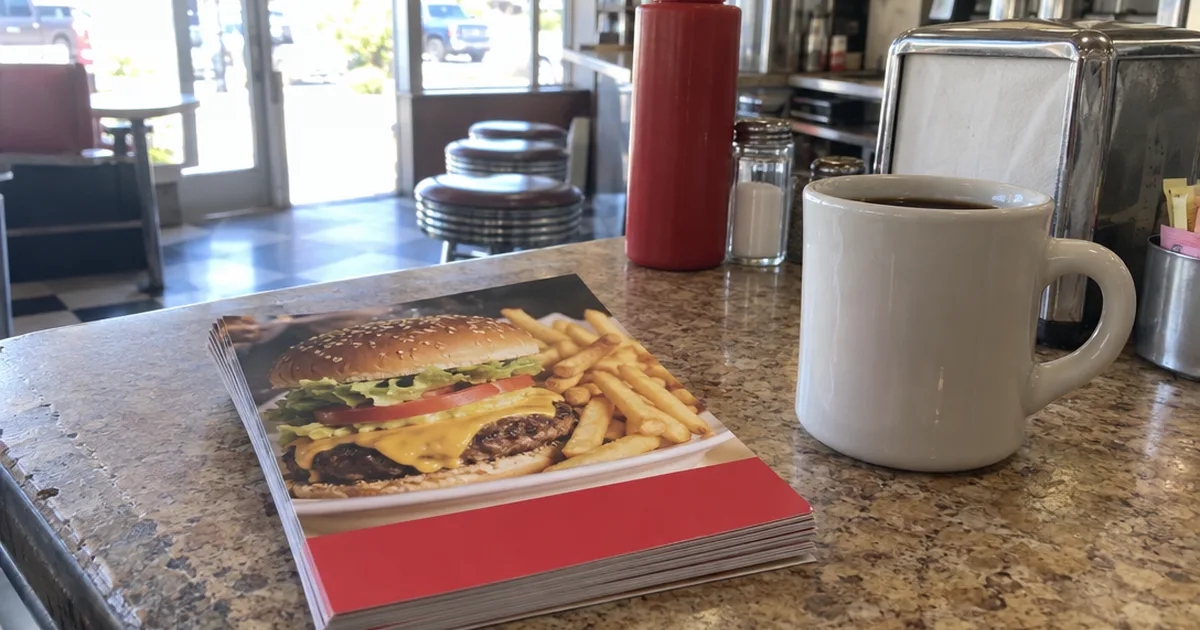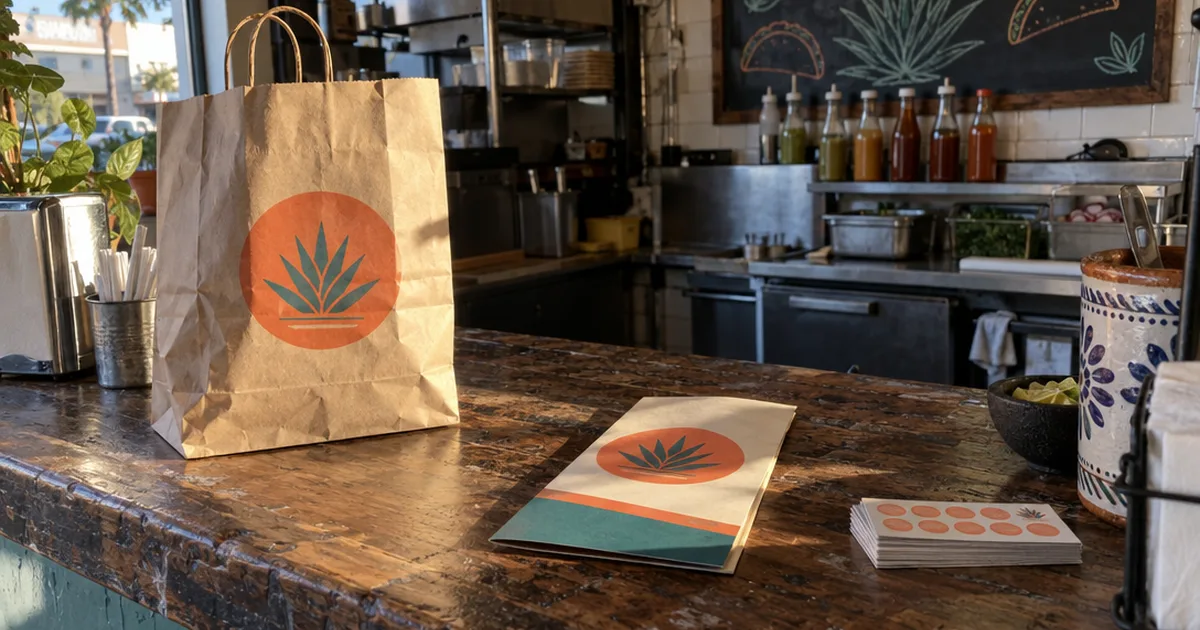
Your restaurant branding already exists, whether you planned it or not. Guests build it from your sign, your menu, your to-go bag and the way someone answers the phone.
So the real question is whether it’s the brand you’d pick. Let’s shape it on purpose: the 7 elements, 6 steps that cost little or nothing, a logo test and a checklist you can print.
What Is Restaurant Branding?
Restaurant branding is everything guests use to recognize and remember your restaurant, from the concept, name and logo to the colors, voice, room and service. A logo is only one piece of it.
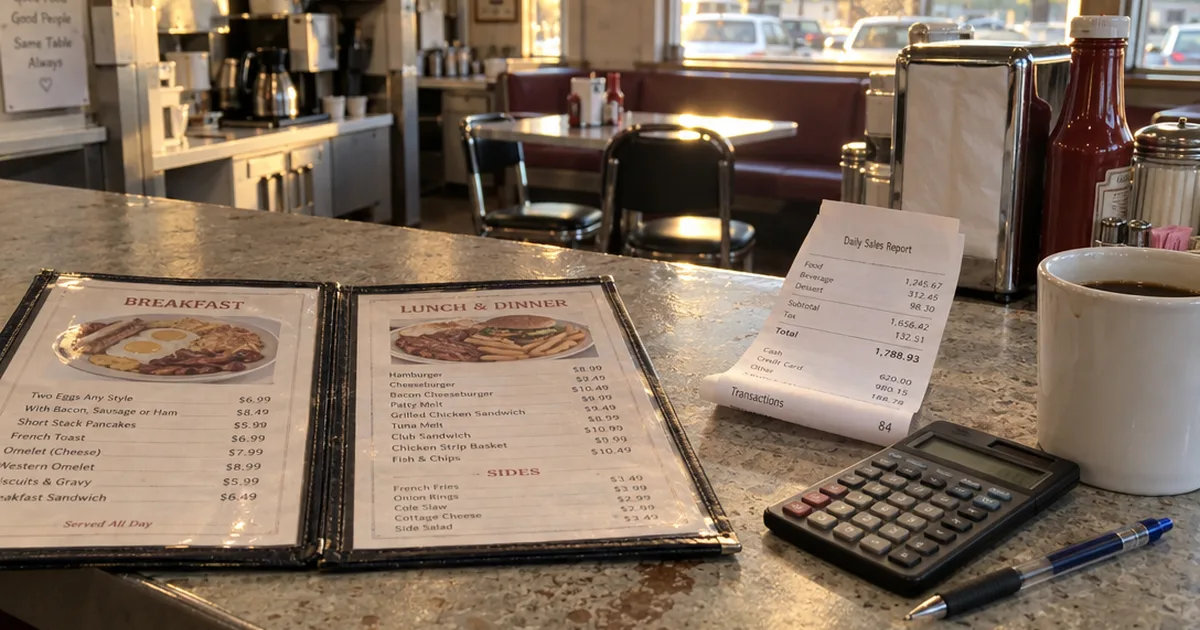
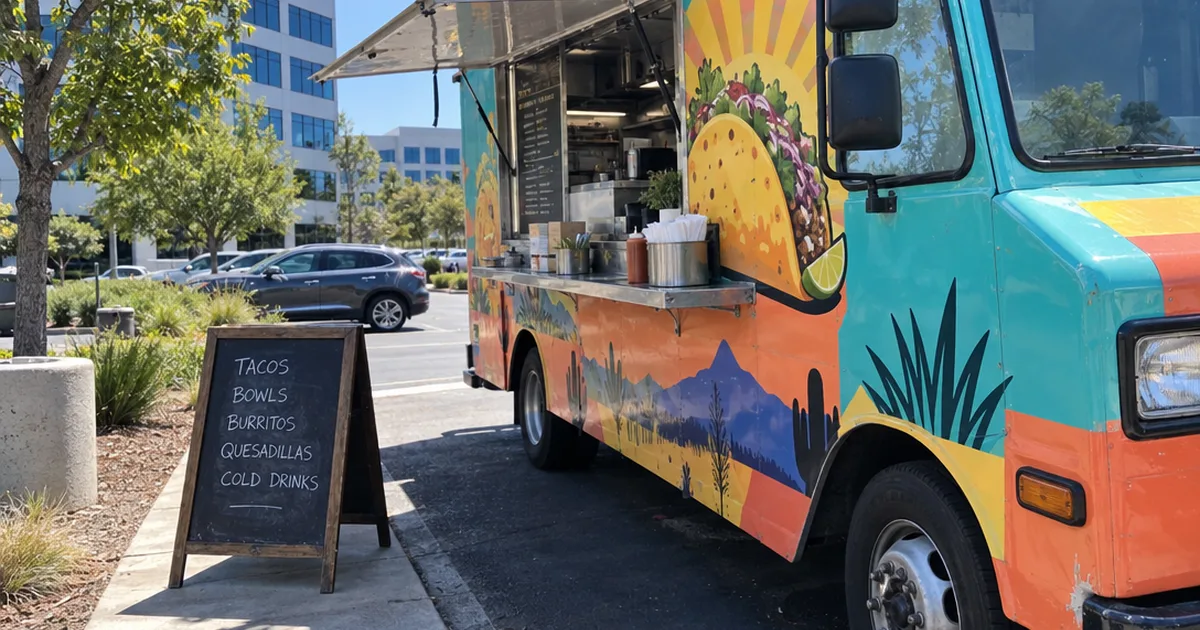
Think of your brand as a promise. A family diner might promise bottomless coffee and a booth that feels like home, while a taqueria might promise late hours and salsa made that morning.
Branding is how well everything around the guest keeps that promise. When the sign, the menu and the server tell the same story, guests know what to expect and remember where to find it.
That memory is what turns a first visit into a second one.
It’s also why branding comes first in your restaurant marketing: every flyer, post and text works harder once you have brand awareness, meaning guests already recognize the name on it.
The 7 Elements of a Restaurant Brand
The 7 elements of a restaurant brand start with your concept and story and end with your touchpoints. Touchpoints include bags, receipts and loyalty cards.
Each element should point to the same idea of who you are.
Here’s what each one covers and where a small restaurant can start:
1. Concept and Story
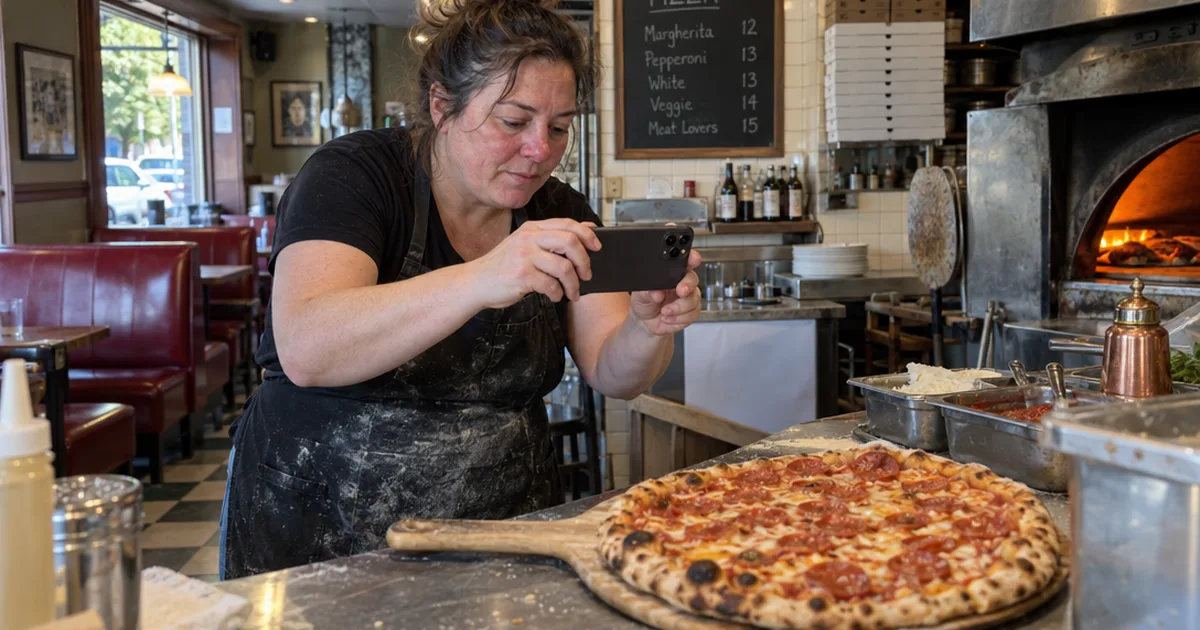
Your concept is the food, pricing and experience you offer, plus the values behind it. A wood-fired pizzeria with an open kitchen run by 2 brothers has a different story than a 24-hour diner off the highway.
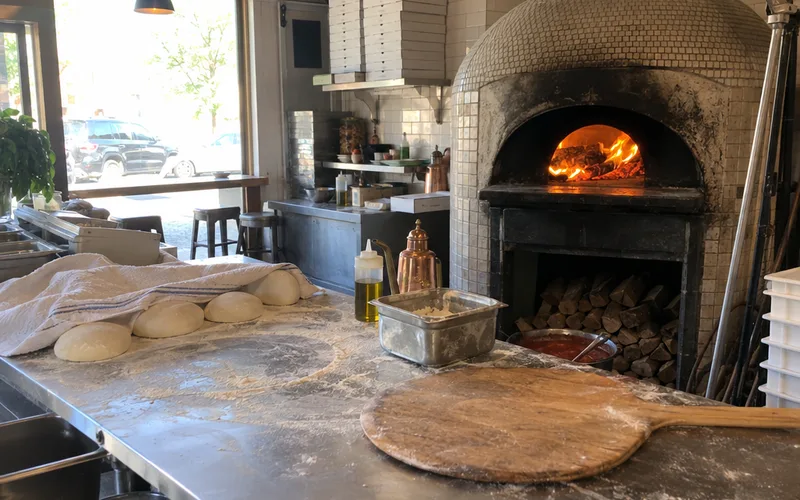
Write your story in 2 or 3 sentences you could say at the register. If you can’t say what makes you different yet, work out your unique selling point before you touch the design.
2. Name and Slogan
Your name should be easy to say, spell and search. Before you commit, check that the web address and social media handles are free.
A short line under the name tells guests what you do in a few words. These restaurant slogan ideas show how much a 4-word line can carry.
3. Logo
Your logo is the signature of your brand, and it shows up on the sign, the cup, the menu and a phone screen. It has to stay readable at every one of those sizes, so test it small before you approve it.
4. Colors and Typography
Pick 2 or 3 brand colors and 2 fonts, then stop. Your brand’s typography, the style of your letters, does quiet work: a chunky slab font reads diner, and a loose script reads bakery.
Write the exact color codes and font names on one page. That way the menu printer, the sign shop and whoever posts on social media all use the same ones.
5. Brand Voice
Brand voice is how your restaurant sounds in writing and out loud. A neighborhood pizzeria might be loud and playful, and a family taqueria might be warm and bilingual.
Your voice shows up in menu descriptions, captions, email, SMS texts and the way staff greet a table. Pick 3 words that describe it and hold every sign and post up against them.
6. Space, Service and Uniforms
The room’s atmosphere is part of the brand too: the interior design, lighting, music and what people see from the sidewalk. Your exterior does the first selling, so choose storefront sign ideas that match the feel inside.
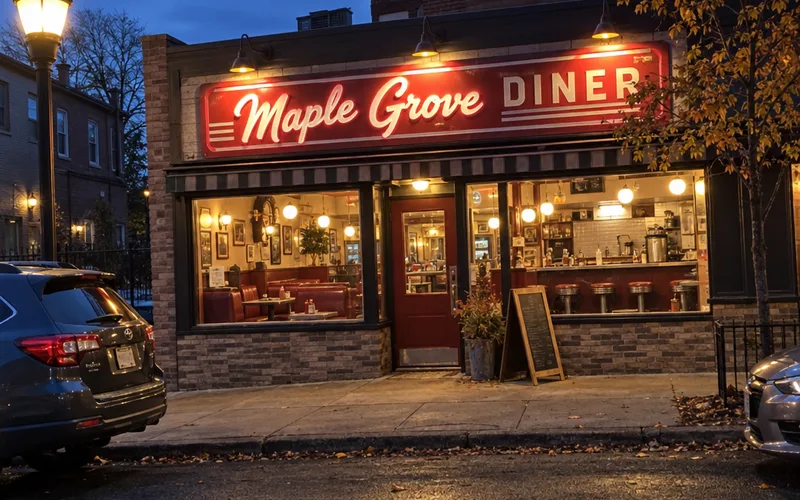
What your team wears counts as well. Stock, a restaurant uniform maker, says on its own site that it uses uniforms to express the brand identity of the Chicago restaurants it works with.
7. Touchpoints
A brand touchpoint is any place a guest meets your brand, from the to-go bag and cup to the receipt, website, map listing and loyalty card. Many of them are things you already pay for, so branding them adds little cost.
Key Takeaway: You don’t need all 7 elements polished on day 1, but they all need to agree with each other.
How to Build a Restaurant Brand in 6 Steps
To build a restaurant brand, define your guests, write your position, lock in your look, set your voice, brand every touchpoint and train your team. The first 3 steps need only a notebook and an hour of quiet.
Step 1: Pick Your Guests
Your target audience is the group of guests you most want to serve. Describe them 2 ways: their demographics, such as age, family size and where they live or work, and their psychographic profile, meaning what they value and enjoy.
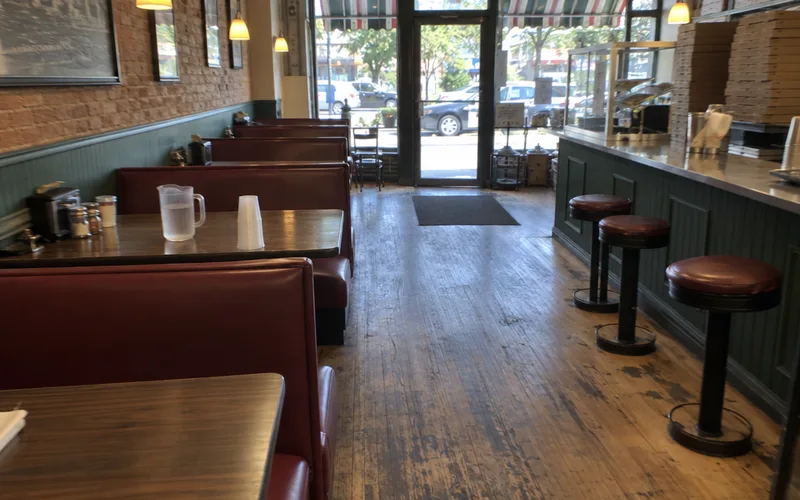
Say your pizzeria sits between a high school and 2 office parks. Lunch guests want speed, while Friday-night guests are families who want a booth and a pitcher, and your brand has to welcome both.
Step 2: Write Your One-Sentence Position
Your position works like a short mission statement: who you serve and why they pick you over the place next door. Fill in this line:
“For [your guests], we’re the [type of place] that [what you do better than anyone nearby].”
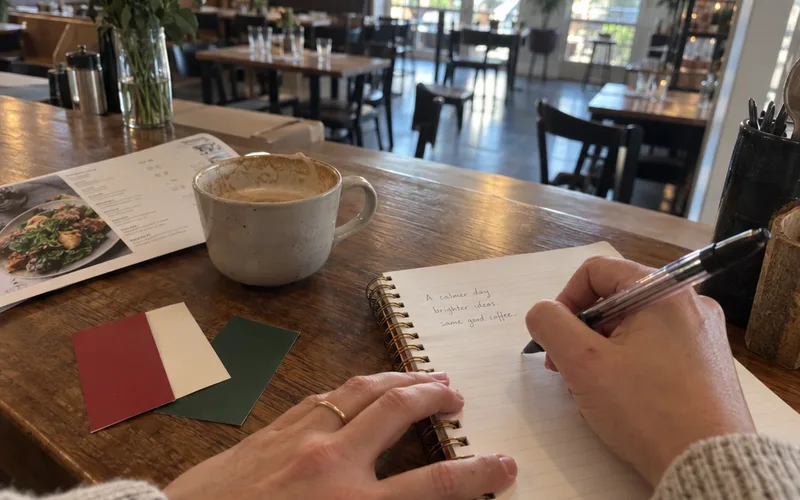
A taqueria might write: “For night-shift workers on the east side, we’re the taqueria that’s open until 2 a.m. with handmade tortillas.” Every later choice, from colors to captions, should fit that sentence.
Step 3: Lock In Your Look
Choose your name, logo, colors and fonts, then put them on a one-page brand sheet. That single page is your brand guide, and it’s all the brand management a small restaurant needs.
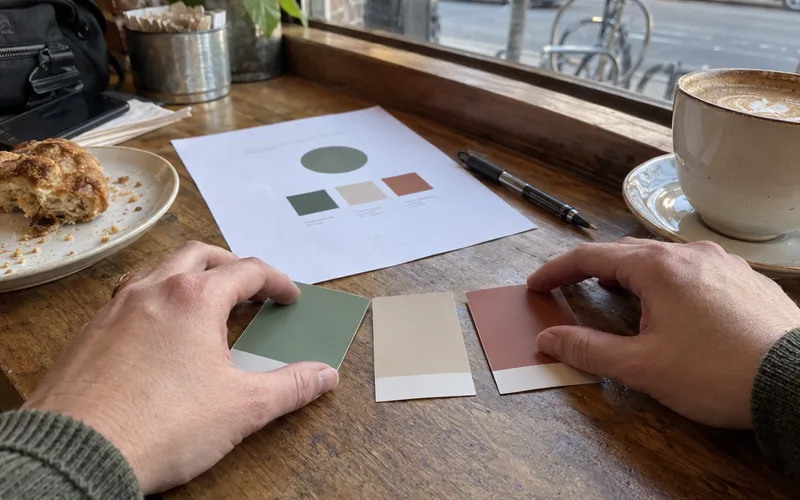
Check that the sheet names exact color codes and font names rather than loose descriptions, so nobody has to guess. Hand a copy to anyone who makes something with your name on it, from your menu printer to whoever runs your social accounts.
Step 4: Set Your Voice
Pick your 3 voice words and write 3 sample lines with them: a greeting, a menu description and a social post. Those samples teach new staff faster than any rule.
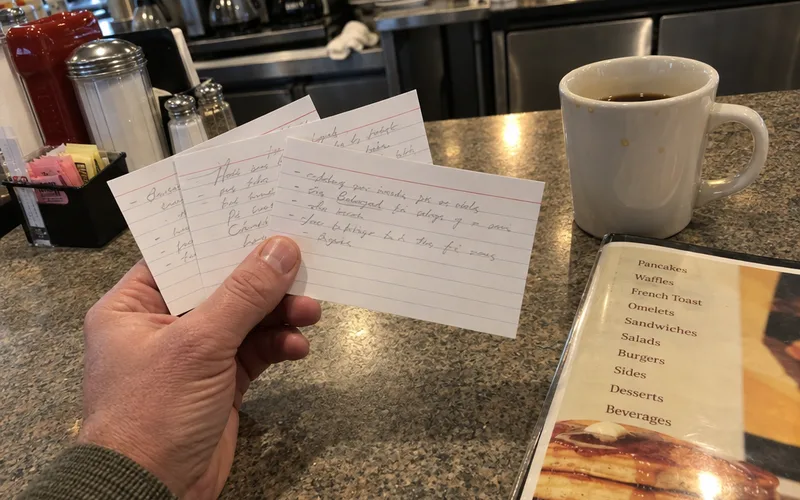
Hold every new sign, caption and menu line up against those 3 words before it goes out. If a line doesn’t sound like them, rewrite it until it does.
Step 5: Brand Every Touchpoint
Start with what guests take home, because those items keep working after the meal. Then work outward in this order:
- To-go bags, cups and boxes
- Receipts and loyalty cards
- The menu and table signage
- Your online listings, website and social profiles
- The storefront sign
Most of these are supplies you already buy, so adding your name and colors costs little more than you spend now.
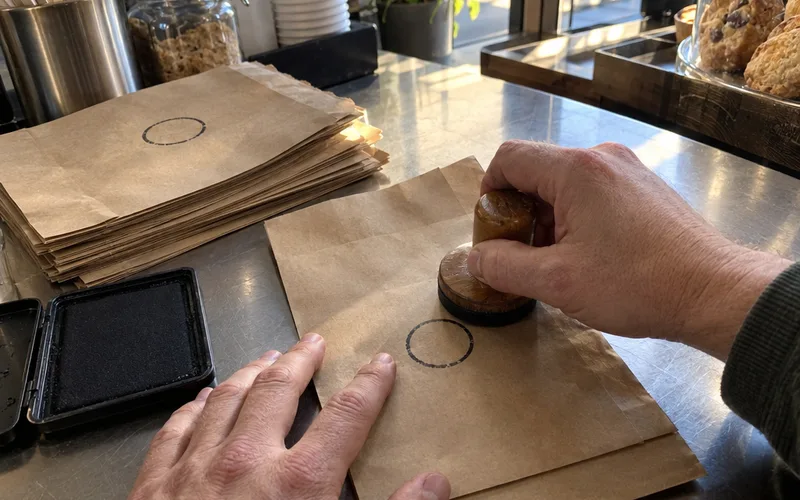
A rubber stamp of your mark on plain kraft bags is enough to start. Check each item against your brand sheet as you go, and fix them one at a time.
Step 6: Train Your Team to Deliver It
Your staff deliver the brand’s hospitality in person, on every shift. Give each person the brand sheet and 2 or 3 service rules that fit your promise and team culture, like “greet every table within a minute.”
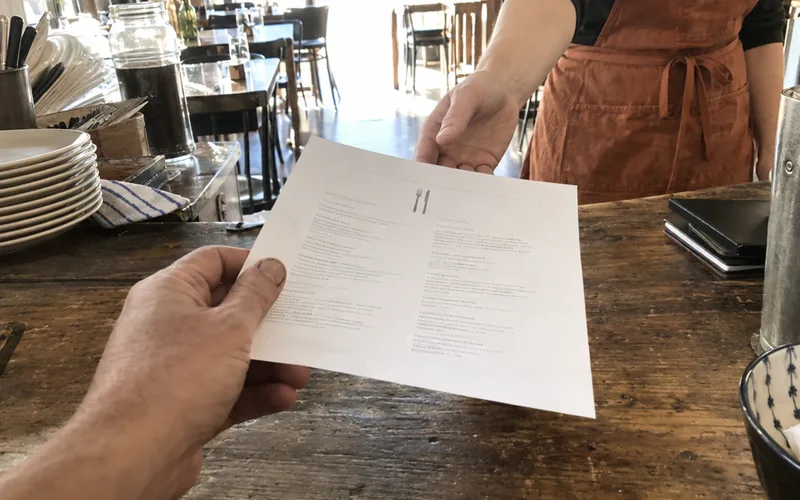
Here’s a short script that fits a casual spot: “Hey, welcome in! Grab any booth, and I’ll bring waters over.”
When every server says some version of it, the customer experience feels the same at noon and at 9 p.m.
How to Make a Restaurant Logo
To make a restaurant logo, start with your name in your brand font, add one simple symbol only if it helps, and test it in black and white at the size of a coffee-cup stamp. A logo that works small and in one color will work everywhere else.
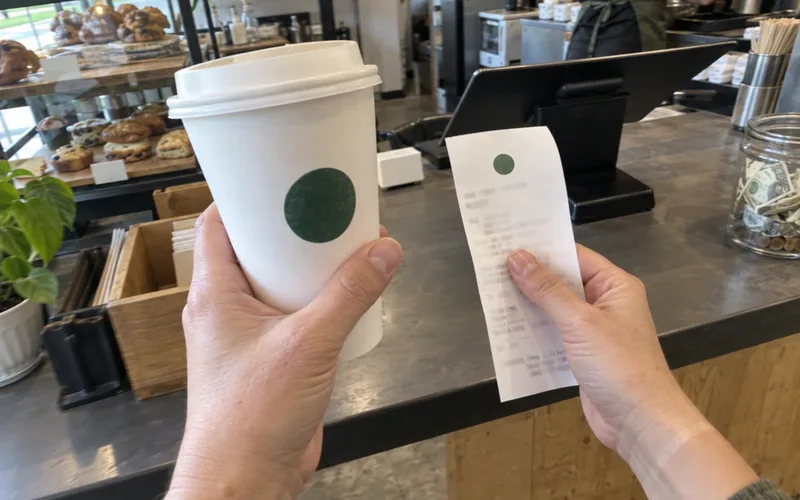
Run every draft through this quick test:
- Readable when printed about 1 inch wide
- Works in one color, with no gradients
- Looks right on a dark sign and a white bag
- Hints at your food or feel
- Looks nothing like a famous chain’s mark
You can draft ideas yourself in a free design tool such as Canva. Pro Tip: Print the finalist on a receipt and a sticker before you approve it, because that’s where weak designs fall apart.
How to Brand Your Restaurant Online
Your restaurant brand online lives mostly in 3 places: your Google Business Profile, your website and your social media accounts. Use the same name, logo, colors, hours and photo style on all 3, so a guest who finds you on Google Maps meets the same restaurant on Instagram.
Start with the Google Business Profile, since it shows your hours, photos and reviews right in search. Then make sure your site matches it, and these restaurant website templates give you a head start.
Photos and other images carry your look online more than anything else. Shoot your signature dish the same way every time, and borrow a few food photography habits so your feed looks like one restaurant.
From there, promoting your restaurant on social media gets easier, because every post already has a voice and a look to follow.
How Branding Brings Guests Back
Restaurant branding brings guests back when the brand goes home with them: a branded bag, receipt or loyalty card keeps your name in front of a guest after the meal. The touchpoints a guest keeps do the most for customer retention.
A loyalty card is the clearest example. A paper punch card with your name and colors sits in a wallet for weeks, and a digital punch card in Apple Wallet or Google Wallet puts your colors on the guest’s phone.
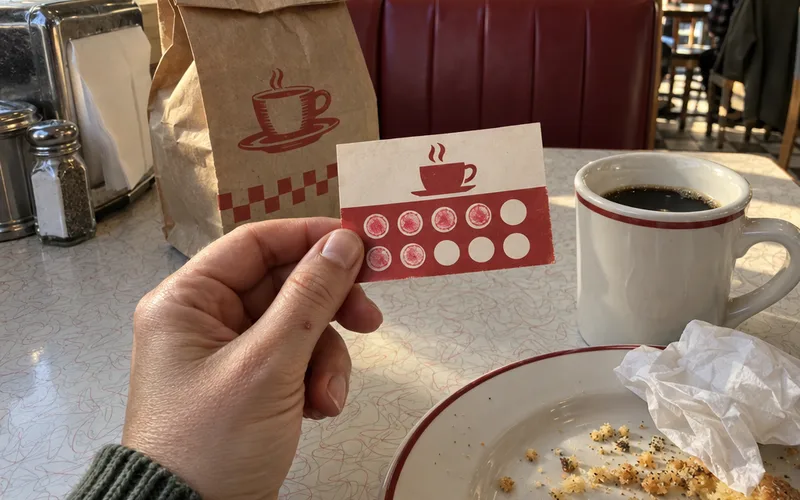
Treat that card as part of the brand and a tool for brand loyalty, not an add-on. These loyalty card design ideas show how to carry your look and voice onto it.
The receipt works the same way. A QR code on the receipt can send a guest straight to your loyalty card or menu, so the last thing they see is your brand inviting them back.
Restaurant Branding Ideas for a Small Budget
The best restaurant branding ideas for a small budget reuse things you already buy or do, such as bags, menus, uniforms and photos, and make them look like you. Here are a few to try this month:
- Give your best seller a name only you use
- Use a rubber stamp of your mark on plain kraft bags instead of custom ones
- Use your colors and voice on table tent ideas and chalkboards
- Rewrite 5 menu descriptions in your voice, using these creative menu ideas
- Put staff in aprons or shirts in your brand color
Uniforms deserve a closer look, because guests see them on every visit. Stock, a uniform maker, describes its own work for Chicago restaurants on its site, including relaxed linen aprons for Parachute and workwear-inspired outfits for The Hu.
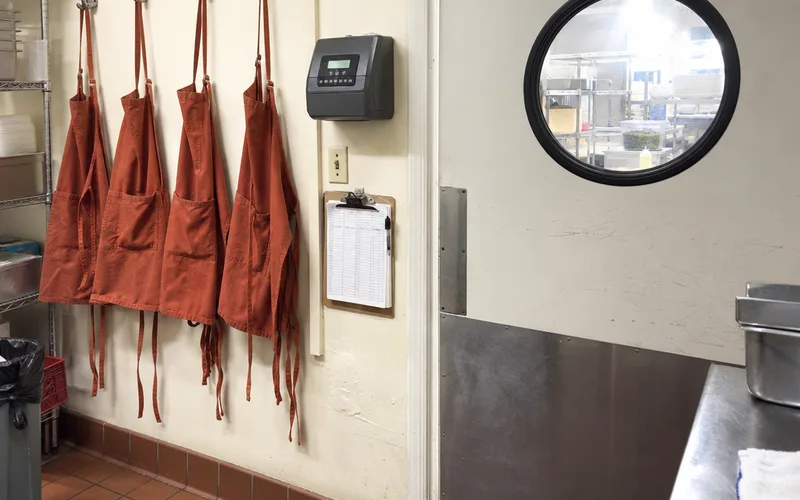
You don’t need custom tailoring to get the effect. Matching aprons in one brand color send the same message for a lot less.
Restaurant Branding Checklist
A restaurant branding checklist keeps your brand consistent by listing every element and touchpoint you need to match. Copy this list onto a one-page brand sheet, and that page becomes your template:
- One-sentence position written down
- 3 voice words and 3 sample lines
- Name checked for web address and handles
- Logo tested small and in one color
- 2 or 3 color codes and 2 font names
- Bags, cups and receipts branded
- Loyalty card matches your brand sheet
- Menu, table tents and signage match
- Online listings, website and social profiles match
- Staff trained on the brand sheet
Should You Do It Yourself or Hire a Designer?
A small restaurant can do its own brand strategy, voice and most touchpoints, then pay a designer for the logo and final files when the budget allows. The work only you can do is the positioning, because nobody knows your guests better.
Here’s how the work usually splits:
| Task | Do it yourself | Get help when |
|---|---|---|
| Position and story | Always | Never needed |
| Logo | Rough drafts | You’re ordering a sign or printed bags |
| Colors and fonts | Match your main design | The designer sets the final files |
| Menu and table signs | Free templates | You’re reprinting the whole menu |
To compare designer prices, ask 2 or 3 local designers or design students to quote the same package. Ask for one-color and full-color versions of the design, plus your color codes and font names in one file.
Matching requests make the quotes easy to compare side by side.
How to Rebrand a Restaurant Without Losing Regulars
To rebrand a restaurant without losing regulars, keep what they love, like the name or the signature dish, and change one touchpoint at a time. Start with whatever looks most worn or draws the most feedback, like a faded menu or an old sign.
Tell your regulars about the rebranding before they notice. A table tent or a short note on the receipt that says what’s changing and what’s staying keeps the change from feeling like a new owner.
Keep old loyalty card stamps valid when you switch to a new card. Nothing says “we still value you” like honoring every punch a regular already earned.
Start With One Page This Week
A restaurant brand is a promise you repeat, not a logo you buy.
This week, write your one-sentence position and 3 voice words on a single page.
Then hold your to-go bag up against it and fix the first thing that doesn’t match.
Frequently Asked Questions
Is restaurant branding just a logo?
No, restaurant branding is much more than a logo: it covers your concept, name, colors, fonts, voice, room, service and every touchpoint a guest sees. The logo is simply the most visible piece, so keep it simple and use it the same way everywhere.
What is restaurant brand identity?
Restaurant brand identity is the visual and verbal side of your brand: your name, logo, colors, typography and voice. Write it on one page so everyone who makes a sign, menu or social post uses the same pieces.
What is a restaurant brand strategy?
A restaurant brand strategy is your plan for who you serve, what you promise them and how each part of the restaurant keeps that promise. For a small restaurant, it can fit in one sentence plus a short list of the touchpoints to fix first.
Can a loyalty card be part of my restaurant brand?
Yes, a loyalty card is one of the few brand touchpoints guests keep after they leave, so give it your colors and voice. A digital punch card in Apple Wallet or Google Wallet puts that brand on the guest’s phone between visits.