68% of customers who quit a business think it simply didn’t care about them.
That figure comes from the U.S. Small Business Administration, as reported by Zendesk in 2022. In other words, most lost regulars weren’t chased off by a bad meal.
They just stopped feeling noticed.
The good news? The fix is cheap.
Below are 18 customer appreciation ideas for restaurants, cafes and small local shops, ranked from free to event-sized. Each one comes with its cost, timing, first step and the exact words to use.
Short on money this month? Ideas 1 through 7 cost nothing but attention.
If a bad review is eating at you, jump to idea 3.
Owners who already run a punch card should read idea 14 before printing another batch.
And if you want one big night that regulars talk about for months, idea 17 is your plan.
How These Ideas Are Ranked
The 18 customer appreciation ideas below are ranked by what they cost to start, from 7 free gestures that take only staff attention to a full appreciation night with food and drink. When two ideas cost the same, the one more owners can start this week comes first.
Every idea fits a business with a small team and no marketing department, so there are no catered galas or software contracts here.
Each idea comes with the same quick facts: who it suits, what it costs, what you get back, how long it takes and the first step to take today.
18 Customer Appreciation Ideas, Free Ones First
The best customer appreciation ideas for a small restaurant or shop are the free, personal ones: names, notes, review replies and spotlights. Ideas 8 through 16 cost about one menu item or a few supplies per guest, and ideas 17 and 18 take one night’s budget.
Read the list in order, but start wherever your week allows.
1. Learn Your Regulars’ Names and Orders
Greet your regulars by name and know what they usually order.
It costs nothing, and it’s the one thing big chains struggle to copy.
- Best for: any counter, cafe or diner with repeat guests. Skip it if you almost never see the same face twice, like a stand at a tourist stop.
- Cost: Free.
- Payoff: Regulars who feel known, which 76% of customers expect (2022).
- Time: Same day.
- First step: Write the names of your 10 most frequent guests on a card by the register tonight.
Personalization sounds like a tech word, but in a restaurant it just means remembering people. In fact, a Zendesk survey reported in 2022 that 76% of customers expect it, and a regular’s usual order is the simplest version there is.
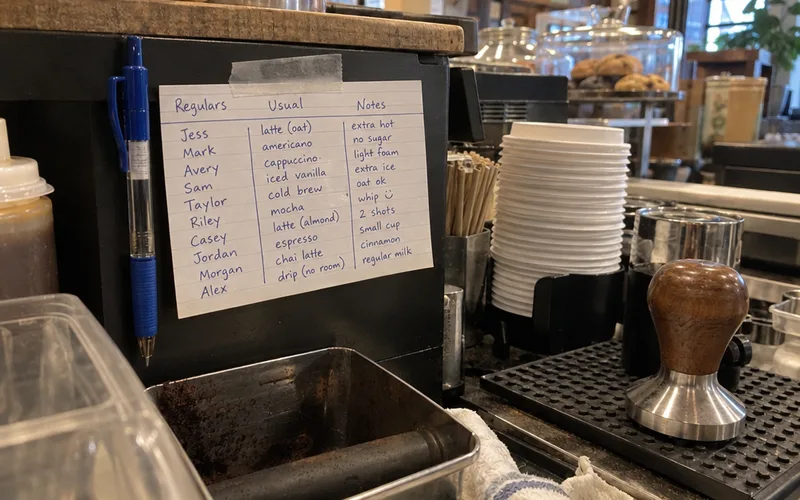
Here’s a simple system for a small team:
- Keep a “regulars card” behind the counter with names, usual orders and one piece of personal information (a dog’s name, a new job, a kid’s soccer team).
- Read it at the start of every shift, just like the specials.
- Add a new name every time a guest visits a third time.
- Ask for names naturally: “I see you every Tuesday and I never asked. What’s your name?”
Most customers are flattered that you noticed them at all.
Once you know a name, use it at hello and at goodbye, because those are the 2 moments people remember.
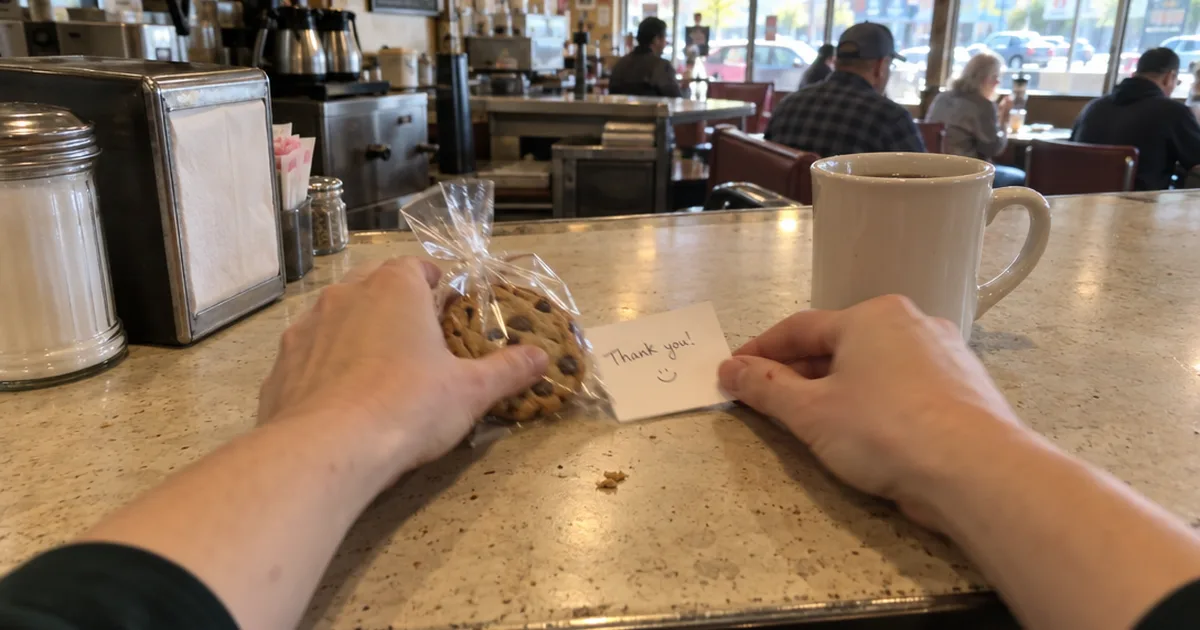
2. Write a Thank-You Note on the Check
Write a short, handwritten thank-you on the check, the receipt or the to-go bag.
A pen stroke takes 5 seconds and turns a transaction into a personal moment.
- Best for: table service, counter service and takeout. Skip it if checks print and go straight to a card reader with no human touch.
- Cost: Free (you already own the pen).
- Payoff: A personal thank-you on the one piece of paper every guest reads.
- Time: Same day.
- First step: Ask each server to write one note per shift, then build up from there.
The trick is to be specific.
A plain “Thanks!” is what everyone writes, while a note that mentions something real from the visit shows a person was paying attention.
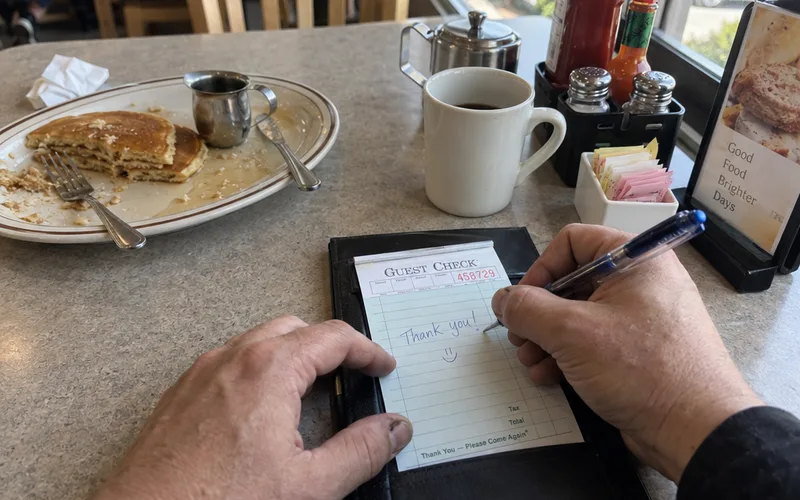
Here’s what to write, depending on the guest:
- First visit: “So glad you found us. Hope we see you again soon. - Maria”
- A regular: “Thanks for being one of our Friday regulars, Dave.”
- A celebration: “Happy anniversary to you both. Dessert’s on us next time.”
- Takeout: “Thanks for ordering. We packed the extra sauce you asked for.”
Notice the server’s name on the first one.
A signature turns “the business thanks you” into “Maria thanks you,” and people remember Maria.
3. Reply to Every Review by Name
Reply to every online review, good or bad, and thank the reviewer by name.
A review reply is a public thank-you that every future guest can read.
- Best for: any business with a Google Business Profile, Yelp page or Facebook page. Skip it if you have no listing yet; set one up first.
- Cost: Free.
- Payoff: Replies that future guests read, and 88% of customers are swayed by reviews (2022).
- Time: This week.
- First step: Open your Google Business Profile today and reply to the 5 newest reviews.
Why does this matter so much? Because your replies are read by customers who haven’t visited yet.
In a 2022 article, a Zendesk study found that 88% of customers are influenced by a company’s reviews when making a purchase decision.
So a warm reply does 2 jobs at once.
It thanks the guest who wrote it, and it shows the next guest what kind of place you run. Every glowing review you thank turns into one more testimonial for your reputation and credibility.
Here’s a reply you can adapt for a 5-star review:
“Thank you, Jen! We’re so glad the green chile burger hit the spot. Tell Luis at the counter it’s your second visit next time, and the fries are on us.”
Keep it short, name one detail from their review and invite them back. If you want more wording options, these 5-star review replies cover different kinds of guests.
Bad reviews deserve a thank-you too.
Thank the guest for telling you, own the problem in one line and offer to make it right offline.
Key Takeaway: A reply is the only thank-you that strangers get to see.
4. Spotlight a Regular on Social Media
Feature one regular a week or a month on your social media accounts.
People love seeing themselves on a business’s page, and their friends see it too.
- Best for: businesses with an active Instagram or Facebook page and guests who don’t mind a photo. Skip it if your crowd values privacy, like a quiet breakfast spot full of retirees who’d rather not be posted.
- Cost: Free.
- Payoff: A thank-you post that the guest shares with their own friends.
- Time: This week.
- First step: Ask one regular today if you can take their photo for a “Regular of the Month” post.
A customer spotlight is simple. You post a photo of a regular, their name (with permission) and one line about why you love having them.
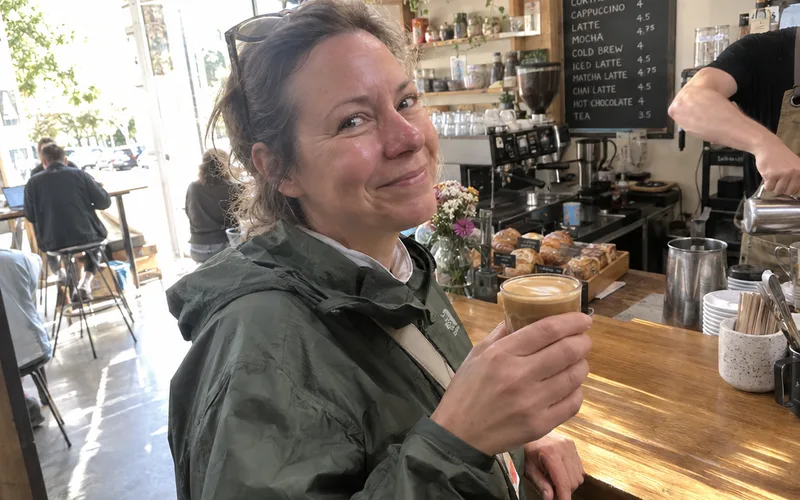
Here’s what that looks like:
“Meet Carla, our Regular of the Month. She’s ordered the same cortado every weekday since we opened, and she always asks about our kids. Thanks for being part of this place, Carla.”
The best part?
Carla will probably share it. Her friends see a real person they know vouching for your place, and that builds word-of-mouth without paying for it.
Always ask first, and let the guest pick the photo.
If you want the spotlight to reach more people, these tips on how to promote a restaurant on social media help the post travel further.
5. Show Guests What You Changed Because of Them
Tell guests when you act on their feedback, with a sign, a menu note or a post.
Feedback that disappears into a void feels like being ignored, while visible change feels like gratitude.
- Best for: any business that collects comments, cards or survey answers. Skip it if you never change anything; start collecting feedback first.
- Cost: Free.
- Payoff: Guests see proof that their opinion shaped your place.
- Time: 2-4 weeks (you need a change to point to).
- First step: Pick one piece of recent customer feedback you’ve already acted on, like a new oat milk option or later Sunday hours.
Most businesses ask for customer feedback and then go quiet, so guests stop bothering to give it.
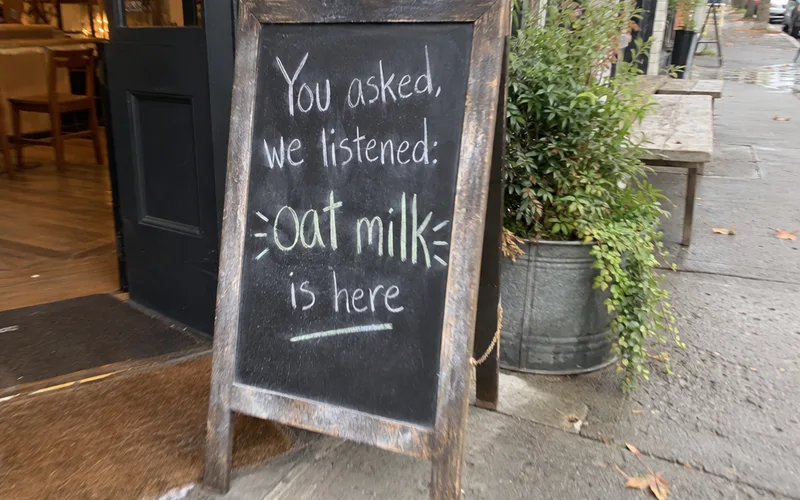
Here’s how to close that loop:
- Keep a running list of guest suggestions by the register or in your phone.
- When you make a change because of one, write it on a chalkboard: “You asked, we listened: gluten-free buns are here.”
- Post the same line on social media and in your next email.
- If you know who suggested it, tell them in person: “Hey, we added the oat milk you asked about. First one’s on us.”
That fourth step is where the magic is.
One guest feels heard, and every other guest sees that this place listens.
Key Takeaway: Appreciation isn’t only what you give, it’s also what you change.
6. Send a Short Thank-You Text or Video
Send a personal thank-you by text or a 30-second video to first-time guests or your best regulars.
It reaches people where they already are, on their phones.
- Best for: businesses that collect phone numbers with consent, like reservation lists or a text club. Skip it if you have no permission to text; ask for it first.
- Cost: Free (a phone you already own).
- Payoff: A thank-you that lands days after the visit, when most businesses have already forgotten the guest.
- Time: This week.
- First step: Record one 30-second video tonight thanking your text club for a great month.
A video thank-you isn’t much work: hold up your phone in your dining room and talk for 30 seconds like you would at the counter.
Here’s a script you can read off a sticky note:
“Hi, it’s Tom from Tom’s Diner. I just wanted to say thank you for coming in this month. Seriously, you’re why we’re still here. Come say hi this week and tell me you saw this video.”
Text messages work for one-on-one thanks too, including a “we miss you” note with a small reward for regulars you haven’t seen in a while.
Send them only to guests who opted in, and keep the communication personal rather than promotional. Done right, restaurant text marketing becomes a thank-you channel, not just a coupon blaster.
The timing matters too, and there’s a simple routine for how to thank a customer after a visit that tells you when to send what.
7. Give Regulars First Access
Let your regulars try new dishes, book holiday tables or buy limited specials before anyone else.
Early access costs nothing, and it makes people feel like insiders.
- Best for: places with seasonal menus, limited specials or busy holiday bookings. Skip it if your menu never changes and you never sell out.
- Cost: Free.
- Payoff: Regulars get a VIP perk that has real value, like the best Valentine’s Day table, without you discounting anything.
- Time: 2-4 weeks (tie it to your next new item or holiday).
- First step: Write down your next 3 menu changes, holidays or limited specials.
Early access works because it’s scarce: everyone can get a coupon, but only regulars get the first shot at the pumpkin pie preorders or the corner booth on Mother’s Day.
Here’s how to run it with an email list or a text club:
- Send the offer to regulars 48 hours before you announce it publicly.
- Name it plainly: “Regulars get first dibs.”
- Cap it, so it really is limited (the first 20 pie orders, the first 10 tables).
- Thank them in the message for being the reason you’re open.
Your restaurant email marketing list is a great place for this, because subscribers already raised their hand.
The catch?
If early access turns into a discount every time, guests start waiting for the deal instead of coming in. So keep early access about first choice, not lower prices.
8. Keep a Treat at the Register
Keep a small treat by the register for guests on their way out: mints, wrapped candy or a jar of house-made cookies.
It’s the last thing guests experience, so it colors the whole visit.
- Best for: counters, cafes, bakeries and family restaurants. Skip it if your space has strict allergy concerns; label everything if you do it.
- Cost: A few supplies a week (a bag of mints or a batch of cookies).
- Payoff: A small, sweet gesture at the moment people remember most: the goodbye.
- Time: Same day.
- First step: Put a bowl of wrapped mints by the register before your next shift.
The treat isn’t the point. The point is that your goodbye feels generous instead of rushed.
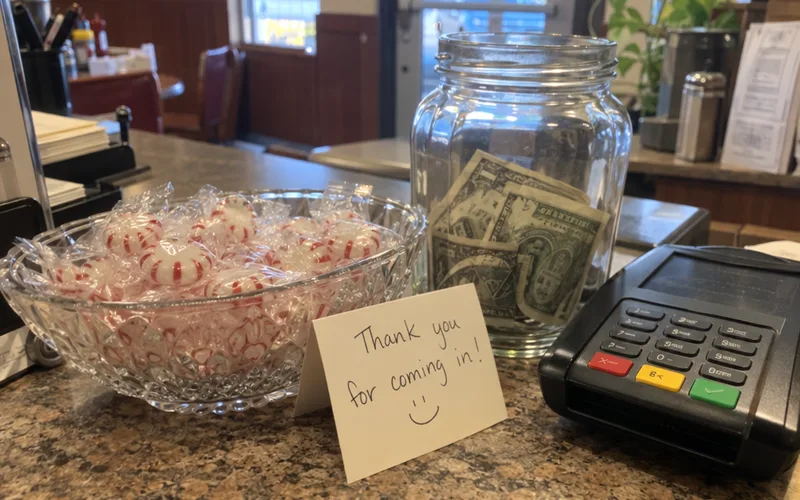
Want to make it better? Swap the store-bought candy for something from your own kitchen, like a bakery’s broken cookies from the morning bake.
Pro Tip: Hand the treat over in person when you can.
A bowl is nice, but “Here, take a cookie for the road” from a real person is far better.
9. Mail a Card for Milestones
Mail a handwritten card when a regular hits a milestone: their first anniversary as a guest, a holiday, or a big life event you know about.
A card in the mailbox stands out because almost nobody sends them anymore.
- Best for: businesses that know guests’ addresses, like caterers, salons with booking systems or restaurants with a mailing list. Skip it if you have no addresses; start with idea 2 instead.
- Cost: Blank cards and stamps, a few supplies per card.
- Payoff: A physical thank-you that can sit on a guest’s fridge for weeks.
- Time: This week.
- First step: Buy a box of blank cards and write 5 to your most loyal guests this week.
The holiday season is the obvious time, but a card in a random month often lands harder because nobody expects it.
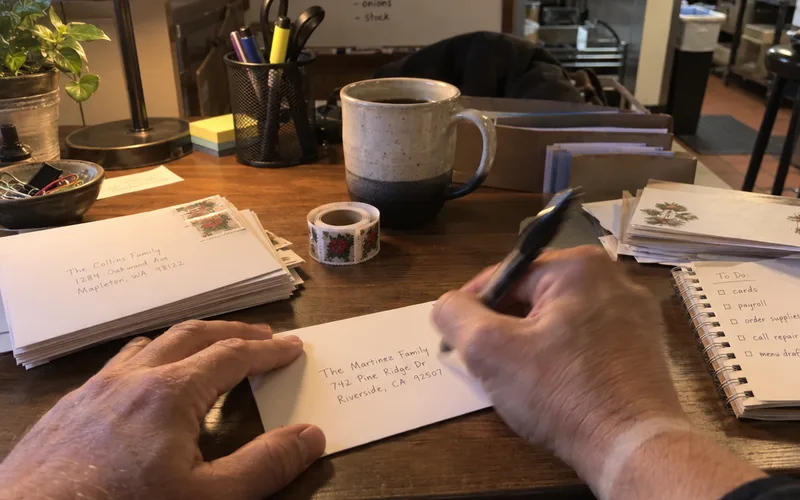
Here’s a card you can copy:
“Dear Linda, it’s been a year since you first came in for breakfast, and we’ve loved every Sunday since. Thank you for making our little diner feel like home. See you this weekend. - Sam and the crew”
If you’re writing cards for the holidays, this guide to a holiday customer appreciation letter has longer templates. Keep the message short, sign it by hand and resist adding a coupon, because a card with a sales pitch reads like advertising.
10. Comp Something Small, Unannounced
Surprise a regular with something on the house: a dessert, a side, an extra pastry or a free refill they didn’t ask for.
Unannounced is the key word, because a surprise feels like a gift while a promotion feels like a deal.
- Best for: any food or drink business with regulars. Skip it if your margins are so tight that a single comp hurts; keep it to low-cost items.
- Cost: One menu item per guest, at your food cost.
- Payoff: A story the guest tells their friends, which is free marketing for you.
- Time: Same day.
- First step: Give each shift lead permission to comp one small item per shift, no approval needed.
This is the restaurant version of what other industries call “surprise and delight.” Guests expect to pay for everything, so a free slice of pie with a note, “Thanks for being a regular,” feels personal.
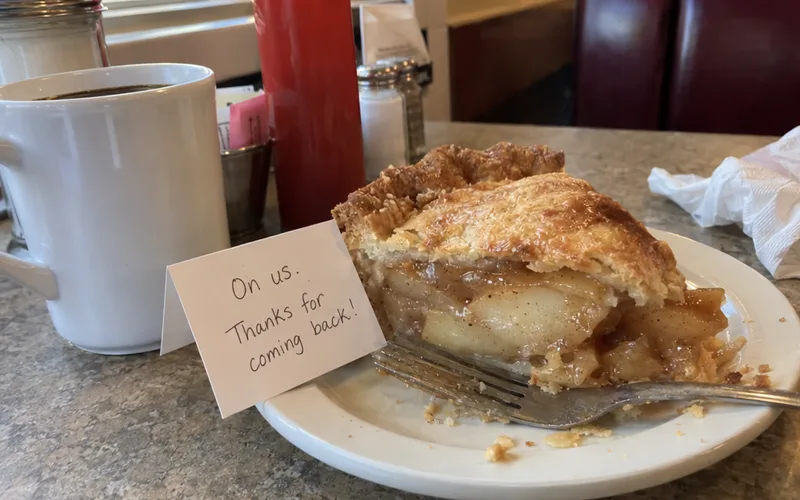
Here’s a simple way to keep it fair and affordable:
- Pick a short list of low-cost comp items, like a side of fries, a cookie or a drip refill.
- Let each shift comp one item, and log it in a notebook so you can see who gets them.
- Aim comps at regulars, first-time guests who seem unsure, and anyone celebrating.
- Say why: “This one’s on us, thanks for coming back.”
That last line matters most.
A comp with no explanation can feel like a mistake on the check.
Key Takeaway: Always tell the guest it’s a thank-you, so it lands.
11. Give a Birthday Reward
Offer every guest who shares their birthday a free item during that week.
Birthdays are the one day most people expect to be celebrated, and birthday guests often bring friends.
- Best for: businesses that collect birth dates through a loyalty card, email list or text club. Skip it if you have no way to store them yet.
- Cost: One menu item per guest, once a year.
- Payoff: A visit from the birthday guest, often with a group that pays full price.
- Time: 1-3 months (you need to collect dates first).
- First step: Add a “birthday month” field to your sign-up card or email form today.
This reward is a classic because it gives guests a reason to pick your place for the celebration.
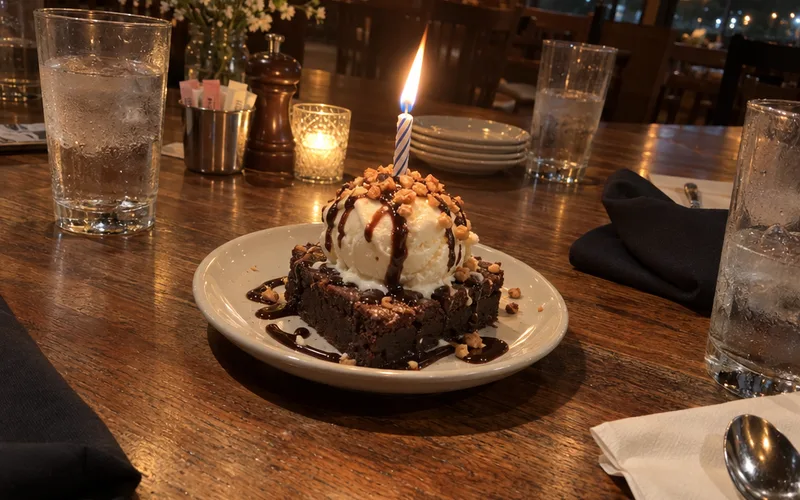
Here’s how to set it up:
- Ask for birthday month and day, not the year, so the question doesn’t feel nosy.
- Send the reward a week ahead by email or text.
- Make it good for the whole week, not just one day.
- Pick an item that pulls in a group, like a free dessert or appetizer, rather than a free entree for one.
Here’s the message:
“Happy almost-birthday, Sam! Come in any day this week and dessert is on us. Bring the crew.”
Keep the redemption easy: no hoops, no minimum spend, just a happy birthday and a free treat.
12. Thank Guests Who Show Up in Bad Weather
Reward guests who come in during a storm, a heat wave or a snow day with a small free item.
Bad weather empties dining rooms, so the guests who show up anyway deserve a thank-you.
- Best for: businesses in places with real weather swings and walk-in traffic. Skip it if bad weather actually brings you more business, like a cozy soup spot.
- Cost: One small menu item per guest, only on bad-weather days.
- Payoff: A reason for regulars to choose you on your slowest days.
- Time: One season (it depends on the weather).
- First step: Write a “rainy day reward” sign today so it’s ready for the next storm.
This one turns a bad day into a story: a guest who braved the rain and got a free hot chocolate will tell people about it.
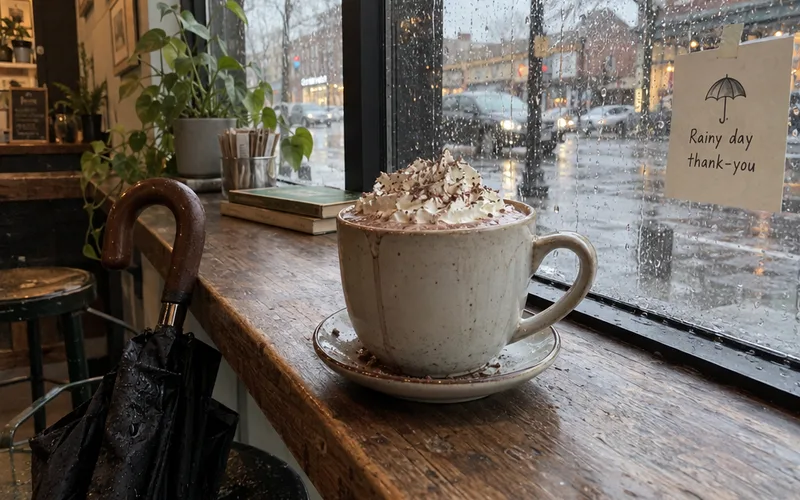
Here’s what the sign could say:
“Made it through the rain? Free hot chocolate with any order today. Thanks for showing up.”
Post the same line on social media the moment the weather turns, so it thanks the guests in the room and invites the ones still deciding.
The catch is that a reward on every gray day stops feeling special. So save it for genuinely bad weather, the kind that would normally empty your dining room.
13. Make It Right With a Rain Check
When something goes wrong, like a sold-out special, a long wait or a cold plate, give the guest a rain check for their next visit.
A mistake handled well can build more loyalty than a perfect night.
- Best for: every food business, because every kitchen has off nights. Skip it only if your staff can’t track or honor rain checks.
- Cost: One menu item per affected guest.
- Payoff: A second visit from a guest who might otherwise never come back.
- Time: Same day.
- First step: Print a small stack of “next one’s on us” cards today and keep them at the host stand.
A rain check is a promise to make it up to someone. Here, it means “We let you down tonight, so your next visit starts with something free.”
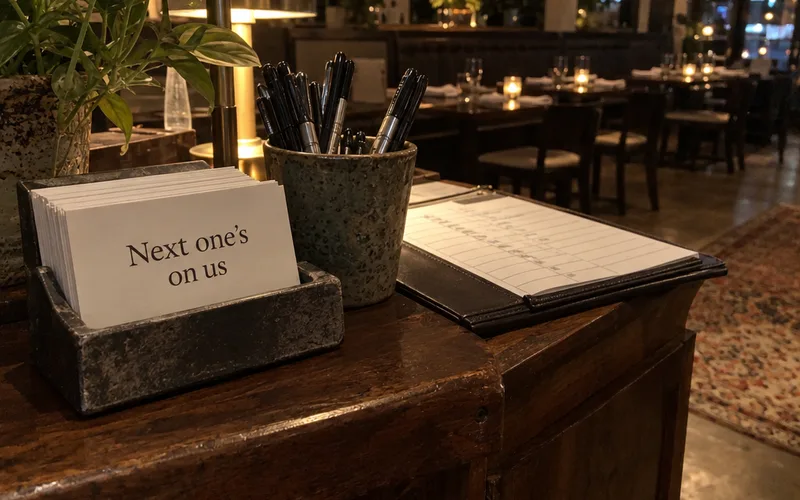
Here’s what to say:
“I’m so sorry the special ran out before your order. Here’s a card for a free one next time, and I’ll make sure we save you one.”
Then actually save them one, because the follow-through is what turns a complaint into a regular.
14. Reward Visits With a Digital Punch Card
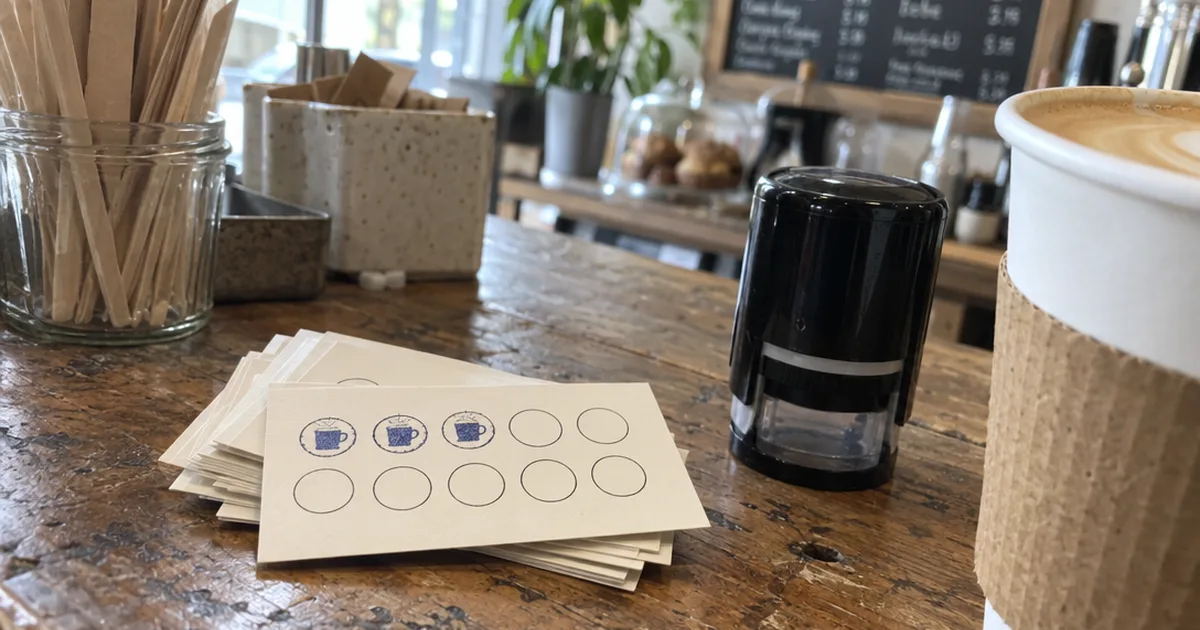
Set up a punch card that rewards repeat visits, ideally a digital one guests save in Apple Wallet or Google Wallet.
A loyalty program is appreciation on autopilot: it thanks guests every time they come back, not just on special days.
- Best for: any business with regulars who visit at least monthly. Skip it if most guests visit once, like a restaurant in an airport.
- Cost: One menu item per completed card, plus the card itself, which can be free to start.
- Payoff: A built-in reason to come back, and a list of your regulars you can thank directly.
- Time: 2-4 weeks (to set up and hand out the first cards).
- First step: Decide on one reward and one number of visits, like a free coffee after 9.
A paper punch card works, but it gets lost in wallets and washing machines.
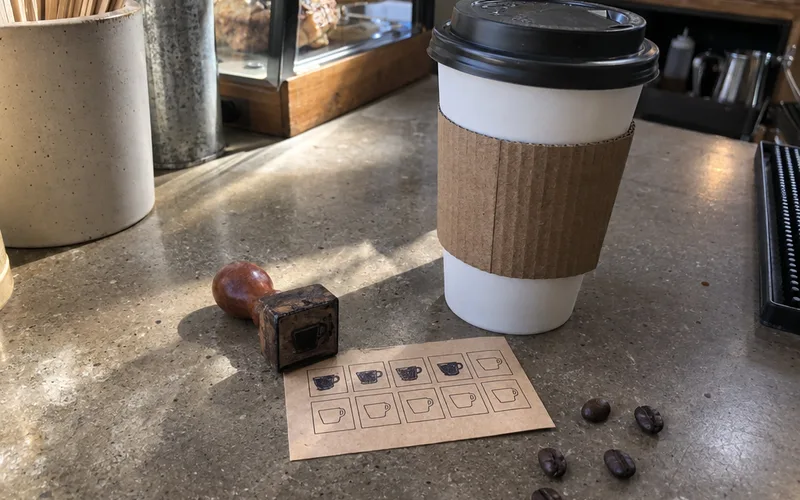
A digital punch card lives on the guest’s phone, next to their boarding passes, and it can’t be forgotten at home. It also gives you data on who your regulars are, which makes ideas 1, 7 and 11 easier.
Keep the reward reachable.
A card that needs 20 visits for a free coffee feels like a chore, while one a regular can fill in a month or two feels like a thank-you. If you’re stuck on what to give away, these punch card reward ideas cover options for different budgets.
Here’s what to tell guests at the register:
“Want to start a card? Every visit gets a stamp, and your 9th coffee is on us. It saves right to your phone.”
Key Takeaway: The best loyalty card is one your regulars can fill.
15. Invite Regulars to Taste-Test New Dishes
Invite a small group of regulars to try new dishes before they hit the menu, and ask for their honest opinion.
Being asked for advice is a powerful form of appreciation, because it says “your taste matters here.”
- Best for: restaurants, cafes and bakeries that change their menu a few times a year. Skip it if your menu is fixed for good.
- Cost: Small tasting portions of 3 to 5 new dishes for 6 to 10 guests.
- Payoff: Real feedback before you print a menu, plus a group of regulars who feel like insiders.
- Time: 2-4 weeks (plan it around your next menu change).
- First step: Pick 6 regulars from your regulars card and invite them in person this week.
Big brands and any large company would call this a customer advisory board. For a small restaurant, it’s just a table of regulars and some forks.
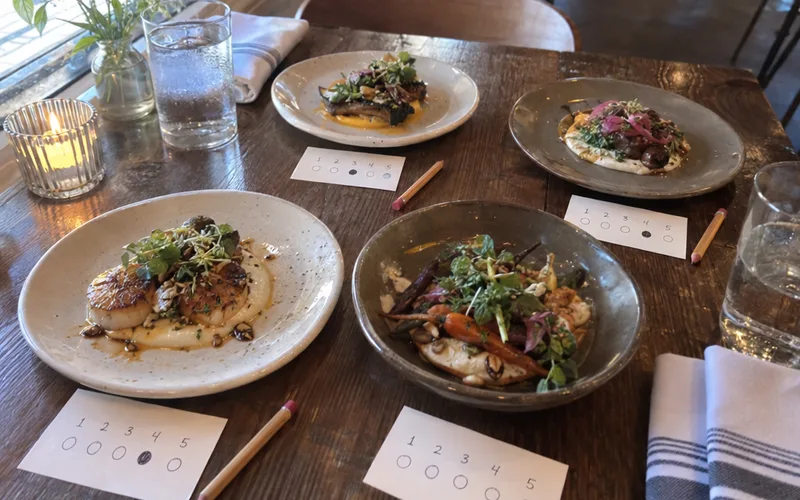
Here’s the invite:
“We’re testing 4 new dishes before our spring menu, and we’d love your honest take. Can you come by Tuesday at 3 for a free tasting?”
Run it during a slow afternoon, and hand out a simple card with each dish and a 1-to-5 rating.
Then use what they tell you.
When a dish they loved makes the menu, tell them (see idea 5), and they’ll talk up your new menu before it launches.
16. Thank Guests Who Send Friends
Reward guests who refer friends with a thank-you for both the regular and the new guest.
A referral is one of the best compliments a guest can pay you, so it deserves a real reward.
- Best for: businesses whose regulars already bring friends. Skip it if you have no way to track who sent whom.
- Cost: One menu item for the referrer and one for the new guest, paid only after the friend visits.
- Payoff: New guests who arrive already trusting you, since 77% of customers would recommend a company after a good experience.
- Time: 1-3 months.
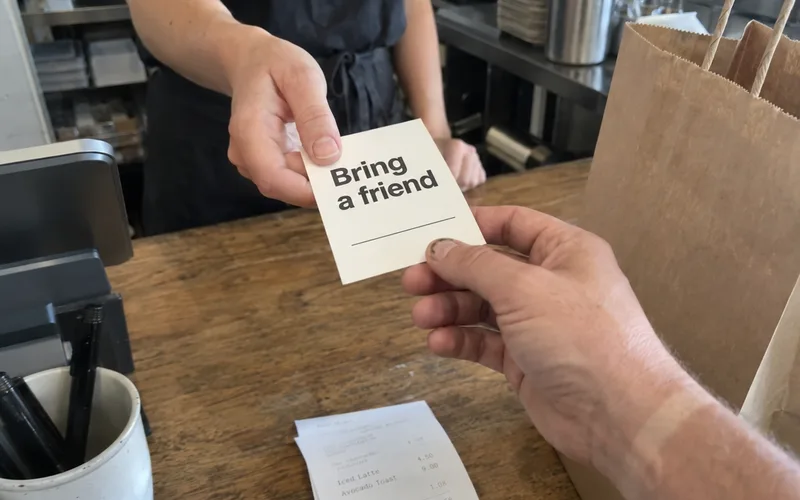
- First step: Print a simple “Bring a friend” card with a space for the referrer’s name.
Your happy regulars are already talking about you.
In fact, a 2022 Zendesk report says that 77% of customers would recommend a company after having a positive experience with it. A referral reward simply says thank you for something they were going to do anyway.
Here’s how to keep it simple:
- Hand regulars a card that gives their friend a free appetizer on the first visit.
- Ask new guests at the register, “Who told you about us?”
- Write the referrer’s name on the card or in a notebook.
- Give the referrer a thank-you reward on their next visit, with a personal note.
Here’s the note:
“Your friend Ana came in Saturday because of you. Thank you! Your next drink is on us.”
Reward the referrer only after the friend shows up, so you pay for results. A full restaurant referral program adds tracking and a two-sided reward once referrals pick up.
17. Host a Regulars-Only Appreciation Night
Host a customer appreciation night just for your regulars, with free bites, a drink special or a live music set.
An exclusive event says “you’re part of this place” louder than any coupon.
- Best for: restaurants and cafes with a loyal core of 30 or more regulars. Skip it if you can’t close or slow down one night without losing money you can’t spare.
- Cost: One night’s food and drink budget, which you set in advance.
- Payoff: A night regulars talk about for months, and photos that fill your social media feed.
- Time: 1-3 months (to plan, invite and host).
- First step: Pick a slow weeknight 6 weeks out and put it on your calendar today.
Customer appreciation events don’t need to be fancy.
They need to feel exclusive. A Tuesday “Regulars Night” with free appetizers, a raffle and the owner working the room beats a big public party where nobody feels special.
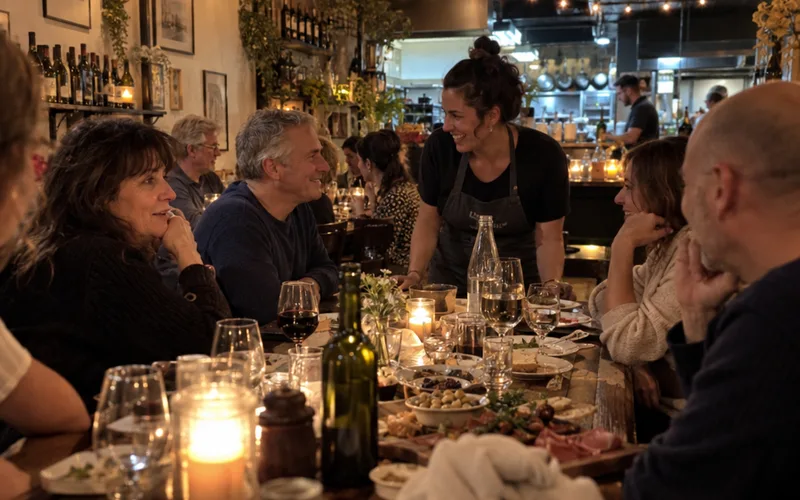
Here’s how to plan one:
- Pick a slow night, so you’re not giving away a busy shift.
- Invite regulars personally, by card, text or email, 3 to 4 weeks ahead.
- Set a budget: free appetizers and one drink special are plenty.
- Add one fun thing, like a raffle for a gift card, a local musician or a “name our new dish” contest.
- Thank everyone out loud at some point in the night, and mean it.
Popular customer appreciation party themes include a “throwback night” with your opening-year prices on one item, a staff-picks tasting menu or a holiday party before the rush.
Trivia, tastings and themed nights all make good restaurant event ideas too. The single most important part is the personal invite, because that’s what makes the night feel like a thank-you instead of a promotion.
18. Donate a Night to a Cause Your Guests Choose
Pick one night a year to donate a share of sales to a local cause, and let your regulars vote on which one.
It thanks your guests by supporting something they care about, not just giving them stuff.
- Best for: businesses with strong roots in a neighborhood, school or church community. Skip it if you can’t afford to give away part of a night’s sales.
- Cost: A share of one night’s sales, which you set in advance.
- Payoff: Guests come in for a reason bigger than dinner, and many bring friends who’ve never visited.
- Time: 1-3 months.
- First step: List 3 local causes your regulars mention, like the youth soccer league, the food bank or the animal shelter.
A donation night gives your community a reason to choose you over staying home, and when guests pick the cause, they feel ownership.
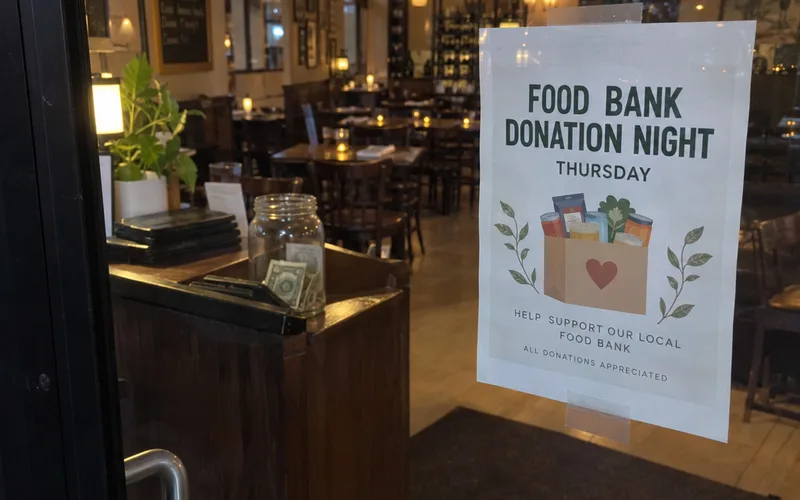
Here’s how to announce it:
“You voted, and the winner is the Eastside Food Bank! This Thursday, a share of every check goes to them. Come eat, and bring someone.”
Be clear and public about how much goes to the cause, because that transparency builds trust in the whole experience.
Pro Tip: Take a photo of the donation handoff and post it with a thank-you to everyone who came.
What to Do on Customer Appreciation Day
Customer appreciation day is a day you pick to thank your customers on purpose, usually with a special offer, a small gift or an event. The best plan for a small business combines 3 ideas from this list: a thank-you message the week before, a small surprise on the day and a public thank-you afterward.
You don’t need a national holiday for it.
Pick a date that means something to your business, like your opening anniversary, or a slow week you’d like to fill. Some owners stretch it into a customer appreciation week or even a month.
Here’s a simple 1-week plan:
- 5 days before: Post and email the announcement: “Next Thursday is Customer Appreciation Day. Come in and let us thank you.”
- The day: Hand every guest a small treat (idea 8), and comp something for regulars (idea 10).
- During the day: Take photos of guests (with permission) for a spotlight post (idea 4).
- The day after: Post a big thank-you with the photos and the total number of guests you served.
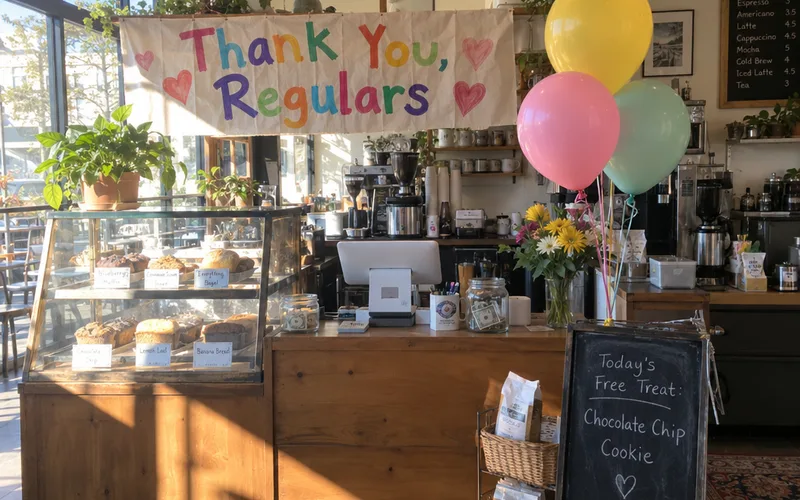
Pinterest is full of customer appreciation day decoration ideas, but a chalkboard sign and a “Thank You, Regulars” banner by the register are plenty.
The point is to make the day feel different from a normal sale. A discount says “buy more,” while a thank-you day says “we’re glad you’re here.”
Customer Appreciation Gifts That Get Used
The best customer appreciation gifts for a restaurant or small shop are things guests will use or eat, like a gift card, a jar of house sauce, a branded mug or a local treat. Skip cheap swag that ends up in a drawer.
A gift should remind people of you every time they use it.
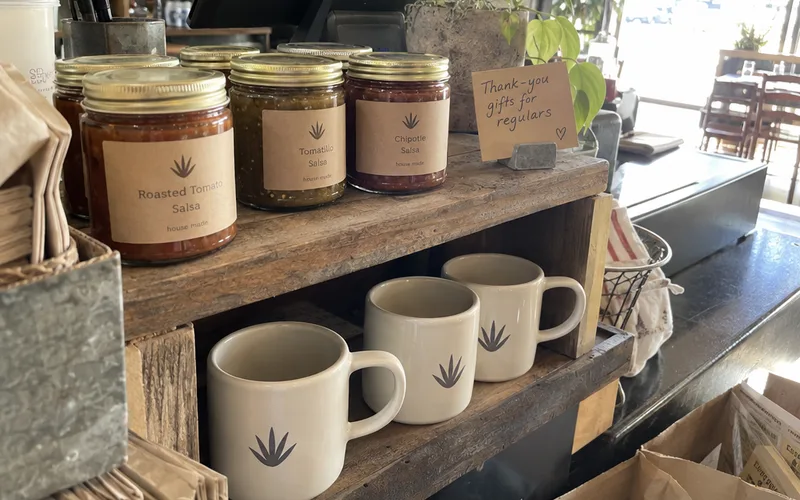
Here are gift ideas that work for small food and service businesses:
- Gift card: Give your best regulars a small gift card “just because.” It brings them back to your counter.
- House-made goods: A jar of salsa, a bag of your coffee beans or a box of cookies says “this is us” better than anything with a logo.
- Branded mug or tote: A good mug with your logo gets used every morning. Pick quality over quantity, or it becomes junk swag.
- Local partner gifts: Team up with a nearby business, like a florist or bookshop, and swap small gift certificates for each other’s regulars.
- Something for the kids: For family restaurants, a coloring book or small toy for a regular’s kids is a gift the parents remember.
Match the gift to the guest.
A regular of 5 years deserves more than a first-time guest, so keep a short list of who gets what.
Note: A gift card from your own business is the safest bet for most owners, because it costs you only when it’s used.
Customer Appreciation Post Ideas (With Wording)
A good customer appreciation post thanks your customers by name or by group, says one specific thing they did and invites them back. Keep it short, warm and personal, and always ask before you tag or photograph a guest.
Most appreciation posts fail because they’re generic, like “Thank you to all our amazing customers!” The posts that work name something real.
Here are 5 appreciation posts for customers you can adapt:
- The milestone post: “We just served our 10,000th breakfast. Every one of those plates went to someone who chose us. Thank you.”
- The regular spotlight: “This is Mike. He’s had the Tuesday special every Tuesday for 3 years. Mike, you’re the best. Lunch is on us next week.”
- The tough-week post: “Last week’s storm knocked out our power for 2 days. Thank you to everyone who came back the minute we reopened.”
- The staff-and-guest post: “Our servers picked their favorite regulars this month. Congrats to the Lopez family, voted ‘Best Table Neighbors.’”
- The simple thank-you: “No special today. Just a thank-you to every person who walked through our door this week. You keep us going.”
Real numbers from your own business, like a 10,000th breakfast, make a post feel true. Write for your target audience too: the regulars who already follow you, not strangers scrolling past.
Post the same message in a newsletter or email too. A Facebook post reaches people who follow you, while an email reaches people who’ve given you their address, and both are worth thanking.
Why Customer Appreciation Pays Off
Customer appreciation pays off because keeping a guest is far cheaper than finding a new one: Zendesk states that acquiring a new customer costs 5 to 25 times more than retaining an existing one. Appreciation is how you keep the guests you already have.
That’s huge for a small business with a tight budget.
Every regular you keep is a guest you don’t have to win back with advertising. Customer retention, keeping the customers you already have, is cheaper than any ad.
So a free coffee for a regular is often a better marketing spend than a coupon mailed to strangers.
Here’s how Zendesk’s Director of Training and Quality Assurance, Holly Vande Walle, put it in 2022:
“Customer appreciation is important because it directly impacts CSAT and customers will reward a business with brand loyalty when they feel appreciated.”
CSAT is short for customer satisfaction score, a common way to measure how happy customers are.
In plain terms, customers who feel appreciated are happier, and happy customers come back. Brand loyalty isn’t something you can buy with a single promotion, but you can earn it with steady small gestures.
There’s also a defensive reason: a guest who feels known at your counter has a reason to stay, even when a new place opens down the street.
A bigger plan of customer retention strategies ties these ideas into everything else you do to keep guests coming back.
Key Takeaway: Appreciation is a retention tool, not a nice extra.
How Much to Spend on Customer Appreciation
Customer appreciation can cost almost nothing: ideas 1 through 7 on this list are free, and most of the rest cost about one menu item per guest. Match the size of the thank-you to what the guest did, and set a monthly comp budget so gestures never surprise you.
You don’t need a big number.
You need a predictable one. Decide each month how many comps, rewards and gifts you can afford, then spend it on purpose.
Here’s a hypothetical example to show the math:
Say your cafe sets a monthly budget of 40 free drinks, and each drip coffee costs you about 50 cents to make. That’s about $20 a month in coffee, and it can fund 10 birthday rewards, 20 surprise comps and 10 rain checks.
Now match the thank-you to the customer:
- A first-time guest: a warm thank-you and a note on the check.
- A guest who left a review: a personal reply, and maybe a free side next visit.
- A regular for a year: a handwritten card and a comp.
- A guest who sent you friends: a real reward for them and their friend.
This keeps appreciation fair, and it keeps it from turning into a discount program.
Track your comps in a notebook or your POS system for one month. You’ll see quickly which ideas bring people back, and you can spend more where it works.
Customer Appreciation Mistakes to Avoid
The most common customer appreciation mistakes are thanking everyone the same way, attaching a sales pitch to every thank-you and promising rewards guests can’t reach. Each one turns gratitude into marketing, and consumers notice the difference.
Here’s what to watch for:
- The thank-you with a catch: “Thanks for visiting, here’s 10% off if you spend $30” is a sales pitch, not appreciation. Send some thank-yous with nothing attached.
- Rewards nobody reaches: A punch card that needs 25 visits, or a birthday reward with a minimum spend, feels like a trick.
- Too many discounts: Constant coupons train guests to wait for a deal. Mix in free thank-yous, early access and personal notes instead.
- Forgetting the staff: Your servers and counter staff deliver most of your appreciation, so give them the freedom to comp, note and greet without asking.
- Only thanking big spenders: The quiet regular who orders one coffee every morning is the backbone of your business too.
The biggest mistake is doing it once: a big appreciation day followed by 11 months of silence doesn’t build loyalty.
Frequently Asked Questions
What are some examples of customer appreciation?
Examples of customer appreciation include greeting regulars by name, writing a thank-you on the check, replying to reviews, comping a dessert, sending a birthday reward and hosting a regulars-only night. The common thread is that each one is aimed at a person, not at everyone who walks by.
How do you appreciate a customer?
You appreciate a customer by noticing them as a person and then acting on it: use their name, remember their order and thank them for something specific they did. Start with one regular this week and add a small surprise the next time they visit.
What are creative customer appreciation ideas for small businesses?
Creative customer appreciation ideas for small businesses include a rainy-day thank-you for guests who show up in bad weather, a tasting panel of regulars who try new dishes first and a charity night where guests pick the cause. Each one costs little and gives people a story to tell.
Is a loyalty program a form of customer appreciation?
Yes, a loyalty program is a form of customer appreciation when its rewards are easy to reach and come with a real thank-you. A punch card that pays off within a month or two of regular visits feels like gratitude, while one that takes a year to fill feels like a sales tactic.
How often should a small business show customer appreciation?
A small business should show customer appreciation every day in small ways, like names and thank-yous, and a few times a year in bigger ways, like a birthday reward or an appreciation night. Put the bigger moments on a calendar so they happen even in a busy month.
Final Thoughts
Customer appreciation works best when it’s small, personal and steady, not big and once a year.
Pick 2 free ideas from the top of this list and start them this week, then add one milestone reward before next month.