Retention
·
·
11 dk okuma
Loyalty reward ideas and what each one costs you
The best loyalty program reward ideas cost you far less than the customer thinks they got, which is why a free item beats the same money off the bill.

Andrew Kim
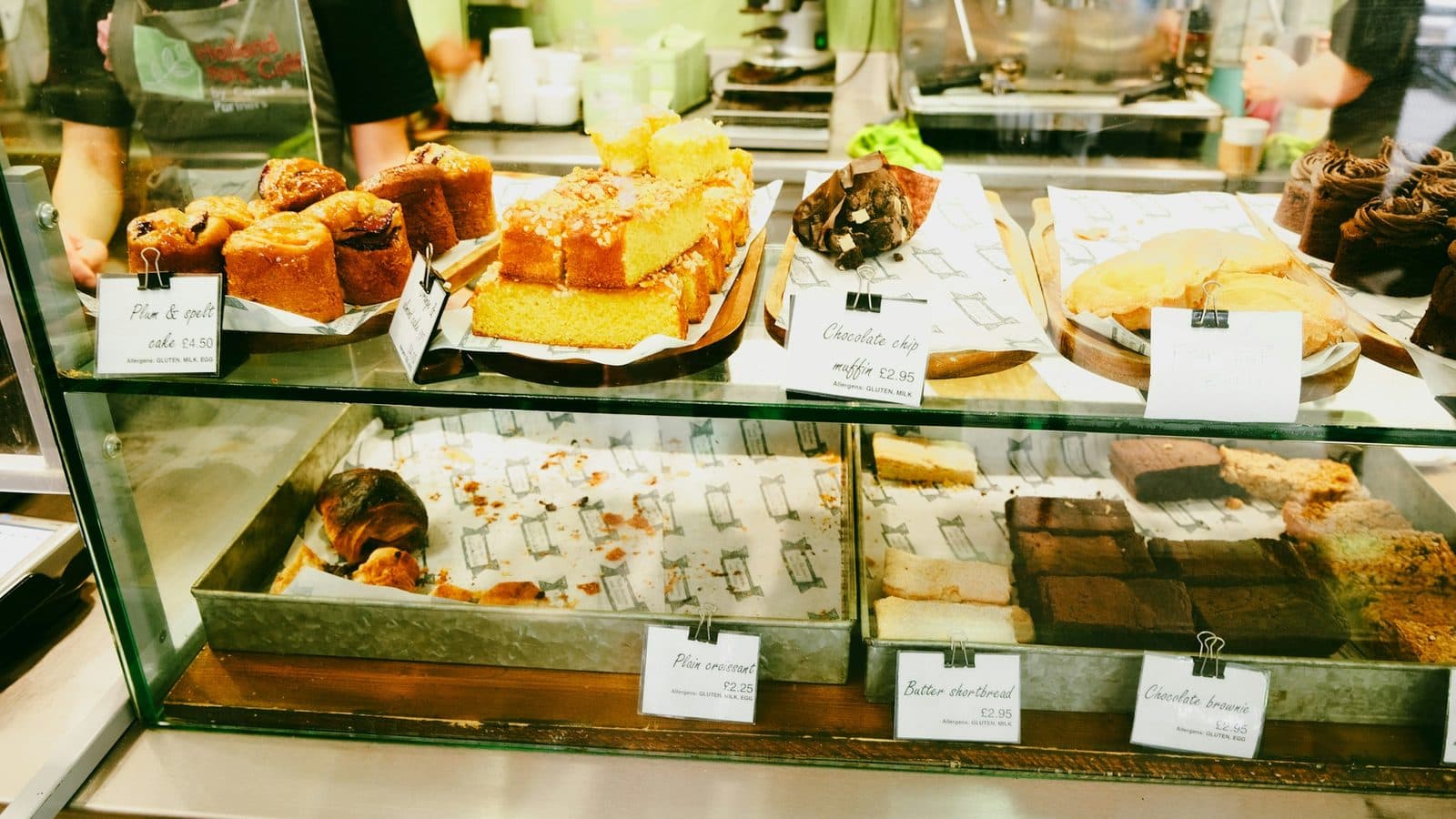
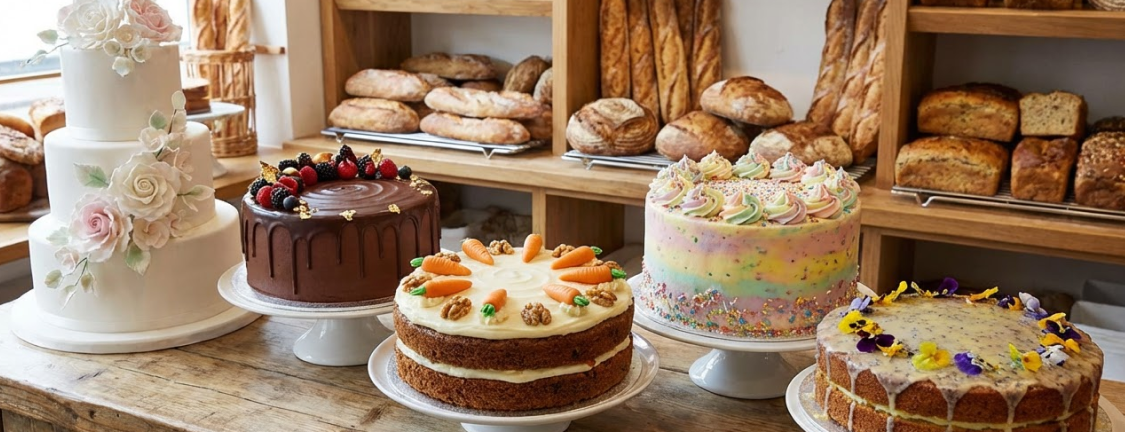
Photograph by Benjamin Cheng on Unsplash
A free $12 plate and $12 off the bill are the same present to the person receiving them. To you they are nowhere close. At the 33.7% median food and non-alcohol beverage cost the National Restaurant Association reported for full-service restaurants under $2 million in sales, that plate leaves the kitchen having cost you $4.04, while the $12 discount costs you $12.
Every guide to loyalty program reward ideas I can find sorts them by how inventive they are. Sort yours by that gap instead. The reward worth giving is the one with the widest distance between what it costs you to make and what the customer thinks they received, which puts the percentage discount near the bottom of the list rather than at the top.
BCG named that gap the loyalty margin in a 2014 paper and wrote that a price discount leaves one that is "narrow to nonexistent". Twelve years on the reward round-ups have got longer, and the ones ranking today still count ideas rather than pricing them.
A discount is the only reward that costs exactly what it's worth
The arithmetic behind that is a single line. Put five percent of revenue into a five percent price cut and you have handed over a reward the customer values at, precisely, five percent. Nothing in that transaction manufactures value. Cash carries no production cost to hide behind, and the clarity that makes a discount easy to explain is exactly what stops it ever being worth more to the customer than it cost you.
There is a second bill attached. A discount held open long enough is a new price, and BCG's note on that is blunt: it's "a move that competitors can easily copy." The café across the road can match ten percent off by Friday. It cannot match your almond croissant.
Anything you make yourself does manufacture value, and that's the whole trick. BCG's own illustration is a hotel room, which costs a half-empty hotel little more than the cleaning and is worth a few hundred dollars to the guest who redeems it. A kitchen is the same machine on a smaller scale. Run the plate through it. The customer receives $12 either way, and you pay either $4.04 or $12, so the plate buys very nearly three times as much for every dollar you give up.
Your own number will differ, and it's the only one that matters here. Restaurants above $2 million in sales reported 31.0% rather than 33.7% in the same data, which is one dataset splitting three points on sales volume alone, so pull your own food cost before you borrow anybody else's.
Free beats cheap by more than the price difference
The gap is not the only reason a free item wins. There is a second one, and it was measured with chocolate.
In a cafeteria experiment with real money, Kristina Shampanier, Nina Mazar and Dan Ariely offered customers a Hershey's Kiss and a Lindt truffle. When the Kiss cost 1 cent and the truffle 14, the truffle took 79% of the choices. Drop both prices by a penny, so the Kiss is free and the truffle costs 13, and the truffle's share fell to 29%. The price difference never moved. Only zero appeared, and their paper in Marketing Science concluded that people act as though a price of zero doesn't just remove a cost but adds to the benefit.
At your counter that means "free croissant" and "$2.25 off" are not the same offer, even though the croissant is the cheaper of the two for you to hand over. You get the margin and the zero in one move.
Something else follows the free item out of the door. Tillster reports that 74% of diners end up spending additional money, by adding an item or upgrading, when they redeem a free loyalty reward; MediaPost, covering the same report, puts the survey at 2,144 US consumers. Read the figure carefully, because it describes what happens on a visit that already happened rather than proving the visit was incremental. Even read narrowly it points at the difference that matters: a discount shaves a bill that was coming anyway, and a free item is a reason to walk in.
Loyalty program reward ideas, and what each one costs
| Reward | What the customer counts it as | What it costs you | What has to be true |
|---|---|---|---|
| A free item you make | Its menu price | Its ingredient cost | They already order it |
| A free item you resell | Its shelf price | Your wholesale price | You buy at a real trade discount |
| A size or add-on upgrade | The gap between the two menu prices | The extra ingredient, and nothing else | Your menu prices sizes apart |
| A fixed amount off the bill | The amount, exactly | The same amount, in cash | Nothing at all, which is its one real advantage |
| A percentage off the bill | The amount, worked out afterwards | The same amount, in cash, moving with the basket | Nothing at all, and the bigger the ticket the more it costs |
| Priority booking, or skipping the queue | Being ahead of everybody else | Staff attention, and a slot you could have sold | You genuinely run out of something |
| Early access to a new line | Being first | A week of patience before the public launch | The new line is worth being early for |
| Branded merchandise | Its retail price | Your unit cost at whatever volume you ordered | Somebody would carry it unprompted |
| A service add-on you already staff | Its list price | Time in a slot that was going to sit idle | The slot really was idle |
The cost column names an input rather than a number on purpose. Your kitchen, your shelf and your rota are the only honest source for that figure.
Two rows on that list are quietly conditional. Priority and early access cost nothing only while scarcity is real: a restaurant with a waiting list can give away the front of it, and a shop with three customers an hour is offering priority over nobody. Merchandise looks generous and behaves like the discount, because a tote bag is cash you spent in advance rather than margin you created.
What Starbucks charges for each kind of reward
Starbucks publishes its whole ladder, which makes it the cheapest research on this page. Six redemption tiers have been running since 10 March 2026.
| Reward | Stars | Value cap | Spend at 1 Star per dollar | Cap as a share of that spend |
|---|---|---|---|---|
| Drink customization: shot, syrup or cold foam | 25 | $1 | $25 | 4.0% |
| $2 off any qualifying item | 60 | $2 | $60 | 3.3% |
| Brewed coffee or tea, bakery item, packaged snack | 100 | $6 | $100 | 6.0% |
| Handcrafted drink, or a hot breakfast item | 200 | $10 | $200 | 5.0% |
| Sandwich, protein box or packaged coffee | 300 | $16 | $300 | 5.3% |
| Select merchandise, or Reserve coffee | 400 | $20 | $400 | 5.0% |
Tiers and value caps read off Starbucks' own Rewards page and its Terms of Use on 27 August 2026. The earn rate is Green status. The last two columns are ours.
Look at the ordering. The lowest ratio in the whole ladder belongs to the only tier paid in cash: $2 off, at 3.3% of the spend it takes to reach. The highest is brewed coffee at 6.0%, which is also the tier where the least milk, labor and syrup leave the building. Starbucks says in its own announcement that it added the 60-Star tier because members wanted quicker access to rewards, which is true and is also where the cheapest generosity happens to sit. A company with a pricing team gives away most of what costs it least. You can copy the pattern without copying the software.
The near reward and the far reward want different things
The reward three stamps away and the reward twenty stamps away should not be the same kind of thing. Near, give them something they'd have bought anyway: a coffee, a roll. Far, give them the thing they never order for themselves, the expensive pastry or the biggest size on the board, because the customer who has worked for twenty stamps has stopped wanting a sensible reward.
That last part isn't a hunch. Ran Kivetz and Itamar Simonson tested it on roughly 3,100 consumers and published the result in the Journal of Marketing Research in 2002: raising what a program demands shifts people from necessity rewards toward luxuries, because effort supplies the excuse to indulge that spending money does not. In their frequent online shopper program, 51% chose the luxury reward when 12 purchases were required and 73% chose it when 24 were. Their car rental study found the sharper version: pushing the requirement from 10 rentals to 20 didn't dent how many people said they would join when the reward was a luxury, and did when it was a necessity.
A distant reward for a staple is therefore the worst of both, which is precisely what a ten-stamp free-drip-coffee card is. Make the tenth one a large mocha and it costs you a little more and asks for the same ten visits. How many stamps sit between near and far is a separate calculation, and it moves the cost of the program more than the choice of reward does.
When a discount is the honest answer
Everything above argues against the percentage off. Two cases turn that around.
The first is what customers actually say. EY surveyed more than 1,400 consumers in November 2025 for its 2026 Loyalty Market Study and found 64% naming discounts and coupons as the rewards they enjoy most, and 55% naming points redeemable like cash, both down from 2024 peaks of 77% and 72% and both still at the top. The same study reports that 62% of organizations offer member-exclusive events while only 20% of consumers pick those as the perks they like best. So the standard advice to swap discounts for experiences is pushing in the direction people report caring about least.
The way out is not to answer a discount with an experience. It's to answer it with a thing. A free item is an immediate, tangible saving of the kind EY's respondents keep asking for, and it carries your production margin at the same time. The top three rows of the table above are the ones that manage both, and the item you make yourself manages it best.
The second case is what you sell. Pierre Chandon, Brian Wansink and Gilles Laurent tested monetary against non-monetary promotions across eight product categories and found the effect reverses with the product. For well-known brands, price promotions lifted choice share by 24 points on utilitarian goods such as laundry detergent, batteries and flour, and cost 2 points on hedonic ones such as chocolates, nuts and bubble bath. Free gifts and sweepstakes ran the other way, gaining 19 points on the hedonic products against 6 on the utilitarian. One caveat travels with that second figure: it wasn't significant on its own, and what reached significance was the crossover between the two promotion types, at p < .01. These were supermarket shelves in 2000, not a café counter in 2026.
The translation is still usable. If what you sell is a chore rather than a pleasure, the dry cleaning, the car wash, the printer paper, a fixed amount off is the honest reward, and no arithmetic about margin will make a free bottle of solvent feel like a gift. A wide menu with no favorite on it lands in the same place, because a free item only works when the customer wants that particular item, and whether a stamp is earned by turning up or by spending is the decision underneath that one. You'll also see it claimed that a named item converts 1.3 to 1.6 times better than an equal discount. I can't find the study behind that range, so treat it as one vendor's experience rather than a measurement.
How much a loyalty reward should cost
Work in this order. Take the item you were going to give away, write down what it costs you to produce rather than what you charge for it, and divide the first number by the second. Under a third and you have a reward worth building a card around, which is roughly where a restaurant kitchen already sits. At the full ticket you're funding a discount with extra steps. Which shape of program the card should take is its own question, and the answer doesn't change the sum.
Hand over the thing, not the percentage
Loyalty Cards sets the reward against a visit or point milestone you choose, so the free item lands exactly where your own arithmetic says it should. Starting is free.
Kaynaklar
- Higher volume restaurants reported lower food-cost ratios in 2024 · National Restaurant Association, 16 October 2025
- Leveraging the Loyalty Margin: Rewards Programs That Work · Boston Consulting Group, 2014
- Zero as a Special Price: The True Value of Free Products · Shampanier, Mazar and Ariely, Marketing Science 26(6), November 2007
- Earning the Right to Indulge: Effort as a Determinant of Customer Preferences toward Frequency Program Rewards · Kivetz and Simonson, Journal of Marketing Research 39(2), May 2002
- Guilt Plays a Role in What Loyalty Program Rewards Consumers Choose · Stanford Graduate School of Business, 28 July 2001
- A Benefit Congruency Framework of Sales Promotion Effectiveness · Chandon, Wansink and Laurent, INSEAD working paper 2000/22/MKT, 2000
- 2026 EY Loyalty Market Study · EY, Surveyed November 2025
- Starbucks Rewards · Starbucks, Read 27 August 2026
- Starbucks Rewards Terms of Use · Starbucks, Read 27 August 2026
- Starbucks Unveils Reimagined Loyalty Program · Starbucks, 29 January 2026
- How diner behavior is changing in 2026: Tillster Phygital Index Report · Tillster, 2026
- QSR Brand Loyalty Is Fading As Consumers Redefine 'Value' · MediaPost, 24 April 2026
- Loyalty Program Rewards: 50 Reward Ideas · helloagain
- How to build a cafe loyalty program · heypeko, Updated July 2026