Retention
·
·
8 min de lectura
Do loyalty programs work? Yes, but not on your regulars
Controlled studies find loyalty programs do lift repeat business, but the lift comes from occasional customers speeding up near a reward, not from regulars.

Andrew Kim
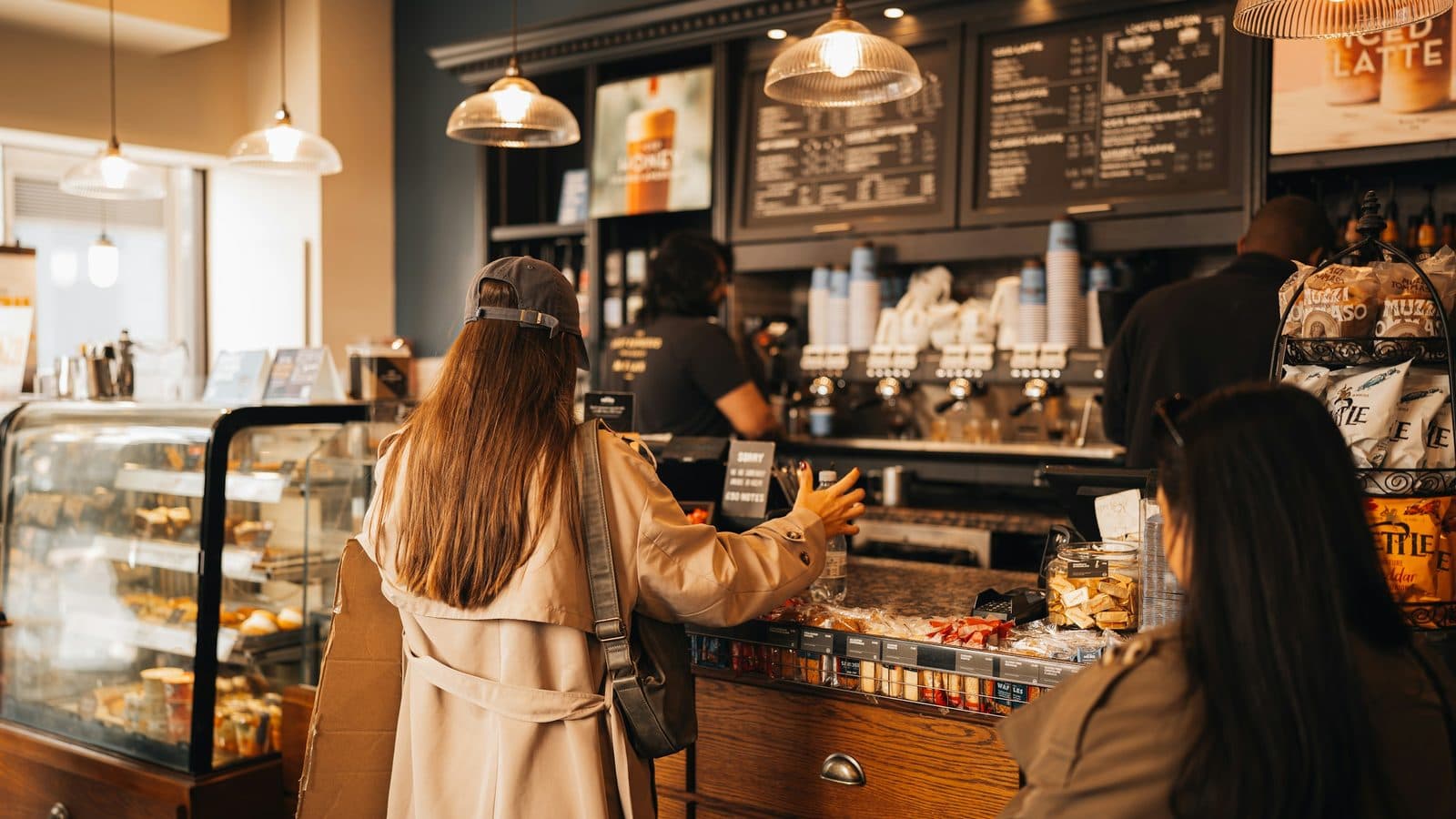
Photograph by Benjamin Chambon on Unsplash
A café on an East Coast university campus ran an ordinary stamp card. Buy ten coffees, get the eleventh free. What the customers did not know was that every stamp was printed by a numbering machine that marked it in sequence. Three researchers collected 949 redeemed cards covering roughly 10,000 coffee purchases, read the hidden numbers, and reconstructed how many days had passed between every visit.
The gaps got shorter. Members bought their next coffee about 20% sooner by the last stamp than they had after the first, which works out to seven-tenths of a day. It is a real effect on real money, and it is nothing like the number a loyalty vendor will quote you.
Programs do work. The lift has been measured repeatedly since the 1990s, and almost none of it comes from the thing owners are usually sold on.
Your regulars joining the program proves nothing
Vendors sell loyalty programs on one comparison: members spend more than non-members. Starbucks is the standard exhibit. On its third-quarter call for fiscal 2026, held on July 29, the company reported 35.8 million 90-day active Rewards members in the U.S.
The comparison runs backwards. People who already visit you four times a week are the ones who bother to sign up, so a gap between members and non-members mostly measures who joined rather than what joining did.
Four researchers put a number on that distortion. Using a Dutch household panel that tracked every grocery loyalty program in the country alongside spending across 20 supermarket chains, Leenheer, van Heerde, Bijmolt and Smidts modeled the decision to join separately from the effect of having joined. Membership still helped. The honest effect on share of wallet came out seven times smaller than the naive comparison suggested, meaning six-sevenths of the headline number was customers sorting themselves.
Grahame Dowling and Mark Uncles made this argument in MIT Sloan Management Review back in 1997, warning that most schemes end up paying customers to do what they were going to do anyway. Nearly thirty years later it still lands. The useful question is not whether your best customers carry a card, but whether anybody's behavior changed.
The effect that survives a controlled test is impatience near the finish line
Back to the café. Ran Kivetz, Oleg Urminsky and Yuhuang Zheng published the stamp-card results in the Journal of Marketing Research in 2006, and the acceleration was not a rounding error. The average card took 24.6 days to finish. Had members kept buying at the pace they set right after the first stamp, it would have taken 29.4 days, so the pull of the reward compressed the whole cycle by nearly five days, about 16%.
Then they ran the experiment that matters. They handed 108 café customers one of two cards at random: a plain ten-stamp card, or a twelve-stamp card that arrived with two stamps already filled in. Both cards required exactly ten purchases. The control group took 15.6 days to buy those ten coffees and the head-start group took 12.7 days, roughly three days faster on an identical amount of buying.
Nothing about the reward changed. Only the customer's sense of where they were standing when they started. Joseph Nunes and Xavier Drèze named this the endowed progress effect in the Journal of Consumer Research the same year, describing it as reframing a task "as one that has been undertaken and incomplete rather than not yet begun."
So the lever a small business is pulling has very little to do with how generous the reward is. It is the distance the customer thinks is left, and you set that distance for free when you design the card. Two free stamps bought three days.
The lift comes from occasional customers, the cost comes from regulars
So who speeds up? Yuping Liu followed a convenience store franchise over time and published the answer in the Journal of Marketing in 2007. Heavy buyers were the most likely to claim their rewards and the least likely to change anything about how they shopped. Light and moderate buyers gradually bought more, grew more loyal, and started buying across parts of the business they had ignored.
That is a profit and loss statement. Your regulars are the cost line: they redeem reliably, and every free coffee they collect is a discount on a visit that was already happening, which is what turns a 2% reward into a 10% one. Your occasional customers are the revenue line, and they are the only group whose behavior the program actually moved.
So change what you count. Total members, or member spend against non-member spend, tells you almost nothing. The number worth tracking is whether the person who used to come once a month now comes twice, because that gap is where the program either pays for itself or quietly does not.
A reward most people can't reach does more harm than none
Nobody joining is not the worst case. Yanwen Wang, Michael Lewis, Cynthia Cryder and Jim Sprigg ran a 24-month field experiment with a major hotel chain across 95,532 existing loyalty customers, published in Marketing Science in 2016, and split them by whether they hit the promotional goal.
Only 20% did. Customers who reached the goal bought more after the promotion ended, which is the result everyone hopes for. Customers who fell short bought less than they had before it started, and the members with the most invested in the relationship took the worst hit from missing.
Setting the bar high backfires. It converts four out of five customers into people who tried something you designed and failed at it, which leaves them somewhere worse than where they started.
Card design carries the same risk. Nick Bombaij and Marnik Dekimpe studied 358 grocery banners across 27 European countries for the International Journal of Research in Marketing and found that the simple version, offering direct and immediate rewards, lifted sales productivity, while the positive effect disappeared once retailers layered on a complex progressive-reward system. Ten stamps for a free coffee at a shop somebody passes on the way to work is reachable in a month. Ten stamps at a restaurant somebody visits twice a year is a card they will lose.
Redemption is the moment you're most likely to lose them
The café researchers kept watching after the free coffee was handed over, and found the least intuitive result in the paper. Once the reward was collected, the goal distance snapped back to the beginning. Then activity dropped. They call it postreward resetting, and they report that customers were also "most likely to defect" at exactly that point.
Picture the card from the other side of the counter. Ten purchases of steadily rising momentum, one free coffee, and then a blank card and a customer who has just been returned to the starting line. The habit dies in one transaction.
It is particularly important to communicate with and motivate customers immediately after they earn a reward.
Kivetz, Urminsky and Zheng, Journal of Marketing Research, 2006
A paper punch card cannot do that. It has no way of knowing that somebody redeemed on Tuesday and has not been back since, so the one moment the evidence says you should act on is the one moment you cannot see. A wallet pass can, because the shop that issued it can push a message to it.
On a street where everyone has a card, the card is not the reason
A loyalty program is not a moat. Bombaij and Dekimpe found program effectiveness was higher in countries where fewer competitors also carried one, meaning the advantage is partly borrowed from whoever has not gotten around to it yet. When every café on the block stamps a card, the card becomes table stakes and everybody's costs go up together.
The broadest evidence agrees that what a program moves is behavior, not affection. A meta-analysis of 429 effect sizes spanning 1990 to 2020, published in the Journal of the Academy of Marketing Science in 2022, found strong evidence that programs enhance loyalty, but noted that shifting how customers actually feel about a brand is much harder than shifting what they do. A card changes visit timing. It does not make anyone love you.
Something else does that. In the Regulars Report published in June 2026, Toast and Resy paired transaction data with a survey of 1,500 U.S. diners and found that nearly half named being remembered by staff as what makes them feel most valued, more than double the share who named points or rewards. The same report put up to 50% of a restaurant's order volume with about 7% of its guests. A stamp card is a reason to come back a little sooner. Recognizing someone when they walk in is why they picked you in the first place, and no software will do that part for you.
Put the reward within reach
Loyalty Cards keeps the count in Apple Wallet and Google Wallet, so nobody loses it. Free for up to 200 customers at one location.
Fuentes
- The Goal-Gradient Hypothesis Resurrected: Purchase Acceleration, Illusionary Goal Progress, and Customer Retention · Journal of Marketing Research, February 2006
- Do loyalty programs really enhance behavioral loyalty? An empirical analysis accounting for self-selecting members · International Journal of Research in Marketing, 2007
- The Endowed Progress Effect: How Artificial Advancement Increases Effort · Journal of Consumer Research, 2006
- The Long-Term Impact of Loyalty Programs on Consumer Purchase Behavior and Loyalty · Journal of Marketing, 2007
- Enduring Effects of Goal Achievement and Failure Within Customer Loyalty Programs: A Large-Scale Field Experiment · Marketing Science, January 2016
- When do loyalty programs work? The moderating role of design, retailer-strategy, and country characteristics · International Journal of Research in Marketing, March 2020
- 40 years of loyalty programs: how effective are they? Generalizations from a meta-analysis · Journal of the Academy of Marketing Science, 2022
- Do Customer Loyalty Programs Really Work? · MIT Sloan Management Review, July 1997
- The Regulars Report 2026 · Resy and Toast, June 2026
- Starbucks Q3 2026 Earnings Call Transcript · The Globe and Mail, July 2026