Retention
·
·
10 min read
Paid loyalty programs: price for the daily regular
A paid loyalty program only works if the fee buys a capped number of redemptions and pulls a second item onto the ticket.

Andrew Kim

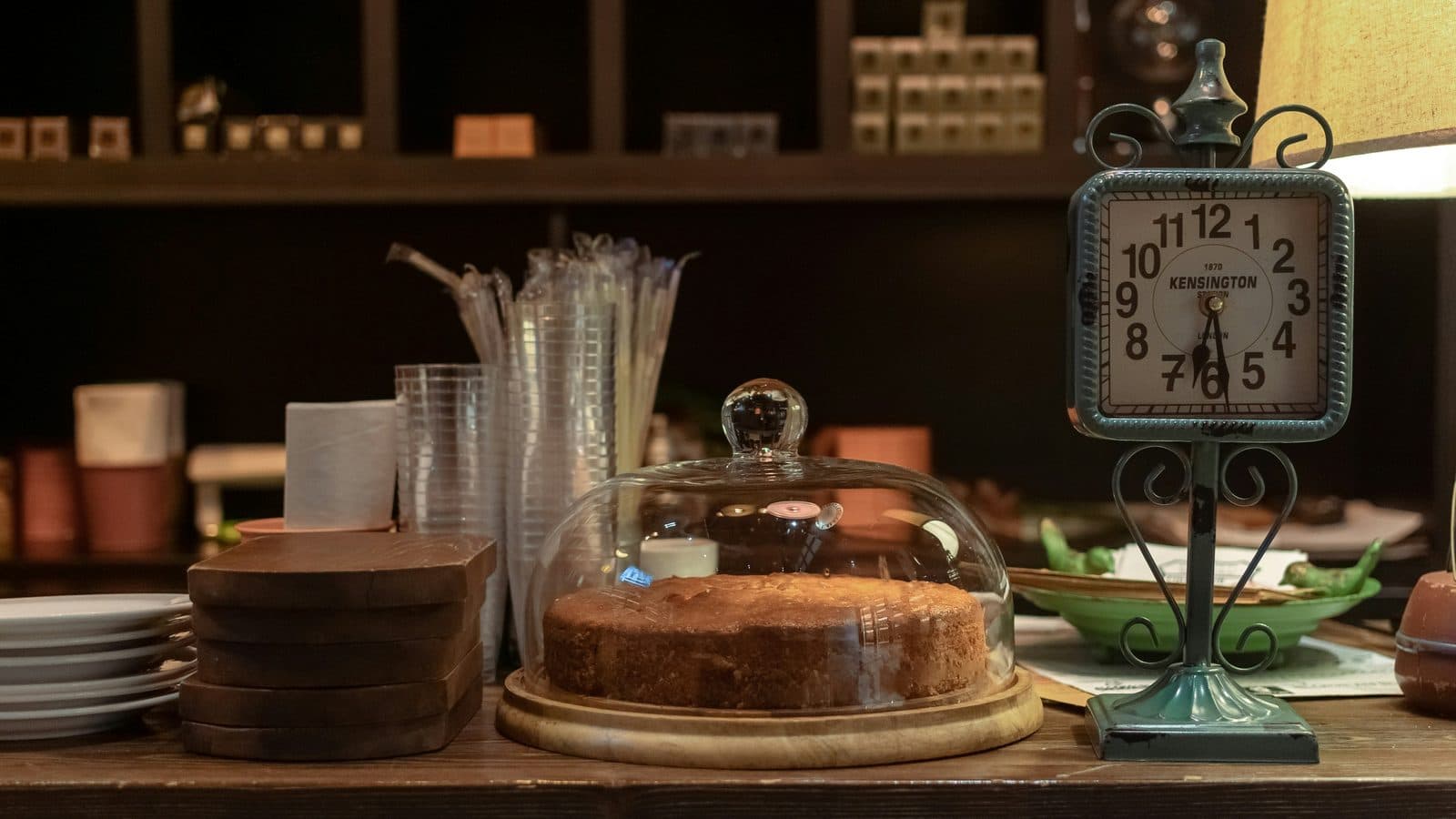
Photograph by Vitaly Gariev on Unsplash
On 27 February 2020 Panera became the first national restaurant chain to sell a coffee subscription, at $8.99 a month for as much drip coffee, iced coffee and hot tea as a member wanted, one cup every two hours. The word unlimited is no longer on that page. Panera's own subscription page, read on 25 September 2026, sells "up to 30 select coffees, teas, fountain drinks and more each month" for $14.99, and the small print fixes that at "30 redemptions of eligible beverages per monthly billing cycle".
A paid loyalty program earns its fee when two things are true: the money buys a counted number of redemptions, and the visit drags a second item onto the ticket. Both, not one. Miss either and you have sold a discount on the sales you were already making, to the customers who were already making them.
Before the arithmetic, the disclosure: we make digital loyalty cards, we do not sell subscription billing, and the numbers below are worth more to you than our conclusion.
What a paid loyalty program costs, cup by cup
The going advice is to price the fee at roughly one average purchase. A subscription platform for cafes suggests $20 to $35 a month for a daily brewed coffee, and a membership app for online stores puts the fee at about 10% of the average customer's yearly spend. Both rules assume monthly visits.
Now run the middle of that range through one till. Square's guidance for cafes setting menu prices says aiming for an 80% profit margin is common for the coffee shop industry, so a $5.50 drink costs about $1.10 to make. Your best customer comes twenty-two mornings a month. That is $121 of coffee. At $25 a month she pays $25, the beans, milk and cups for those drinks run to about $24, and a month of her habit leaves you roughly a dollar.
Nothing went wrong there. The fee did exactly what it promised, and that is the trouble with a rule of thumb built for a customer who turns up monthly rather than before work every morning.
The free stamp card behaves differently, because it only gives away the eleventh drink. What that costs lands near 2% of the money collected on the card when a new customer finishes one, and near 10% when a regular does. A monthly fee starts at the 10% case and keeps going.
Panera capped it, and Pret stopped giving drinks away
Panera's price moved from $8.99 in February 2020 to $10.99 in April 2022, when the club widened to all 26 self-serve drinks, and stands at $14.99 now. The cap is the more interesting change. Panera's own footnote prices its maximum case for you: 30 redemptions at an average beverage price of $3.84, which the company measured across its own redemptions between 1 January and 25 June 2026, against a $14.99 fee. That is $115.20 of drinks for $14.99, and Panera chose to stop the count there rather than find out how far a daily member would carry it.
Pret went the other way and stopped giving drinks away at all. The retreat took four years. Its subscription launched in September 2020 as YourPret Barista at £20 a month for five drinks a day, rose to £25, then to £30 as Club Pret. On 18 July 2024 the chain said that from 3 September the five free drinks would become five half-price drinks and the 20% food discount would end, and UK managing director Clare Clough told customers the priority was now "better value for everyone". The new fee was set at £10, discounted to £5 for existing subscribers, and in February 2025, after the backlash, Pret said the fee would stay at £5 rather than rise to £10.
Read Pret's British page today and the headline is "The Half Price Coffee Club": £5 a month for 50% off up to five barista drinks a day, thirty minutes between redemptions, blended drinks excluded. Its American page still sells the old shape, five barista-made drinks a day plus 20% off the menu, and Pret's US terms put that at $50 a month plus tax. Same company, two markets, and the fee tracks the giveaway: £5 where the member pays half, $50 where the drinks are free.
| Program | Fee | What the fee buys | The ceiling on it |
|---|---|---|---|
| Panera Sip Club (US) | $14.99 a month, or $5 for five months on the current promotion | Drip coffee, iced coffee, hot tea, fountain and select bubbler drinks | 30 redemptions a month, one every two hours; espresso, cappuccino, cold brew and frozen drinks excluded |
| Club Pret (UK) | £5 a month | 50% off barista-made hot and iced drinks | Five a day, thirty minutes apart; blended drinks excluded |
| Club Pret (US) | $50 a month plus tax | Five barista-made drinks a day, plus 20% off the menu | Five a day, thirty minutes apart; one subscription per person, QR code not to be shared |
| PROOF Coffee Roasters | $49, $79 or $129 a month | Unlimited drip coffee and tea, with espresso and cold brew included only on the top plan | The two cheaper plans charge $2 extra per espresso drink or cold brew |
Every fee and exclusion was read off each company's own page on 25 September 2026. Both chains here have changed the shape of the offer since 2022, one by capping the count and one by ending the giveaway.
The customer who signs up is the one you can least afford
A free card's lift comes from occasional customers speeding up near a reward rather than from regulars, which is what the controlled studies find. A fee inverts that sorting completely. Nobody pays $25 for a coffee club they might use twice, so the people who hand you the money are the ones who were coming anyway, and they arrive on day one rather than gradually.
The gym industry lives with the same sorting by relying on absence. Stefano DellaVigna and Ulrike Malmendier tracked 7,752 members of three American health clubs for the American Economic Review in June 2006, and found that members on a flat monthly fee above $70 turned up 4.3 times a month, which is more than $17 a visit against a ten-visit pass selling at $10 a visit. Roughly 80% would have paid less. The average member in that group gave up $600 in savings over the membership.
Coffee is not a gym. The habit that earns you the fee is a habit people keep, at the same hour, on the way to the same job, and the member who signs up and then forgets to come is not the case worth planning around. Plan for the one who works upstairs.
The fee was buying the food, not the coffee
Before the national launch, Panera ran the subscription in 150 restaurants and chief executive Niren Chaudhary gave QSR Magazine the pilot numbers: visit frequency up more than 200% after a customer signed up, and a 70% increase in food attachment, which he called staggering. The trade association NACS repeated both figures that August. By the end of 2021 the coffee club held roughly 600,000 members with more than half of them paying, and QSR reported that subscribers visited eight times more often than non-members, spent up to eleven times more a year, and attached food to an order 30% of the time. Another 43% of them were new to Panera.
Coffee was bait. Breakfast was the business. Run that test on your own counter before you price anything: when somebody walks in for the thing they have already paid for, what else is within reach, and do you make money on it?
A bakery with pastries passes. A deli passes twice, because the same member comes back at lunch. An espresso bar with three things on the counter does not, and no fee fixes that, because the only thing the member can take is the thing you just promised to hand over.
The second test is how often anybody comes at all. A salon sees a client every six weeks, so a monthly fee asks that client to pay twice over for one appointment, which is why paid membership belongs to businesses with a daily or weekly rhythm. Everywhere else it is a prepaid voucher wearing a club's name.
McKinsey's 2020 survey of loyalty programs found that paid members were 60% more likely to spend more on a brand after subscribing, against 30% for free programs. Worth knowing, and worth discounting: those are brands with a catalogue, and a member who spends more on an assortment is not the same event as a member who takes a drink.
A recurring charge brings paperwork a stamp card never had
Pret's American subscription terms run to seventeen numbered sections and finish with mandatory binding arbitration. Cancellation takes effect at the end of the subscription month with no refund for the unused part, a pause runs 31 days, a fee change needs forty days' notice, there is one subscription per person, and the member's QR code may not be shared with anybody. None of that is lawyers being precious. It is what a promise looks like after somebody has tried every reading of it.
The law has a view too, and it moved twice recently. The Federal Trade Commission's click-to-cancel rule was vacated in its entirety by the Eighth Circuit on 8 July 2025, days before it was due to take effect. What survives still binds you: the Restore Online Shoppers' Confidence Act requires renewal terms disclosed before you take billing details, express consent, and a simple way out, and the states have their own rules. California's amended automatic renewal law, which applies to contracts entered into, amended or extended on or after 1 July 2025, requires an easy cancellation mechanism and a prominent "click to cancel" button displayed alongside any retention offer you show a leaving member.
A punch card has none of this. You can end it on a Tuesday with a sign on the door.
The version that works behind one till
Three things sit between a free card and an unlimited club, and each of them keeps the ceiling where you can see it.
The simplest is a prepaid bundle. Ten coffees for the price of nine takes the cash up front, costs you one drink, expires when you say it does, and never renews itself into an argument, and what that one drink costs you is the only number you have to get right.
Then there is Pret's retreat, which is worth copying. Sell the discount, not the drink. A member paying £5 for half-price coffee still leaves you half of every price, so your heaviest user becomes your most profitable one instead of your most expensive.
The last option is the fee itself, priced honestly. Publish the number of redemptions it buys the way Panera now does, run the arithmetic at the top of that number rather than the middle, and leave a gap between redemptions so one membership cannot feed a household.
Whichever you pick, do not measure it by comparing members against everybody else. Members chose themselves, and research on self-selecting members found the apparent effect of a program shrinks once you account for that. Compare the same customers before and after, and watch what they buy besides the drink. Independent coffee shops surveyed for the 2025 Independent Coffee Shop Industry Report averaged a 13.8% net margin, which is the room you have to be wrong in.
Find your daily regulars first
Loyalty Cards keeps the stamp card in Apple Wallet and Google Wallet, where nobody has to install anything, so you can see who actually comes every morning before you decide whether to charge any of them. Starting is free.
Sources
- MyPanera+ Coffee subscription press release · Panera Bread, 27 February 2020
- Sip Club subscription page and terms · Panera Bread, Read 25 September 2026
- Unlimited Sip Club launch press release · Panera Bread, 19 April 2022
- Panera Launches an Unlimited Coffee Subscription · QSR Magazine, February 2020
- Panera Creates First Nationwide Subscription for All Self-Serve Drinks · QSR Magazine, April 2022
- Panera Enhances Coffee Subscription Offer · NACS, 6 August 2020
- Pret A Manger change to coffee subscription sparks backlash · BBC News, 18 July 2024
- Pret scraps its five-a-day coffee subscription · Restaurant Online, 18 July 2024
- Club Pret coffee subscription to remain at £5 per month · Retail Times, 13 February 2025
- Club Pret · Pret A Manger, Read 25 September 2026
- Pret A Manger terms and conditions · Pret A Manger, Read 25 September 2026
- PROOF Coffee Roasters membership · PROOF Coffee Roasters, Read 25 September 2026
- Paying Not to Go to the Gym · American Economic Review, June 2006
- Do loyalty programs really enhance behavioral loyalty? An empirical analysis accounting for self-selecting members · International Journal of Research in Marketing, 2007
- Coping with the big switch: How paid loyalty programs can help bring consumers back to your brand · McKinsey and Company, 22 October 2020
- Click to Cancel Just Got Cancelled: Eighth Circuit Vacates Entirety of FTC's Negative Option Rule · Cooley, 11 July 2025
- California Business and Professions Code section 17602 · California Legislative Information
- How to Price Coffee Drinks · Square
- The 2025 Independent Coffee Shop Industry Report · Coffee Shop Keys, 24 June 2025
- 5 Coffee Shop Subscription Ideas · Subport
- How to Price a Membership Program to Inspire Brand Loyalty · Inveterate