Wallet passes
·
·
10 min read
How often to send push notifications? Count the visits
Google Wallet caps notifying messages at three per card a day, so for most shops the working number is one broadcast a month plus the updates a card earns.

Andrew Kim

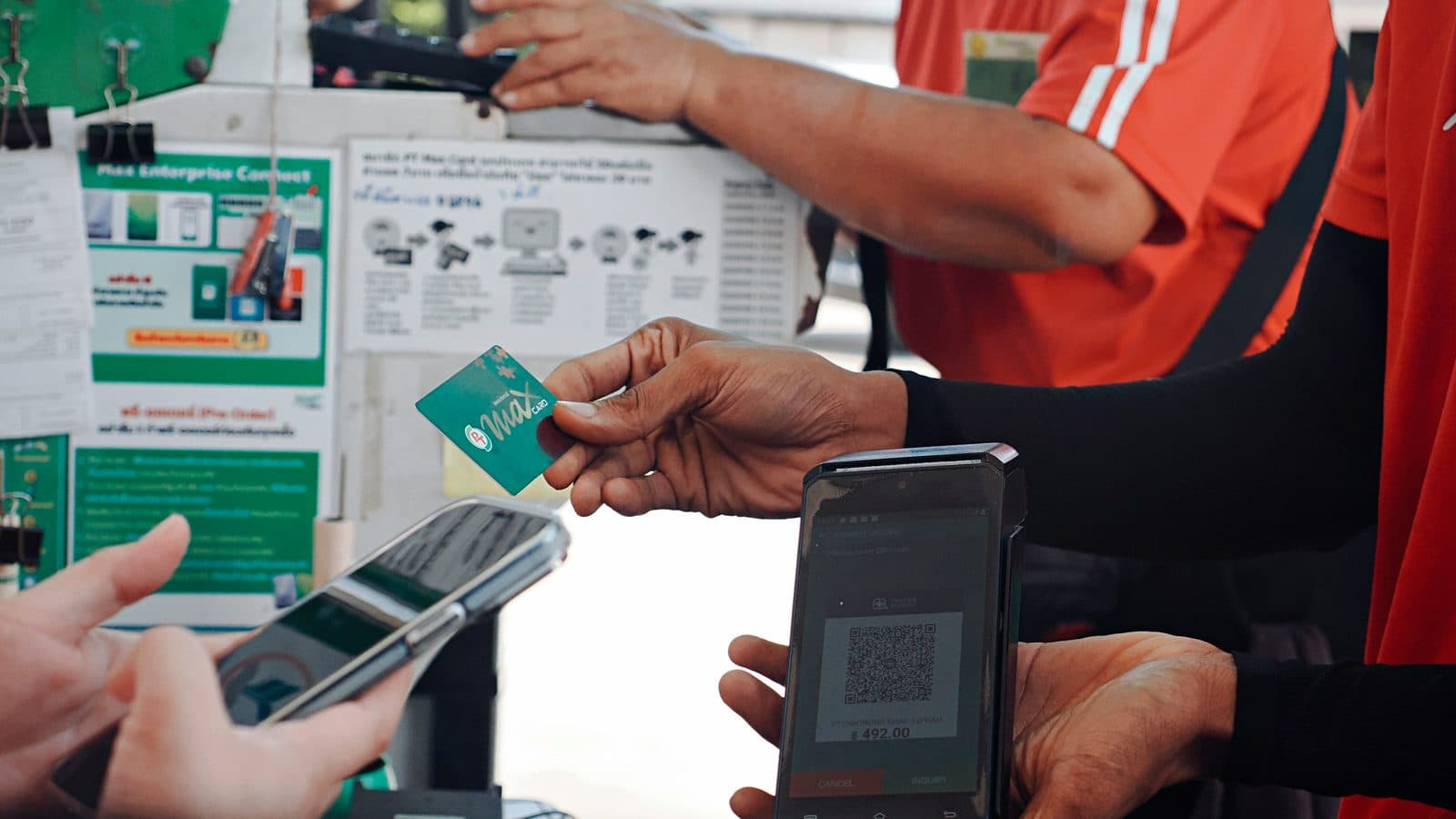
Photograph by Jamie Street on Unsplash
Send a fourth notification to the same Google Wallet loyalty card inside 24 hours and it does not arrive. The platform refuses it. Google's documentation for loyalty passes, last updated on 17 September 2026, says you may send a maximum of three messages that trigger a push notification in a 24 hour period, and that anything past that comes back as a QuotaExceededException.
Apple never published a number. On an iPhone the question does not take that shape at all: a Wallet notification fires when a field on the pass changes and that field carries a change message, so there is nothing to send unless the card itself changed.
So there is a real answer. Three a day per card is the ceiling Google set rather than a target, and for almost every shop the working number is one unprompted broadcast a month plus as many triggered updates as the card genuinely earns. Almost every other figure you will read on this question traces back to one survey about phone apps, run in 2015.
Google wrote the limit into the API
The limit counts more than the messages you compose. Google's loyalty documentation describes two ways to make a phone buzz: an AddMessage call with the type TEXT_AND_NOTIFY, which drops a note on the back of the pass and pushes it, and a field update sent with notifyPreference set to notifyOnUpdate. Both draw on the same allowance. Three per pass, in any 24 hours.
The list of fields that can fire an update notification is short. On the class there is rewardsTier, secondaryRewardsTier and programName, and on the object there is loyaltyPoints.balance and its secondary twin. A points balance and a tier. That is the whole vocabulary Google gives a loyalty card for telling somebody their situation has changed.
Picture a busy morning. If your platform notifies on every balance change, a regular who buys a coffee at eight, a second at eleven and a pastry at two has spent the day's allowance on three receipts, and the message about tonight's tasting, the one you actually wanted to send, is the one that hits the quota. Google also says it may throttle your delivery if it decides you are spamming people, which is a second limit with no published number attached to it.
On Apple, nothing arrives unless the card itself changed
Apple's rule lives in one field. In the pass field documentation, changeMessage is described as "a format string for the alert text to display when the pass updates", it has to contain the escape %@ which the field's new value replaces, and Apple states plainly that you need to provide a value for the system to show a change notification.
Read it as written. An Apple Wallet notification is a sentence with one blank in it, and the blank is filled by whatever the field now says. "You have %@ stamps" becomes "You have 7 stamps". There is no separate campaign object, no send button, and no audience picker anywhere in the format.
The delivery path says the same thing. Apple's guide to adding a web service to update passes describes the sequence: the device registers the pass with your server and hands over a push token, your server sends a notification when the information changes, and the device then comes back and asks for the updated pass. The push is a knock on the door rather than the message itself. If you are new to how these passes behave on a phone, the Apple Wallet side of loyalty cards is worth reading first.
Platforms get around this by keeping a field on the back of the card whose only job is to hold whatever you want to say. Loopy Loyalty's help documentation describes exactly that, with the message appearing on the lock screen and again on the back of the card, and advises keeping it under 90 characters so the lock screen does not cut it off. It works well enough. It is still a field change wearing a marketing message.
Every frequency number in circulation came from a survey about apps
Look at what the pages ranking for this question currently tell you. BTAQA, writing on 5 May 2026, puts the ideal at two to four broadcasts a month and says opt-outs rise sharply past six a month. BonusQR's 2026 guide says two to five a week causes 10% opt-outs and three to six a week drives them as high as 40%. Others land on one to two a week, or two to four a week. Those are not small differences. Four a week is more than eight times two a month.
They disagree because they share one original. In January 2016, WAN-IFRA reported on a fresh study from a Boston analytics company called Localytics: 46% of respondents would disable push notifications after two to five messages in a week, and 32% would stop using the app altogether at six to ten. Ten years on, those two bands are still being shuffled around as though they were laws.
Here is the part nobody quoting them mentions. Localytics ran the same two questions again in November 2017 on 1,000 US smartphone users and published the comparison on 16 January 2018. Tolerance had risen. The two-to-five band that drove 31% of people to abandon an app in 2015 drove 22.3% by 2017, and 90% said they would accept one push a week without turning notifications off. eMarketer reported the same survey in July 2018.
So the number doing the rounds is the stale half of a pair, and both halves were measured on apps rather than on a card sitting in a wallet. Airship, whose 2026 report covers push sent to more than 3 billion people, says as much itself. "Ask ten marketers how many push notifications you should send per month, and you'll probably get ten different numbers," wrote Jennie Lewis, a senior manager there, on 17 August 2026. "Most of the time, these are just guesses dressed up as best practices."
Your message arrives in a stack of about fifty-six
The best measurement of what a phone actually receives is not a marketing survey. Martin Pielot, Amalia Vradi and Souneil Park analysed 794,525 notifications from 278 phone users for MobileHCI 2018 and found a median of 56 notifications per person per day, most of them from messaging apps.
Two findings from that paper matter more to you than the headline. Notifications from non-messaging apps converted into somebody opening the app only 16.19% of the time, against roughly two-thirds for personal messages. And that category was dismissed faster than any other, which the authors read as people arriving quickly at the decision that nothing is at stake.
Pielot is also worth reading on his own earlier work, which is where the widely repeated figure of 63.5 notifications a day comes from. That one, he wrote in 2018, was "derived from a sample size of 15 people", and he "never felt too confident about it". None of the pages recycling that figure mention the fifteen people behind it.
A broadcast is worth less the more often somebody already comes
Most advice on this question scales frequency up with visit frequency, on the reasoning that a daily customer is more engaged. The arithmetic runs the other way.
A broadcast can only do one thing: add a visit that was not already going to happen. Its value is measured against the visits you were getting anyway, and visit frequency is that denominator.
| Who carries the card | A regular's gap between visits | Visits a month | What one added visit is worth |
|---|---|---|---|
| Café regular | 2 to 3 days | 13 | 8% |
| Weekday lunch spot | 1 week | 4.3 | 23% |
| Barber | 4 weeks | 1.1 | 92% |
| Nail salon | 6 weeks | 0.7 | 138% |
| Car repair shop | 6 months | 0.17 | 600% |
Our arithmetic, on a 52-week year, with the café regular counted at three visits a week: monthly visits are the gap turned into a rate, and the last column is one added visit as a share of that.
The café is the trap. Thirteen visits a month is the most engaged customer you have, and it is also the customer a message can do least for, because you cannot sell them a fourteenth coffee they did not want. Every push you send that regular is spending a channel on somebody who was walking past your door anyway. The salon client at six weeks is the opposite: one message that lands in week seven is worth more than a year of café broadcasts, and it is a message you can only send if the channel is still open when week seven arrives.
Which gives a rule you can run without a dashboard. Send unprompted messages to people who are past their own gap, not to your whole list, and let the length of that gap set how often any one person hears from you. For most single-location shops that comes out at one broadcast a month, aimed at a different slice of the list each time, which is fewer than one message a week for any individual and well inside every band quoted above.
The messages that should not count against your budget
A stamp confirmation is not marketing. Neither is a balance that updates when somebody pays, or a note that the reward they earned is about to lapse. Those are receipts, and the platforms treat them as the reason the mechanism exists at all: Google's five notifying fields are a tier and a balance, and Apple's change message is literally a template for reporting a new value.
The deadline warning is the highest-value message on that list, because a short expiry on an earned reward is the only form of expiry anybody has measured. A reward with 30 days left on it and no reminder attached is a visit you have already paid for and then thrown away.
What deserves cutting is the middle category, the message that is neither a receipt nor a reason to come in: new menu item, holiday hours, "we miss you" with nothing behind it. Holiday hours belong on your door and your Google listing. If you cannot name the visit a message is meant to produce, it is a broadcast to 13-visits-a-month regulars who were coming anyway.
When somebody switches it off, nothing tells you
Airship names the three things people do when they have had enough, and they escalate: unsubscribe from push, switch notifications off at the operating system level, or delete the app. On a wallet card the third one is a swipe, and there is no app store listing to bring anybody back through, no re-install prompt, no trace left on the phone at all. Apple's own notification settings make the second step one switch under Settings, and pass platforms like PassEntry document a per-pass toggle for Allow Notifications on top of it. None of those three steps sends you a signal. The card just goes quiet.
That matters more once you notice what the fallback channel costs. Texting the same customer puts you inside the Telephone Consumer Protection Act, whose prohibitions in 47 U.S.C. § 227 are written around calls and messages to a telephone number assigned to a cellular service. A wallet notification never touches a phone number. It goes from your server to Apple or Google and then to a pass the customer chose to keep. That is a different footing from a text, and the consent rules around collecting a number are worth reading before you treat the two as interchangeable.
Three a day is what the platform allows. One a month, aimed at the people whose own gap has run out, is what the channel can carry.
Make the card do the talking
Loyalty Cards pushes to the wallet pass itself rather than through an app your customer would have to install, and you can build the card first on the free plan before you send anything.


Sources
- Trigger Push Notifications, Loyalty cards · Google for Developers, Last updated 17 September 2026
- PassFieldContent · Apple Developer Documentation
- Adding a Web Service to Update Passes · Apple Developer Documentation
- Dismissed! A Detailed Exploration of How Mobile Phone Users Handle Push Notifications · Pielot, Vradi and Park, MobileHCI 2018, September 2018
- Dismissed! A Detailed Exploration of How Mobile Phone Users Handle Push Notifications · Martin Pielot's blog, June 2018
- How Consumers Perceive Push Notifications in 2018 · Localytics, 16 January 2018
- Let's say goodbye to pointless, ill-timed, endless push notifications · WAN-IFRA, January 2016
- Shoppers May Get Brand Fatigue From Messaging Overload · eMarketer, 25 July 2018
- How many push notifications should you send per month? · Airship, 17 August 2026
- How push messages work · Loopy Loyalty Help Center
- How Many Push Notifications Should You Send Customers? · BTAQA, 5 May 2026
- Push notifications and customer loyalty: 2026 guide · BonusQR
- Change notification settings on iPhone · Apple Support
- Notifications · PassEntry Documentation
- Telephone Consumer Protection Act, 47 U.S.C. § 227 · Federal Communications Commission